
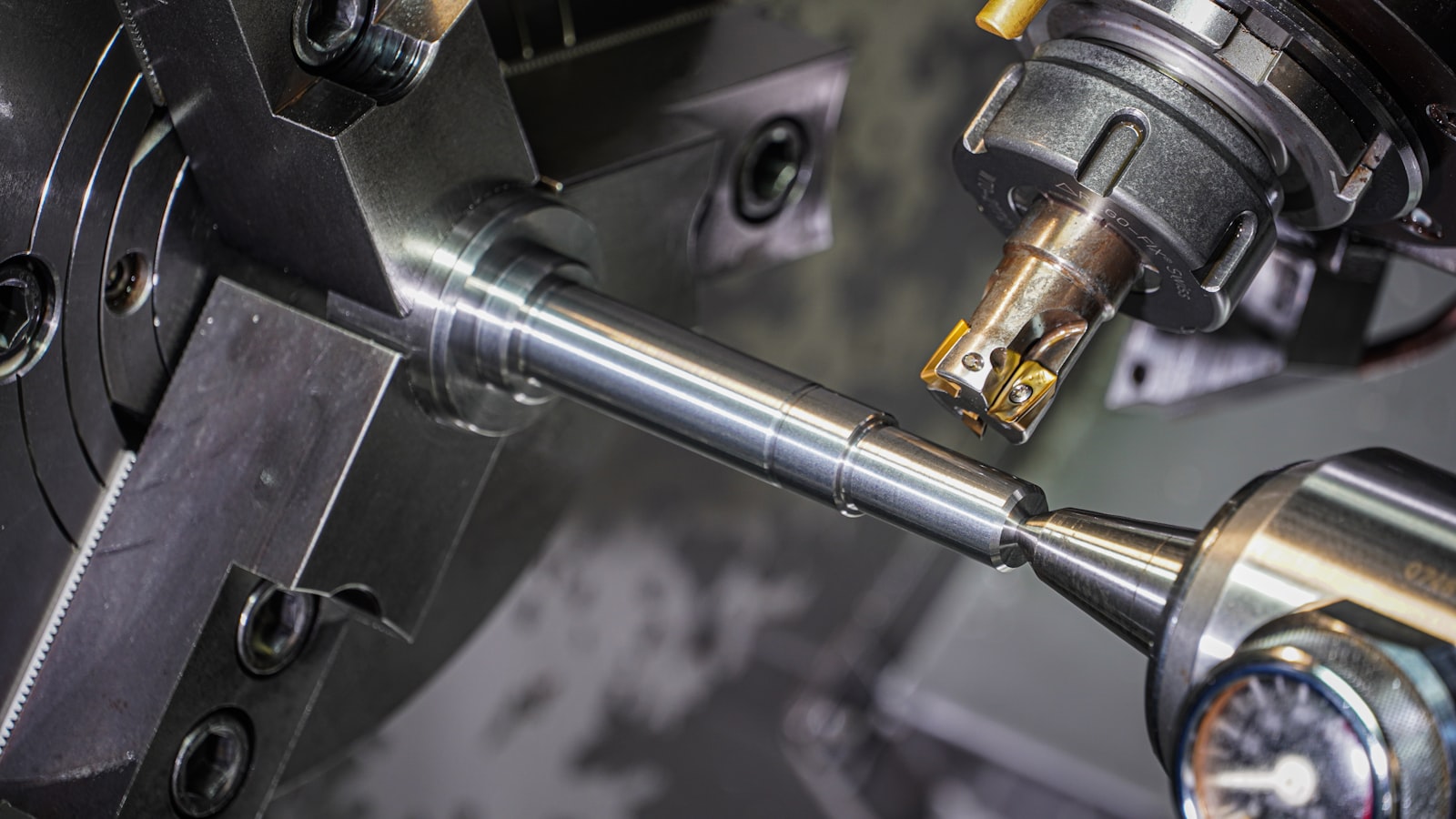
Q235 Overview
Q235 is a plain carbon structural steel used throughout China, also designated as Q235A, Q235B, Q235C, and Q235D. As a mild steel, it requires no heat treatment during production. The 'Q' denotes the yield point while '235' indicates yield strength in megapascals. The material offers good plasticity and weldability.
Q235 Equivalent Materials
International equivalences are approximate, with differences in yield strength, tensile strength, and chemical limits. Engineers often cross-reference Q235 grades against equivalents like A36, S235JR, and SS400 to confirm material substitutions for international projects.
| Grade | ASTM (USA) | EN (Europe) | JIS (Japan) | DIN (Germany) |
|---|---|---|---|---|
| Q235A | N/A | N/A | N/A | USt37-2 |
| Q235B | A36 | S235JR | SS400 | St37-2 |
| Q235C | N/A | S235J0 | SM400A | S235J0 |
| Q235D | N/A | S235J2 | N/A | S235J2 |
A36 specifies a minimum yield of 250 MPa versus 235 MPa for Q235B, and the tensile ranges differ. The JIS equivalent SS400, governed by G3101, controls only sulfur and phosphorus, while Q235 mandates limits on five elements including manganese. Substitution requires verifying that the replacement standard meets all requirements. For higher-strength needs, consider Q345 at 345 MPa or Q355 at 355 MPa.
Characteristics of Q235
As material thickness increases, Q235's yield value decreases. Its moderate carbon content provides comprehensive and adequate performance. The steel balances strength, welding capability, and plasticity well. Common forms include steel plates, rods, bars, and angle frames, primarily used in engineering and construction industries.
Q235 conforms to PRC standards. While offering lower mechanical properties than A36, the materials remain generally substitutable for one another, as long as there are no special requirements.
Uses of Q235
Q235 combines toughness, weldability, and plasticity with excellent cold-bending performance.
- Welded structures: factory buildings, towers, boilers, bridges, containers, vehicles
- Mechanical components: stands, rods, nuts, connecting rods, brackets
Q235 Physical Properties
| Property | Metric | US/Imperial |
|---|---|---|
| Density | 7.85 g/cc | 0.284 lb/in3 |
Q235 Mechanical Properties
| Property | Metric | US/Imperial |
|---|---|---|
| Tensile Strength, Ultimate | 400 - 550 MPa | - |
| Tensile Strength, Yield | 250 MPa | - |
| Elongation at Break | 20% | 20% |
| Modulus of Elasticity | 200 GPa | 29000 ksi |
| Compressive Yield Strength | 152 MPa | 22000 psi |
| Bulk Modulus | 160 GPa | 23200 ksi |
| Poisson's Ratio | 0.26 | 0.26 |
| Shear Modulus | 79.3 GPa | 11500 ksi |
Chemical Composition of Q235 Grades
GB/T 700 defines four quality grades with progressively tighter controls on carbon, sulfur, and phosphorus.
| Element | Q235A | Q235B | Q235C | Q235D |
|---|---|---|---|---|
| Carbon (C) % | <= 0.22 | <= 0.20 | <= 0.17 | <= 0.17 |
| Manganese (Mn) % | <= 1.40 | <= 1.40 | <= 1.40 | <= 1.40 |
| Silicon (Si) % | <= 0.35 | <= 0.35 | <= 0.35 | <= 0.35 |
| Sulfur (S) % | <= 0.050 | <= 0.045 | <= 0.040 | <= 0.035 |
| Phosphorus (P) % | <= 0.045 | <= 0.045 | <= 0.040 | <= 0.035 |
Quality progresses from A (lowest) through D (highest). Excessive phosphorus causes cold shortness, meaning brittleness at low temperatures, while high sulfur leads to hot shortness and weld cracking during fabrication. Q235D carries the tightest impurity limits and delivers the best overall performance for welded structures.
Q235A vs Q235B vs Q235C vs Q235D
The core differentiator across grades is the Charpy V-notch impact test and the allowed deoxidation method.
| Feature | Q235A | Q235B | Q235C | Q235D |
|---|---|---|---|---|
| Impact Test Temp | Not required | 20 C | 0 C | -20 C |
| Impact Energy (Akv) | N/A | > 27 J | > 27 J | > 27 J |
| Deoxidation | Rimmed, semi-killed, or killed | Rimmed, semi-killed, or killed | Killed or special killed | Killed or special killed |
| Typical Use | Brackets, covers, railings | Indoor beams, columns | Bridges, crane jibs | Low-temp piping, alpine towers |
Q235A requires no impact testing and suits non-critical parts where stress stays low. Q235B is the most widely traded variant, balancing safety and cost for general building needs. Q235C handles dynamic loads on crane arm and bridge assemblies. Q235D performs reliably at -20 C, making it the safe choice for extreme cold.
Killed steel is fully deoxidized with a dense, uniform grain, while rimmed steel costs less but has uneven internal composition. When selecting a grade for structural connections, impurity levels directly affect the heat-affected zone: lower sulfur and phosphorus in the C and D grades reduce cracking risk for joints carrying repeated or dynamic loads.
Heat Treatment and Welding
All Q235 grades join reliably with arc, resistance, and gas methods thanks to low carbon content. Thin sections need no preheat, but for sections above 25 mm, warming to 100 to 150 C before joining helps prevent cracking, particularly with Q235A and its higher impurity levels. Low hardenability means Q235 responds best to normalizing, which refines the grain structure for improved toughness.
Surface treatments like hot-dip galvanizing, powder coating, and plating add buildup to the finished part. On precision features such as bolt holes, this changes the final dimension, so specify which features to mask before coating to prevent rework. When CNC machining Q235B components, the low carbon content allows straightforward processing, and Q235 is also a common choice for sheet metal fabrication, where bend radii and hole placement near edges should be accounted for early.
Frequently Asked Questions About Q235 Steel
What is Q235 equivalent to? Q235B is closest to A36 in the United States, S235JR under European EN 10025-2, and SS400 under Japanese JIS G3101. Each standard defines slightly different yield, tensile, and chemical limits, so verify the replacement meets requirements for your application.
Is Q235 equivalent to A36? Q235B is the closest match. A36 requires a minimum yield of 250 MPa versus 235 MPa for Q235B, and the tensile ranges differ, but the two remain generally substitutable when there are no special requirements.
Is Q235 good for structural use? Q235 is a reliable low-carbon steel with good mechanical properties, well suited for beam and column connections in standard building frames. Q235C and Q235D provide improved toughness at lower temperatures for cold-climate installations.
What is the difference between 45 steel and Q235? 45 steel contains approximately 0.45% carbon, a medium-carbon steel with higher hardness suited for shafts, gears, and wear-critical components. Q235 has a carbon content below 0.22% and is favored for its weldability, ductility, and lower cost in structural and construction applications.