

Key Takeaways
- Traceability in computer numerical control (CNC) machining in Mexico means a complete, auditable document chain from raw material to shipment, guided by standards such as ISO 9001:2015, IATF 16949, AS9100 Rev D, and AS9102 first-article inspection.
- Buyers protect themselves by checking mill test reports (MTRs) tied to heat numbers, lot traceability logs, coordinate measuring machine (CMM) inspection reports, certificates of conformance, and process certificates for heat treat, plating, and anodizing.
- Key verification steps include cross-referencing heat numbers on MTRs with physical material, confirming chemistry and mechanical properties match specifications, and confirming that subcontractors maintain traceability for special processes.
- United States-Mexico-Canada Agreement (USMCA) origin rules and Section 232 tariffs make material traceability a commercial requirement, because duty follows where metal was produced and buyers must document origin to claim preferential treatment.
- Redstone Manufacturing provides CNC machining in Mexico with full traceability documentation, in-person inspection at origin, and importer-of-record services under modified Delivered Duty Paid (DDP) terms.
Get a traceability-backed quote from Redstone Manufacturing
Core Traceability Documents For CNC Machined Parts From Mexico
A complete traceability package works as one continuous chain, and each document below covers a different link. Miss one document and the chain breaks at that point.
- Mill test reports (MTRs) tied to the heat number on the material.
- Material certificates for the bar or plate the part came from, documenting the material grade, the applicable material specification such as ASTM (American Society for Testing and Materials) or AMS (Aerospace Material Specifications), and the heat treatment or delivery condition of the as-shipped material.
- Lot traceability logs linking the material heat number to the finished part, with the finished serial number resolving back through enterprise resource planning (ERP) records to the raw heat number.
- CMM inspection reports and related quality records that, as part of the overall traceability system, document the operator, date, and equipment or machine ID.
- A certificate of conformance (CoC) that states the material meets a named grade specification, such as ASTM A322 Grade 4140, with a full MTR including actual chemistry and mechanical test data for critical applications.
- AS9102 first-article inspection reports (Forms 1, 2, and 3) where the aerospace industry requires them, issued by AS9100-certified suppliers.
- A dimensional inspection record that identifies the inspection instruments used, such as the bore gauge model and calibration date and the micrometer range and last calibration, so the traceability of the measurement itself can be established.
- Per-batch process certificates for heat treat, anodize (MIL-A-8625), and plating (ASTM B633), issued under one certificate of conformance.
- A USMCA certification of origin containing the nine mandatory data elements from Annex 5-A of Chapter 5 where preferential duty treatment is claimed.
- Restriction of Hazardous Substances (RoHS) and Registration, Evaluation, Authorisation and Restriction of Chemicals (REACH) declarations when the buyer’s customers or destination-market requirements call for them, with the REACH screen run against the current Candidate List and the RoHS statement mapped to the homogeneous materials entering covered electrical and electronic equipment.
Each document has a specific job in that chain. An MTR must include the mill’s identity, the heat number, the material grade and governing specification, the delivery condition, and actual measured values for chemical composition and mechanical properties. A material certificate that only states “conforms to standard X” with no supporting data is a declaration, not an MTR, and it does not give a buyer or auditor the data needed to verify the material. Under the Food and Drug Administration (FDA) Food Safety Modernization Act (FSMA) Food Traceability Rule, a lot traceability log must link all Key Data Elements to the traceability lot code at each Critical Tracking Event, from initial packing or receiving through transformation and shipping, so that records form an unbroken chain from the assigned lot code to the shipping documentation.

CMM inspection reports must include the operator name, inspection date, equipment identification, and the specific characteristics measured, and for aerospace or medical work under AS9102 these fields are mandatory; a missing entry invalidates the report, while commercial CNC work tolerates some missing fields. AS9102 Form 3 requires each ballooned characteristic to be listed with its specified requirement, the actual measured result, and a pass or fail status where attribute inspection applies, and the identification number of designed or qualified tooling is recorded only when such tooling is used for attribute acceptance. A report that lists dimensions without those fields is incomplete. Under 21 Code of Federal Regulations (CFR) § 111.35(b)(3), calibration records must identify the instrument or control calibrated, provide the date of calibration, identify the reference standard used including its certification of accuracy and recertification history, identify the calibration method and accuracy or precision limits, provide calibration readings, identify any recalibration method and readings, and include the initials of the person who performed the calibration.
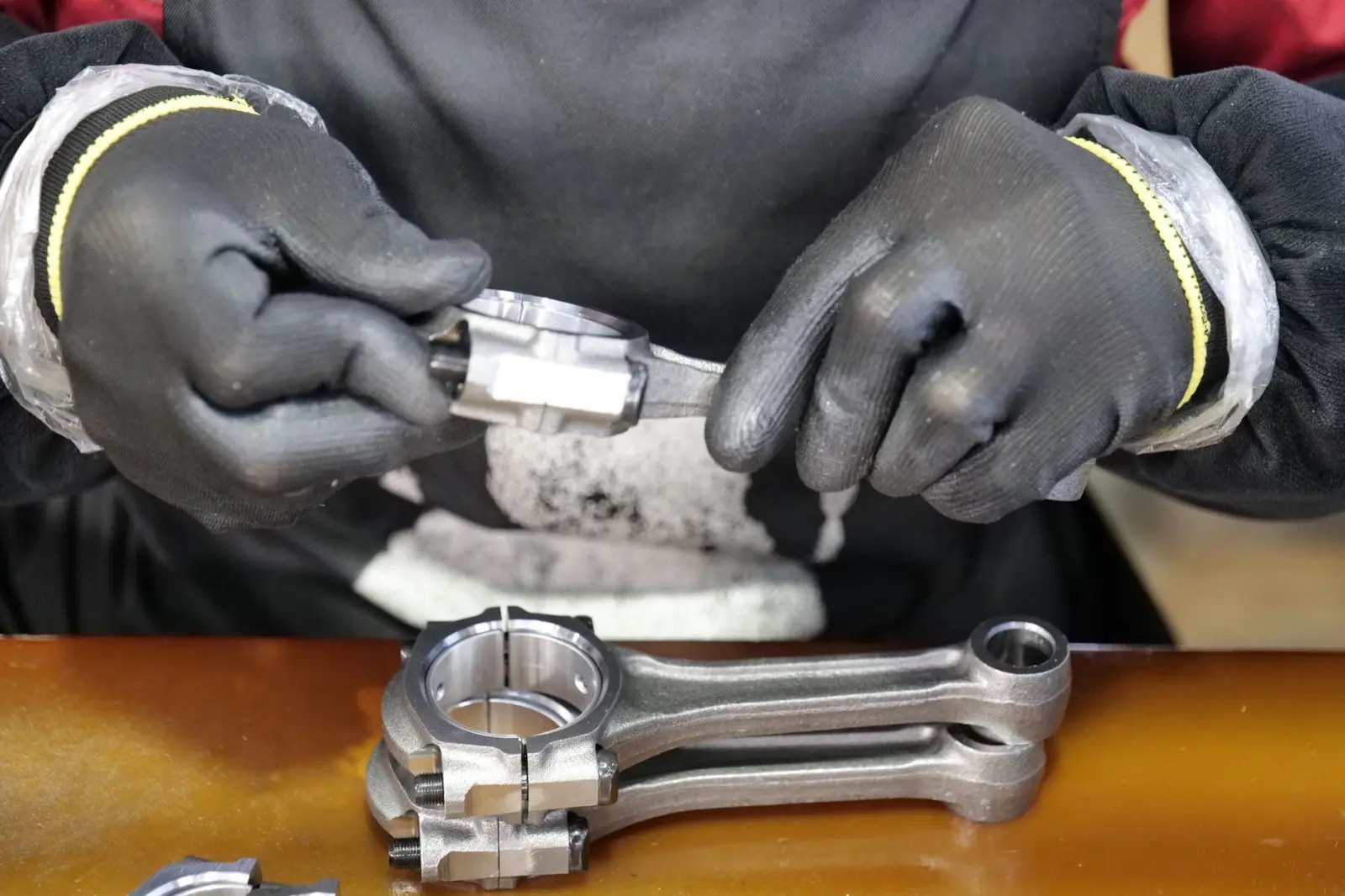
Specific red flags help buyers move from theory to action. A heat number on the MTR that does not match the receiving record is a traceability discrepancy that requires the material to be held for engineering or quality review, because acceptance requires the certificate heat number to agree with the receiving record and the physical material marking. A CMM report with no operator, no date, and no equipment ID cannot be verified and will not survive an audit; for aerospace and medical work under AS9102 or ISO 13485 every such field is mandatory, while commercial CNC work tolerates some missing fields, though the certification date and operator name should always be present. A certificate of conformance that says “meets specification” without naming the specification gives the buyer no usable information. Hard rejection triggers for a material test certificate include a heat number on the certificate that does not match the heat number on the packing list or physical piece marking. A certificate re-issued by a trading company with its own header obscuring the original mill identification is a red flag that should prompt buyers to request the original valid certificate from the supplier, rather than an automatic hard rejection trigger.
Share your print for a document-chain review
How To Verify Mill Test Reports And Material Certificates From Mexico
Most buyers skip the three-way cross-reference that actually protects them. The MTR has to match the heat number on the physical material. The material must match the drawing callout for grade, standard, and delivery condition, unless the drawing explicitly permits an equivalent substitution or the callout is ambiguous. The chemistry and mechanical properties recorded on the MTR must fall within the range or limits of the product specification that the drawing names for the material to be accepted for use. A material test certificate chemical composition table typically shows both the minimum required chemical analysis per the material specification and the values actually reported for the heat number, for easy review. If only one column is present, the document fails incoming inspection.
X-ray fluorescence (XRF) is a non-destructive method for confirming alloy identity on the physical part when the paperwork is thin or suspect. XRF composition analysis identifies roughly 95 percent of grade substitutions, with the remaining cases requiring laboratory chemistry analysis. Combining XRF with hardness testing can raise the catch rate further. A supplier who cannot produce the MTR on request signals a traceability risk before the order is placed.
Mill and material certificates belong to the mills and material suppliers, not to the machining company, which is why a shop-issued certificate is not a substitute. A machining shop that issues its own certificate claiming to certify the material’s chemistry does not provide the same assurance as a mill-issued MTR. A certificate issued by a trading company on its own letterhead, replacing the original mill’s header and signature, cannot satisfy European standard EN 10204 3.1, because the signatory is a reseller rather than the manufacturer’s authorized inspector.
Ask an engineer to review your MTR package
Certification Scope For ISO 9001, IATF 16949, And AS9100 Rev D
Paperwork only goes so far, and even a perfect MTR package means little if the supplier’s certification does not actually cover machining. That is where scope statements on quality certificates matter.
A supplier can hold ISO 9001:2015, IATF 16949, or AS9100 Rev D and still not have CNC machining inside the scope. The scope statement on the certificate defines what the registrar actually audited. A registered business scope limited to “sales of mechanical parts” or “trading of industrial products” indicates the company is registered as a trading company rather than a manufacturer and does not by itself prove control of machining operations, because manufacturing capability and staffing information for such companies is often inconsistent and does not clearly prove direct factory ownership. Request the full certificate PDF and read the scope statement, not just the logo.
Certificate verification should confirm that the scope of validation proves the specific claim being relied upon, matching the subject, identifier, dates, and scope to that claim. A certificate scoped to assembly or distribution does not cover machining. A certificate covering stamping of decorative trim does not qualify a supplier to produce a structural machined bracket.
For aerospace suppliers seeking to qualify with prime contractors, AS9100 Rev D certification is the baseline requirement, and AS9102 first-article inspection is required by AS9100 Rev D Clause 8.1.3. AS9100 certification is tightly controlled. Valid AS9100 certificates must be issued by a certification body accredited to the AS standards by an accreditation body recognized by the International Aerospace Quality Group (IAQG) Industry Controlled Other Party (ICOP), such as the ANSI National Accreditation Board (ANAB), and every certified organization must be listed in the IAQG Online Aerospace Supplier Information System (OASIS) database. Search the OASIS portal by the supplier’s exact legal entity name before placing any aerospace order. For automotive, IATF 16949:2016 is the quality management system standard, and it must be implemented as a supplement to ISO 9001:2015. The IATF Rules for Achieving and Maintaining IATF Recognition, Sixth Edition, took effect on 1 January 2025. For general industrial work in the United States, the minimum standard is Occupational Safety and Health Administration (OSHA) General Industry regulations under 29 CFR Part 1910.

AS9100 is currently at Revision D, published in 2016, so a supplier citing an older revision deserves follow-up. A supplier with an expired AS9100 certificate no longer holds a valid aerospace quality management system and cannot claim AS9100 compliance, because certification must be registered and current in the IAQG OASIS database to be recognized, and original equipment manufacturers (OEMs) and Tier 1 suppliers mandate it contractually. Parts shipped under an expired AS9100 certificate will generally be rejected during OEM incoming inspection or audit, because an expired certificate means the supplier no longer has a valid aerospace quality management system, although the specific rejection outcome depends on the customer’s flow-down requirements and purchase order quality clauses.
Request a supplier-scope review for your project
Subcontractor Traceability For Heat Treat, Plating, And Anodizing
Special processes such as heat treatment and plating are where traceability most often leaks, because work leaves the machining shop. In most CNC machining programs, particularly among the roughly 13,000 United States machine shops with fewer than 20 employees and under 2.5 million dollars in annual revenue, heat treatment, plating, and anodizing are outsourced to outside processors rather than performed in-house, and the supplier’s quality system has to extend to those approved subcontractors. If a supplier subcontracts a process such as heat treatment to a different company, the supplier retains responsibility for the subcontracted process under its quality management system. That responsibility only works if the lot number follows the part through the subcontractor and back.
Buyers can test this quickly. Ask the supplier to name who performs their heat treat, plating, and anodizing. Then ask how the lot number travels with the parts through that subcontractor’s facility and returns on the process certificate. Request the subcontractor’s process certificates and confirm they carry the same lot or heat number as the machining shop’s internal records. If the supplier cannot name the subcontractor and cannot show the certificate, the chain has a hole at exactly the point where material properties are most likely to change.
For aerospace programs, National Aerospace and Defense Contractors Accreditation Program (NADCAP) accreditation is required for special processes such as heat treatment, welding, non-destructive testing, and surface finishing when an aerospace customer’s purchase order or prime contractor quality clause mandates it; it is not required for every aerospace part or program. NADCAP sits alongside AS9100 for those specific processes. A supplier who cannot confirm whether a heat treat subcontractor holds NADCAP accreditation for aerospace work is not running an aerospace-grade program.

Review your special-process chain with an engineer
How USMCA And Metals Origin Rules Affect Traceability And Cost
USMCA and United States tariff rules turn traceability into a pricing and compliance issue, not only a quality topic. As of 2026-09-22, USMCA preferential duty treatment depends on North American content thresholds. Goods primarily made from Chinese inputs and merely assembled in Mexico generally do not qualify for USMCA because the non-originating Chinese materials must satisfy the applicable product-specific rule of origin, and simple assembly typically fails this test; whether such goods are also subject to Section 301 tariffs depends on a separate substantial transformation analysis, and Customs and Border Protection (CBP) rulings show that some Mexico-assembled goods using Chinese components still qualify for USMCA while others fail USMCA but avoid Section 301 because the Chinese inputs were substantially transformed in Mexico. A part machined in Mexico from Chinese steel may not qualify for USMCA preferential treatment unless it satisfies the applicable product-specific rule of origin such as tariff shift or regional value content; for automotive steel, USMCA requires the steel to be melted and poured in North America, and without material traceability the buyer cannot prove origin, cannot claim preference, and cannot model landed cost.
For steel and aluminum specifically, duty follows where the metal was produced. USMCA qualification and metals tariff exposure are related but separate issues that both require documentation and review, because Section 232 duties apply independently of USMCA preferential origin qualification. Section 232 is the national-security tariff authority that applies to steel and aluminum based on where the metal was produced. Section 301 applies based on where the part was made. Both can stack on the same part, in addition to the ordinary duty rate for its Harmonized Tariff Schedule (HTS) code.
For CNC machined parts to qualify under USMCA, the supplier must document the HS or HTS classification of the inputs and the finished part to at least the six-digit level and demonstrate that the applicable origin criterion is met, most commonly the required tariff shift under the product-specific rule in Annex 4-B, although a good may instead qualify under regional value content, wholly obtained status, or the assembled goods provision. Under USMCA Article 5.8 and 19 CFR 182.15, importers claiming preferential tariff treatment must retain for at least five years documentation including the certification of origin and records demonstrating that the good is originating, such as bills of materials with origin status of each component, HS classification workpapers, regional value content calculation worksheets, supplier certifications, production records, and shipment documentation. The USMCA certification of origin must contain nine specified data elements including the certifier’s identity, the HTS classification of the good, and the origin criterion met.
This environment makes material traceability a commercial requirement. Under the USMCA Uniform Regulations, a customs administration may consider a material used in production to be non-originating if the producer or supplier of that material does not allow access to information required to determine whether the material is originating, including by denial of access to its records, failure to respond to a verification questionnaire or letter, or refusal to consent to a verification visit within 30 days of notification. The tariff and trade environment as of 2026-09-22 remains subject to change, and buyers should confirm current rates and rules at the time of shipment.
Get help modeling landed cost and documentation
Supplier Vetting Questions And Traceability Red Flags
Knowing what to look for is one thing, and getting a supplier to show it is another. These questions help separate strong traceability programs from weak ones.
Can you show me the MTR for the heat number on this part? A strong answer produces the document immediately, with the heat number visible on both the MTR and the material tag or receiving log. A weak answer sounds like “we can get that later” or “the certificate is at the mill.”
What is your lot numbering scheme from receiving through shipment? A strong answer names the system, describes how the lot number is assigned at receiving, how it travels through each operation, and how it appears on the shipping document. A weak answer sounds like “our quality person handles that.”
Which subcontractors do you use for heat treat, plating, and anodizing, and how does the lot number follow the part? A strong answer names the subcontractors, describes the traveler or tag that accompanies the parts, and produces a sample process certificate showing the lot number. A weak answer cannot name the subcontractor.
Can you show me your ISO 9001, IATF 16949, or AS9100 certificate and read me the scope? A strong answer produces the full certificate PDF and reads the scope statement aloud. A weak answer shows a logo on a website or offers a certificate number without the document.
How do you handle a certificate that does not match the part? A strong answer describes a documented nonconformance process: the material is tagged, moved to quarantine, a nonconformance report is opened, root cause is investigated, and disposition is documented. A weak answer gives a vague reference to “talking to the supplier.”
What happens when a customer’s customer audits you? A strong answer describes prior audit experience, names the records produced, and offers to show the audit file. A weak answer says that it has not happened yet.
The pattern in weak answers is deferred accountability, unnamed systems, and a willingness to figure it out after the order. Strong answers name documents, name systems, name people, and show the record before the purchase order is signed.
Schedule a supplier-vetting discussion
Where Redstone Manufacturing Fits In Your Traceability Plan
Redstone Manufacturing positions itself as a CNC partner that treats traceability and trade compliance as part of the core service, not an add-on. Redstone runs CNC machining through its own facilities in Mexico, as well as in China, India, Taiwan, and Vietnam. If tariffs or conditions change, Redstone can move a program between those countries without the customer requalifying a supplier, which matters when the trade environment shifts between quote and production.
Redstone inspects every shipment in person at origin before it leaves, and no shipment departs without that check. Redstone retains mill test certificates from its supply base and issues RoHS declarations on form RS-QF-ROHS-C, covering Directive 2011/65/EU as amended by Delegated Directive (EU) 2015/863, and REACH Substances of Very High Concern (SVHC) declarations on form RS-QF-REACH-C, addressing Regulation (EC) No 1907/2006 Article 33 and the European Chemicals Agency (ECHA) Candidate List, both issued on request.
Redstone acts as importer of record on modified DDP terms, so tariffs, duties, customs, and freight roll into one landed unit price. The buyer avoids customs forms and customs broker conversations. Repair, replacement, or refund responsibility sits with a United States company under a United States contract. Payment terms are Net 30 or Net 60 from ship date, with nothing owed until samples are approved and in-spec production parts ship. Parts are manufactured at ISO 9001 certified facilities.
Start a CNC project with full traceability support
Frequently Asked Questions
How Do I Verify A Mill Test Report Against The Physical Part?
Verification starts with matching the heat number on the MTR to the heat number marked on the material and listed on the receiving log. The grade, standard, and delivery condition must match the drawing callout. Chemistry and mechanical properties must fall inside the specification the drawing names, with both the specification limit and the actual measured result visible in separate columns. XRF testing can confirm alloy identity on the physical part when paperwork is thin or suspect, and it catches most grade substitutions before machining.
What Is The Difference Between ISO 9001 And AS9100 Traceability Requirements?
ISO 9001:2015 Clause 8.5.2 requires organizations to use suitable means to identify outputs when necessary to ensure conformity, to identify the status of outputs with respect to monitoring and measurement requirements throughout production and service provision, and, when traceability is a requirement, to control the unique identification of outputs and retain the documented information necessary to enable traceability. AS9100 Rev D adds configuration management, key characteristics management, counterfeit parts prevention, special process control, and first-article inspection per AS9102. Aerospace buyers should treat AS9100 Rev D plus AS9102 as the baseline. Major aerospace OEMs do not accept ISO 9001 as a substitute for AS9100 for flight-critical hardware, although some OEMs accept ISO 9001, sometimes with supplemental customer-specific requirements, for non-flight-critical applications such as ground support equipment, test fixtures, and prototype or pre-production programs.
How Does Traceability Affect Landed Cost And Tariff Exposure?
For steel and aluminum, duty follows where the metal was produced, so the MTR becomes the key document that supports origin and tariff treatment. A part machined in Mexico from non-qualifying steel may miss USMCA preferential treatment and face Section 232 metals tariffs. Without material traceability, the buyer cannot prove origin, cannot claim preference, and cannot model landed cost. Section 232 tariffs on steel and aluminum apply independently of USMCA preferential origin qualification, so both origin and tariff exposure require documentation.
Talk with Redstone about your traceability requirements