
Key Takeaways
- Total Landed Cost (TLC) covers every expense from factory floor to usable inventory, including freight, duties, brokerage, inspection, carrying costs, and internal labor. It goes far beyond the quoted part price.
- Section 232 duties follow the origin of the metal, and Section 301 duties follow the country of manufacture. Both can apply to the same part at the same time.
- The United States-Mexico-Canada Agreement (USMCA) removes duties only for goods that meet North American content thresholds. Mexico’s IMMEX export program defers import taxes on exported goods but requires ongoing compliance systems.
- Headline savings figures usually ignore quality risk, prepayment exposure, tariff management, and the buyer’s own sourcing work. These items often add 30–50% to the true cost.
- Redstone Manufacturing takes on importing, tariff management, and quality oversight by acting as importer of record and using a modified Delivered Duty Paid (DDP) model, so buyers see a single landed price instead of a stack of hidden tasks.
Cost Savings Manufacturing In Mexico: What Total Landed Cost Actually Includes
Total landed cost is every dollar spent getting a part from a factory floor to usable inventory at your facility. It starts with the factory price and ends when the part sits on your shelf, ready to use. Every cost in between belongs in the number.
A full landed-cost analysis has to account for ten distinct cost categories. Most published savings figures for manufacturing in Mexico cover only the first one:
- Part price
- Tooling
- Freight
- Duties and tariffs
- Customs brokerage and Harmonized Tariff Schedule (HTS) classification
- Pre-shipment inspection
- Your own internal labor for supplier management and quality follow-up
- Rework and scrap
- Inventory carrying cost
- The cost of a bad batch
When a headline says manufacturing in Mexico saves 30% to 60%, that figure almost always reflects part price alone. A full landed-cost analysis adds all costs necessary to bring a product into sellable inventory. The gap between factory price and true landed cost is routinely 30% to 50% wider than buyers expect. The decision framework that follows uses the full number.
Get your part’s full landed cost modeled.
The Four Cost Buckets Behind Manufacturing in Mexico
Four cost categories drive the total landed cost of a Mexico program: labor, real estate, logistics, and taxes and duties. Each behaves differently and needs its own model.
Labor
Mexican industrial wages are lower than United States (US) wages, and the gap is real. Fully loaded 2026 manufacturing wages in Mexico range from roughly $5.56 per hour for an entry-level operator to $11.95 per hour for a computer numerical control (CNC) machinist, against fully fringed US manufacturing compensation of $31.59 to $32.27 per hour. That is a large gap on paper.
The gap narrows when you compare Mexico with China. China’s fully fringed manufacturing labor rates fall in the $6.50 to $7.87 per hour range. Mexico’s labor cost advantage over Chinese coastal plants is roughly 10% to 21%, not the 75% to 80% advantage it holds over the US. The two countries have largely converged on direct labor cost.
Lower wages do not automatically create proportionally lower unit cost. Labor content per part varies by product. A highly automated part with 10% labor content barely moves in price when the hourly rate drops. A hand-assembled product with 40% labor content moves a lot. A 13% minimum wage increase on a product with 20% labor content justifies roughly a 2% to 3% unit price move. The math is part-specific.
Wages in Mexico are also rising. Mexico’s constitutional reform reducing the standard workweek to 40 hours, published in the Official Gazette on March 3, 2026, phases down from 48 hours today to 40 by 2030 with no reduction to salaries. Per-hour labor cost will rise as the schedule advances. Companies modeling Mexican operations should plan for ongoing wage escalation.
Real Estate
Class A industrial lease rates in Mexico in 2026 range from $0.45 to $0.55 per square foot per month in the Bajío region (Querétaro, Guanajuato) to $0.79 to $0.80 in Tijuana, compared with a US national average of approximately $0.70 per square foot per month. Interior markets run 20% to 35% below US averages. Border cities are comparable to or slightly above US averages because nearshoring demand has pushed rents up sharply. Industrial lease rents across Mexico have surged approximately 50% in five years. The real estate advantage is strongest in the interior and largely gone at the border.
Logistics
Ocean freight is remarkably cheap relative to trucking, so proximity to Mexico saves less on freight dollars than many buyers expect. Illustrative freight costs run $4,000 to $8,000 per 40-foot container from China versus $2,000 to $3,500 per truckload from Mexico. That is a real difference, but freight alone rarely decides the program.
Transit time and its impact on inventory usually matter more. Transit from China runs 30 to 45 days, while Mexico runs 3 to 7 days. That difference forces a China program to carry 60 to 90 days of pipeline inventory, while a Mexico program carries 15 to 25 days. At a 20% to 25% annual inventory carrying cost rate, a product with $10 million in annual cost of goods sold incurs roughly $452,000 per year in carrying cost on a 75-day offshore pipeline versus $121,000 on a 20-day nearshore pipeline. That $331,000 difference does not appear in a factory price comparison. It shows up in working capital.
Taxes And Duties
Mexico’s IMMEX program is the mechanism that allows duty-free import of raw materials and components for goods that are then exported. IMMEX authorizes registered companies to temporarily import raw materials, components, machinery, and equipment without paying the General Import Tax or Value Added Tax (VAT) at the point of entry, provided the resulting goods are destined for export. The taxes are deferred and become payable if goods are sold domestically.
Qualifying for IMMEX is a compliance program the manufacturer has to run. IMMEX alone does not exempt companies from VAT. Since Mexico’s 2014 fiscal reform, IMMEX holders must pay the full 16% VAT at the point of import unless they obtain the separate IVA/IEPS Certification from Mexico’s tax authority, the Servicio de Administración Tributaria (SAT). Over 770 IMMEX programs were cancelled or suspended in 2025 for non-compliance. Running it correctly requires dedicated compliance infrastructure.
Is It Cheaper To Manufacture In Mexico Or China?
With the four cost buckets in view, the country comparison becomes a question of which bucket dominates for a given part. China typically still wins on part price and on the depth of its supply base for castings, injection molding, and sheet metal. China’s manufacturing density is difficult to replicate elsewhere. Injection molding, die-casting, CNC machining, sheet metal, and printed circuit board (PCB) assembly all sit within the same industrial ecosystem. For complex, multi-component products that draw on that ecosystem, China’s supply base advantage is real.
Mexico wins on transit time, freight predictability, and reduced tariff exposure for goods that qualify under USMCA. Post-Section 301 duties on Chinese goods run 7.5% to 25% and above, while USMCA-qualifying goods produced in Mexico face 0% duty into the US.1 That duty differential is often the single largest line item in a Mexico-versus-China landed cost comparison. It is also the variable most likely to widen over time.
USMCA treatment depends on North American content thresholds, not on where final assembly happens. A good qualifies for USMCA preference if it meets the product-specific rule of origin for its HTS classification, which for many goods requires demonstrating that a defined percentage of value originated in North America. A mostly Chinese product finished in Mexico does not automatically qualify. Moving final assembly to Mexico without restructuring the supply chain does not capture the tariff benefit.
The right answer depends on the part, the volume, and the tariff position. Redstone produces parts across facilities in China, India, Taiwan, Vietnam, and Mexico. The company selects the production route based on the landed cost for the specific part.
How Tariffs Change the Math
Tariff rates and structures change. This section reflects the framework as of September 2026 and should be verified against current proclamations before making sourcing decisions.
Duty Follows The Metal
For steel and aluminum, duty follows where the metal was produced. This is the single most consequential point many buyers miss. A steel bracket made in Mexico from Chinese steel does not automatically escape Section 232 steel duties. The origin of the metal determines the duty. The country of manufacture does not.
This rule also opens a legitimate structure. A buyer can purchase United States-origin material, ship it to Mexico for casting or fabrication, and bring the finished part back. Covered products manufactured abroad using qualifying US-origin metal inputs may qualify for a reduced Section 232 rate. The structure requires documentation and deliberate supply chain design, but it is a real option for the right program.
Section 232 And Section 301 Stack
Section 232 and Section 301 are two different statutes with two different triggers. Section 232 is aimed at a material on national-security grounds, primarily steel and aluminum, and its derivative product lists are what pull ordinary custom parts into scope.
A steel bracket made in China can catch a Section 232 duty because it is steel and a Section 301 duty because it is Chinese, both sitting on top of the ordinary duty rate for its HTS code. Buyers who hear both numbers often assume the higher one replaced the lower one. That assumption is wrong. Buyers need to model both, separately, at the HTS line level.
The Basis Shifted To Full Product Value
Effective April 6, 2026, Section 232 duties apply to the full customs value of the imported product, regardless of metal content. The prior approach calculated duty on the embedded metal content only. The shift to full product value has caught buyers out mid-program.
A product assembled in Mexico containing any covered metal can now face duty on its entire customs value, not just the embedded metal portion. This change may materially increase duty liability for high-value finished goods that incorporate relatively modest amounts of steel, aluminum, or copper.
USMCA Depends On Content Thresholds
USMCA Regional Value Content can be calculated using the Transaction Value method or the Net Cost method, and the specific threshold depends on the product’s HTS classification. For automotive goods, the threshold is 75%. For other manufactured goods, the applicable threshold is set by the product-specific rule of origin in USMCA Annex 4-B. Claiming USMCA preference without documentation is one of the five most expensive USMCA mistakes importers make, because United States Customs and Border Protection (CBP) can deny the claim retroactively and assess penalties. The importer of record is responsible for having the certification on file at the time of the import claim.
Get your part’s tariff exposure modeled.
What The Savings Number Does Not Include
The headline savings number for manufacturing in Mexico is calculated on part price. It leaves out the buyer’s own labor. Someone has to run supplier selection, manage quality, review design for manufacturability (DFM), control drawings, coordinate pre-shipment inspection and freight, and handle customs brokerage and HTS classification. For a buyer with no in-house sourcing function, that work does not get done for free. It either falls on someone who is not equipped for it, or it does not get done at all.
The headline number also leaves out quality risk. Quality fade is the gradual decline in part quality over successive production runs when no one is watching. It is the largest recurring failure mode in unmonitored overseas work. Parts are right at sample stage and degrade over time. The cost of a bad batch, including rework, line stoppages, and customer impact, never appears in a factory price comparison.
Prepayment exposure is another missing item. Overseas factories typically demand payment before anything is verified. The money leaves before the parts arrive and before anyone has confirmed the parts are correct. For a buyer with no recourse against a distant supplier, that exposure is a real financial risk.
Tariff management is the last major item most buyers underestimate. Tariffs now risk 20% to 30% of earnings before interest and taxes (EBIT) margins across manufacturing. One buyer described a single month’s tariff bill on imported parts at close to $75,000. That money has to be tracked, modeled, and managed by someone. Many buyers in this market describe themselves in plain terms as not being importers. They want the work removed, not a small discount on the part price.
When Mexico Is the Wrong Answer
Mexico does not fit every part or every program. Some situations deserve a hard look before committing to a Mexico strategy.
Highly automated, low-labor-content products are a weak fit. If labor is 8% of unit cost, a 70% reduction in labor rate moves the unit price by less than 6%. The math rarely justifies the transition cost and program management overhead.
Bulky or low-value-density parts where freight and handling dominate the cost structure are also a weak fit. The logistics advantage of Mexico over China is real, but it shows up in transit time and inventory carrying cost, not in freight dollars per pound. A part that is expensive to move relative to its value does not benefit proportionally from proximity.
Products needing specialized inputs that are not available in the region present a supply chain problem that geography alone cannot solve. If the bill of materials depends on a supplier ecosystem that exists only in one country, moving final assembly elsewhere does not change that dependency.
Buyers who already run a competent overseas supply chain and hold a hard target number are also a poor fit for a managed program. If a buyer has people who can go inspect parts in country, they should do it themselves. Redstone is built for buyers who lack that capability and want a managed solution.
These are qualification criteria. The practical question is whether the part and program fit the conditions where Mexico delivers real total landed cost savings.
How To Capture The Savings Without Becoming An Importer
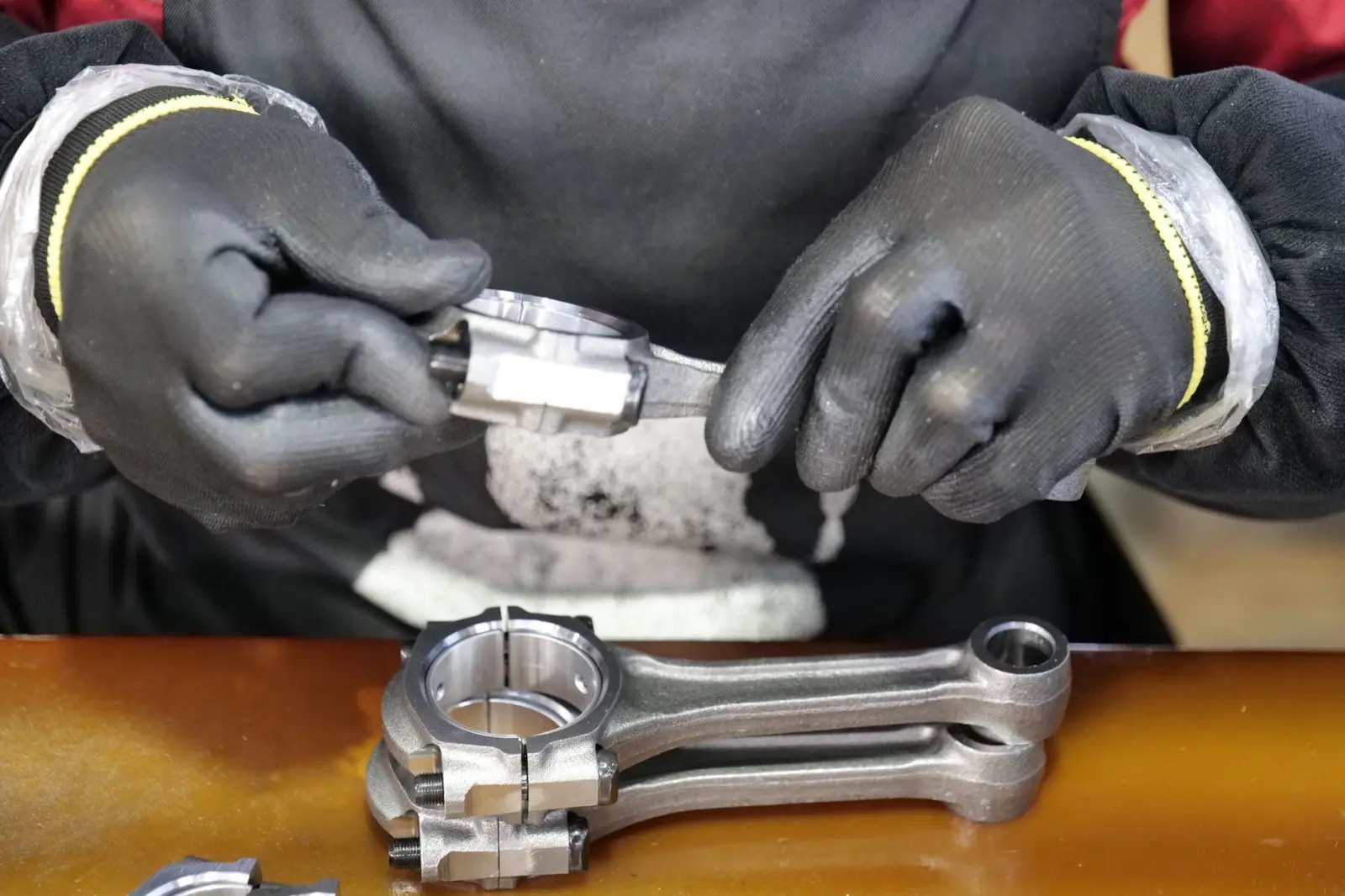
Redstone Manufacturing gets custom metal and plastic parts made for US and Canadian companies whose core business is not metal manufacturing and who have no in-house sourcing or quality function. Four core processes run through the business: CNC machining, sheet metal fabrication, castings, and injection molding, produced at Redstone’s facilities in China, India, Taiwan, Vietnam, and Mexico.

Two commercial terms explain how Redstone removes work from buyers.
Importer of record is the party legally responsible for the customs entry. That party classifies the goods, files the paperwork, and pays the duties and tariffs. That responsibility normally falls on the buyer. Redstone takes it. The customer never files anything, never talks to a customs broker, and never handles a tariff question. When a rate changes between quote and shipment, Redstone is the party tracking it.
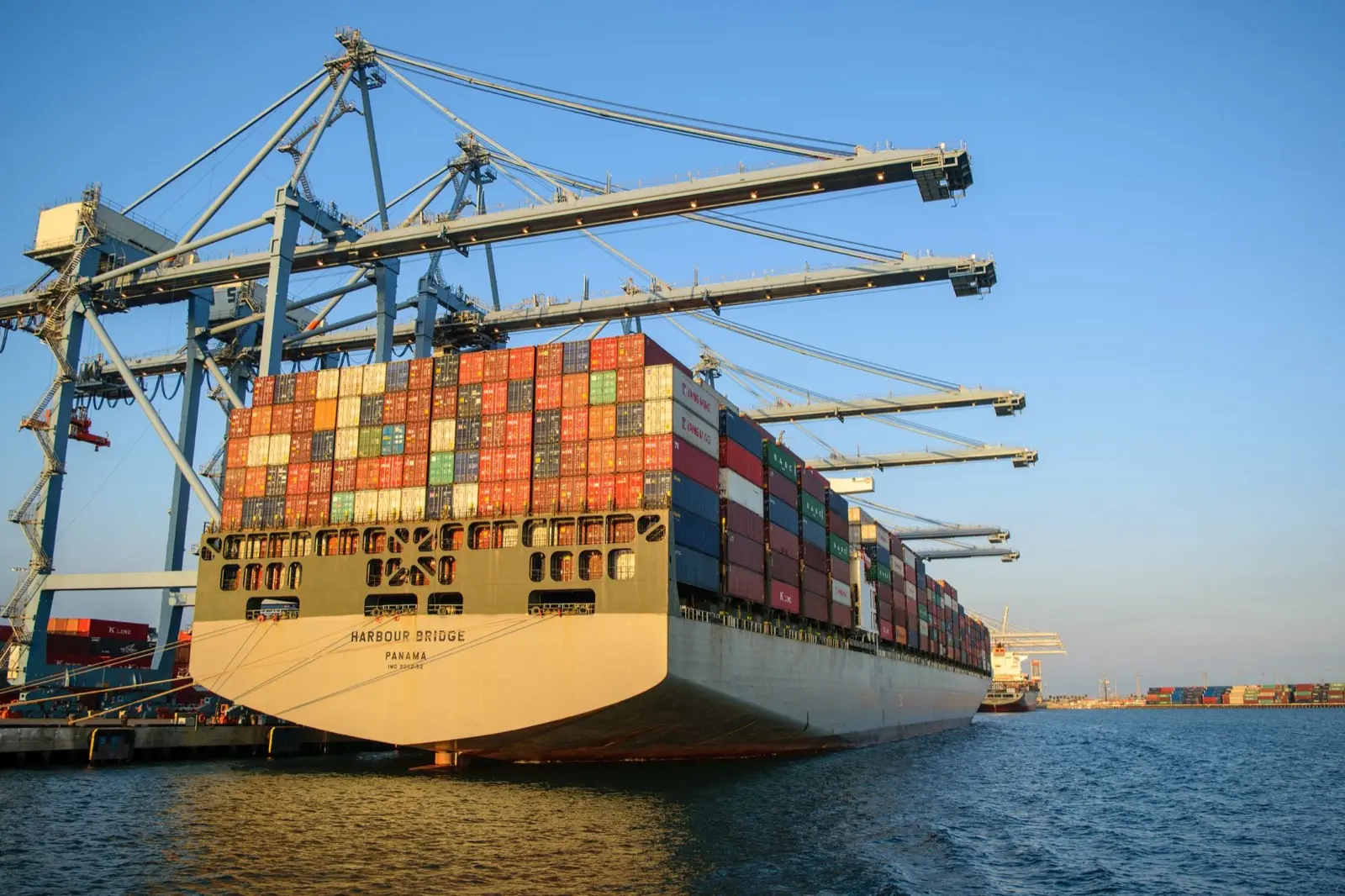
Modified Delivered Duty Paid (DDP) means Redstone moves the goods to the buyer’s door with duties paid. Freight is quoted separately, prepaid, and added to the invoice rather than buried inside the part price. The customer gets one landed price and never touches a customs form.
Country flexibility is a structural advantage in the current tariff environment. A program can move between Redstone’s facilities in China, India, Taiwan, Vietnam, and Mexico if tariffs or conditions change. The customer does not have to find and qualify a new supplier each time the trade environment shifts.
United States contractual accountability means repair, replacement, or refund responsibility sits with a US company under a US contract. Nothing is owed until samples are approved and in-spec production parts ship, then payment terms such as Net 30 or Net 60 run from ship date. The customer commits documentation to start a program, not money.
Redstone also runs DFM review in both directions. The team flags parts that will fail in production and parts that pay for performance nobody needs. Every shipment is inspected in person at origin by Redstone staff before it leaves. HTS classification is handled by end use to minimize duty exposure, and tariff mechanics, including the metal-origin rule, are applied to the specific part rather than assumed from a country average.
Frequently Asked Questions
What Does Total Landed Cost Include?
Total landed cost is every dollar spent getting a part from the factory floor to usable inventory at your facility. It includes the factory price, tooling, freight, duties and tariffs, customs brokerage and HTS classification, pre-shipment inspection, your own internal labor for supplier management and quality follow-up, rework and scrap, inventory carrying cost, and the cost of a bad batch. As noted earlier, these items often add 30% to 50% or more to the cost that appears on the factory invoice.
Is Manufacturing in Mexico Cheaper Than China?
The cost comparison depends on the part, the volume, and the tariff position. China typically wins on factory price and on the depth of its supply base for castings, injection molding, and sheet metal. Mexico typically wins on transit time, freight predictability, and tariff exposure for goods that qualify under USMCA. The duty gap between Section 301 tariffs on Chinese goods and the 0% duty on USMCA-qualifying Mexican goods is often the largest single line item in a landed cost comparison.
For parts with meaningful tariff exposure, significant inventory carrying cost, or high demand variability, Mexico frequently delivers a lower total landed cost even when the factory price is higher. For highly stable, high-volume commodity items with low tariff exposure, China’s unit economics often still win.
How Do Tariffs Affect the Cost of Manufacturing in Mexico?
Tariffs affect Mexico manufacturing costs in two main ways. First, goods made in Mexico that qualify under USMCA can enter the US at 0% duty, which is a significant advantage over Chinese-origin goods subject to Section 301 tariffs.1 Second, goods made in Mexico from non-North American steel or aluminum may still face Section 232 duties, because Section 232 duty follows where the metal was produced.
As of April 6, 2026, Section 232 duties apply to the full customs value of covered products, not just the embedded metal content. That change has increased duty liability for many finished goods. Section 232 and Section 301 are separate statutes that can both apply to the same part at the same time. Buyers need to model both at the HTS line level for their specific part.
What Does The IMMEX Program Do?
IMMEX (Industria Manufacturera, Maquiladora y de Servicios de Exportación) is Mexico’s export manufacturing program. It allows registered companies to temporarily import raw materials, components, machinery, and equipment into Mexico without paying the General Import Tax or VAT at the point of entry, provided the resulting goods are destined for export. The taxes are deferred and become payable if goods are sold domestically.
IMMEX alone does not exempt companies from VAT. Since Mexico’s 2014 fiscal reform, IMMEX holders must also obtain a separate IVA/IEPS Certification from Mexico’s tax authority to avoid paying the 16% VAT at import. Running IMMEX correctly requires dedicated compliance infrastructure, including automated inventory tracking systems that report to customs authorities within 48 hours. Over 770 IMMEX programs were cancelled or suspended in 2025 for non-compliance.
Does USMCA Eliminate Duties on Goods Made in Mexico?
USMCA eliminates duties on qualifying goods, but qualification depends on meeting product-specific rules of origin, not simply on where final assembly happened. A good qualifies for USMCA preference if it meets the applicable Regional Value Content threshold and any other product-specific requirements for its HTS classification. For automotive goods, the threshold is 75%. For other manufactured goods, the threshold is set by the product-specific rule in USMCA Annex 4-B.
A mostly Chinese product assembled in Mexico does not automatically qualify. The importer of record is responsible for having a USMCA Certification of Origin on file at the time of the import claim. Claiming USMCA preference without documentation can result in retroactive denial and penalties from CBP.
What Does the Savings Number Leave Out?
The headline savings number for manufacturing in Mexico is almost always calculated on factory price only. It leaves out the buyer’s own time running supplier selection, quality management, DFM review, drawing control, pre-shipment inspection, freight coordination, customs brokerage, and HTS classification. It leaves out quality risk and quality fade over successive production runs. It leaves out prepayment exposure, since overseas factories typically demand payment before anything is verified. It leaves out rework and the cost of a bad batch. It also leaves out tariff management, which can run to tens of thousands of dollars in a single month for buyers with meaningful import volumes.
When Is Mexico the Wrong Answer?
Mexico is a weak fit for highly automated, low-labor-content products where labor is a small share of unit cost, because a reduction in the hourly rate barely moves the unit price. It is also a weak fit for bulky or low-value-density parts where freight and handling dominate the cost structure, for products needing specialized inputs that are not available in the region, and for buyers who already run a competent overseas supply chain and hold a hard target number. These are qualification criteria. The practical question is whether the part and program fit the conditions where Mexico delivers real total landed cost savings.
How Do I Get a Landed-Cost Quote for My Part?
Sending a drawing or model is the fastest way to get a landed-cost quote. Redstone reviews the part, selects a production route across its facilities in China, India, Taiwan, Vietnam, or Mexico, and models tariffs, freight, and quality controls for that specific configuration. The result is a single landed price that already includes duties, brokerage, and inspection.
Share your drawing and get a landed-cost estimate.
1 Tariff rates change often. Always check the US Customs and Border protection website for the latest information.