Key Takeaways
- Low-volume CNC (computer numerical control) machining in China typically covers 10–500 pieces and skips hard tooling, so it often beats both one-off prototyping and full mass production for first-time importers.
- Buyers need to compare total landed cost, including freight, customs, tariffs, and inspection, because direct factory quotes usually shift these responsibilities to the buyer.
- Section 232 and Section 301 tariffs stack on top of ordinary duties. Section 232 follows where the metal was produced, not where the part was machined, so accurate Harmonized Tariff Schedule (HTS) classification matters.
- Redstone Manufacturing inspects parts in person before every shipment, acts as importer of record on modified Delivered Duty Paid (DDP) terms, and carries repair, replacement, or refund responsibility under a United States (US) contract.
How This Guide Helps You Choose a Sourcing Model
This guide explains the main sourcing models for first-time importers, what to send for a quote, typical lead times, seasonal shutdowns, payment terms, tariff mechanics, and how quality is checked before parts leave China. Each section builds toward one decision: who carries the work and risk that come with a low-volume China order.
The decision framework is simple, but most buyers apply it wrong. They compare part prices instead of comparing five variables: cost, quality control, lead time, operational burden, and recourse when something goes wrong. A lower part price that transfers customs liability, prepayment risk, inspection responsibility, and tariff exposure to the buyer is a different product, not a better deal.
The key question is who owns the bundle of work and risk attached to the order. That answer tells you whether you are buying a part price or a landed part.
Get a quote from an engineer who can review your drawing.
What Low Volume CNC Machining In China Actually Involves
Three realistic sourcing models exist for this situation, and each one allocates work differently.
A direct overseas facility sells parts and nothing else. Supplier selection, quality management, design for manufacturability (DFM) review, drawing control, pre-shipment inspection, freight, customs brokerage, HTS classification, and tariff exposure all transfer to the buyer. That transfer is what makes the model risky. Payment is typically demanded in advance, so the money leaves before anything is verified. Once an international payment clears into a supplier’s account, the buyer shifts from commercial partner to unsecured creditor pending delivery and loses leverage over quality, production schedules, and delivery timelines. When something goes wrong, practical recourse against a distant supplier is rare, and international litigation or arbitration is usually complex, expensive, and slow compared with the amount at stake.
Instant-quote platforms work well for no-touch prototype work when the buyer knows exactly what they want. There is no account manager, no DFM conversation, and nobody accountable when a part is wrong. A buyer who is out of their depth needs someone to take the work, not a faster way to place an order.
Redstone Manufacturing is the structural answer for that buyer: it combines overseas manufacturing cost with a US company that owns the outcome. Redstone acts as importer of record on modified DDP terms, quotes one landed price, inspects in person at origin before every shipment, and carries repair, replacement, or refund responsibility under a US contract.
Two terms carry most of the commercial weight. The importer of record is the party legally responsible for the customs entry: classifying the goods under the HTS, filing paperwork with US Customs and Border Protection (CBP), and paying duties and tariffs. Under 19 U.S.C. 1484, that statutory responsibility cannot be overridden by a sales contract, and CBP can pursue the importer of record for entry errors and penalties even if a contract says someone else will pay. That responsibility normally falls on the buyer, and Redstone takes it instead.
Modified DDP means the seller moves goods to the buyer’s door with duties paid. Freight is quoted separately, prepaid, and added to the invoice rather than buried inside the part price. Once you know which sourcing model you are choosing, the next step is preparing a quote request that gets an accurate price.
What To Send A China CNC Shop For A Quote
Most suppliers will not quote a part with no drawings at all. Sending complete information upfront avoids assumption-based pricing that creates wide quote spreads between shops. The five items below are the minimum a shop needs to quote accurately; missing any one usually leads to padded pricing to cover the unknown.
- STEP file or 3D model
- 2D drawing with tolerances and critical dimensions called out
- Material specification and required surface finish
- Quantity, and whether this is a one-time order or a recurring need
- Any inspection requirements, such as first article inspection (FAI) or material certifications
PDF, STEP, IGES, DXF, and DWG are all accepted. A physical sample or 3D scan works when no digital file exists.
If drawings are missing or untrusted, Redstone can reverse engineer from a physical sample or scan into a 3D model, 2D drawings, material analysis, tolerance and finish definition, and inspection criteria. The fee is commonly waived in exchange for a one-year blanket purchase order (PO), which is a volume statement rather than a payment obligation. Most suppliers avoid this work because the effort is high and they cannot judge whether the customer will actually order.
How Long Low Volume CNC Machining In China Takes
CNC machined parts typically run 4 to 6 weeks for production. First-time parts take roughly double, because samples are produced and shipped for approval before the production lot starts. That sample stage is a feature that establishes what “correct” means in physical form before volume is committed.
Chinese New Year pauses production in China roughly 2 to 3 weeks, from late January to mid-February. Chinese New Year falls on February 6 in 2027. Orders that must ship before it need to start roughly 5 to 6 weeks ahead of the shutdown. Missing that window is the most common and most preventable cause of a first-quarter delivery delay.
Ocean freight from China to North America adds roughly 20 to 40 days depending on destination port and whether the shipment moves as a full container or consolidated cargo. Express air freight typically takes 3 to 5 working days door to door. The right shipping method depends on urgency and unit economics rather than a blanket preference for speed.
Request timing and shipping options for your specific part.
How Payment And Recourse Work
The buyer’s real fear is paying in advance for parts that may never arrive, or may arrive wrong. That fear is well-founded: once funds clear the seller’s account, the importer loses control over production timelines, quality assurance, and shipping schedules. Recovering prepaid funds through international litigation is slow, expensive, and often impractical.
With Redstone, nothing is owed until samples are approved and in-spec production parts ship, then payment terms run Net 30 or Net 60 from ship date. Repair, replacement, or refund responsibility sits with a US company under a US contract, so the buyer never has to chase a supplier overseas.
The mechanism that defines what “correct” means before volume is committed is the golden sample. This can be an approved physical reference part, or documented surface finish and critical tolerances, established before the production lot starts. Once the golden sample is approved, production begins against that standard. Deviation from it is treated as a nonconformance.
Payment and recourse are only half of the landed-cost picture. The other half is what happens when the part crosses the border.
Tariffs And Landed Cost For Low Volume CNC Parts From China
As of 2026-09-16. Rates change. The mechanics described here do not.
Many buyers assume the part price equals landed cost. For CNC machined metal parts from China, tariffs can add substantially to the cost of a part, and the layers stack rather than replace each other.
The first mechanic: for steel and aluminum, duty follows where the metal was produced, not where the part was machined. The country of melt and pour controls the Section 232 steel rate, not the country where the finished part was machined. So a CNC machined part made in China from steel melted and poured in Taiwan carries the Taiwan melt-and-pour origin for Section 232 purposes. This point is both easy to miss and highly consequential. It also opens a legitimate structure: buy US material, ship it out for casting, and bring the finished part back. Steel melted and poured in the United States is exempt from Section 232 steel duties, but the importer must report the ISO country code and support the claim with a mill certificate.
The second mechanic: Section 232 and Section 301 stack. They are two different statutes with two different triggers. Section 301 is aimed at a country and applies because of where the part was made. It is implemented through Chapter 99 Subchapter III headings in the HTS. Section 232, by contrast, is aimed at a material on national-security grounds, primarily steel and aluminum, and its derivative product lists are what pull ordinary custom parts into scope. So a steel bracket made in China can stack three separate duties: a Section 232 duty because it is steel, a Section 301 duty because it is Chinese, and the ordinary most-favored-nation (MFN) duty rate for its HTS code. Buyers often hear both numbers, cannot tell which applies, and assume one replaced the other.
The third mechanic: effective April 6, 2026, the Section 232 additional ad valorem duty applies to the full customs value of the imported product, regardless of metal content. The basis for calculation shifted from metal content to full product value. Buyers who modeled tariff exposure under the prior method have been caught mid-program by this change.
The fourth mechanic: the United States-Mexico-Canada Agreement (USMCA) treatment depends on North American content thresholds, not on where final assembly happens. No US preference program, including USMCA, waives Section 232. A USMCA-qualifying steel article from Mexico still pays the Section 232 rate if the steel was melted and poured outside the United States. A mostly-Chinese product finished in Mexico does not automatically qualify for USMCA treatment.
Redstone removes much of this exposure by handling HTS classification by end use, including duties at rates in effect as of the quote date, adjusting at shipment if they change, and quoting one landed unit price. The customer never files anything or talks to a broker.
Quality Control Before A China Shipment Leaves
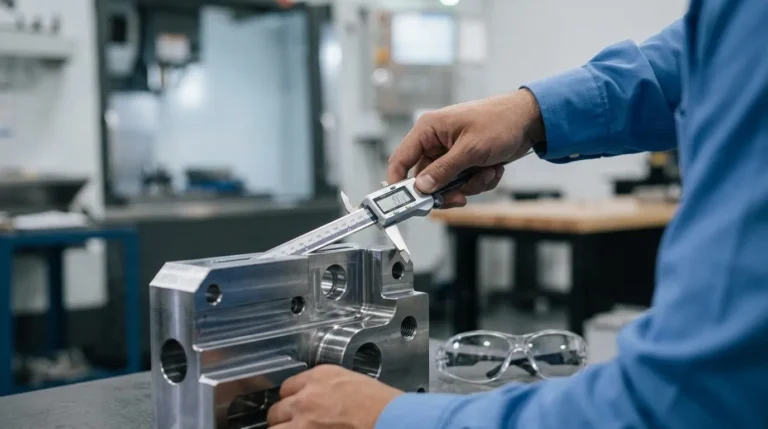
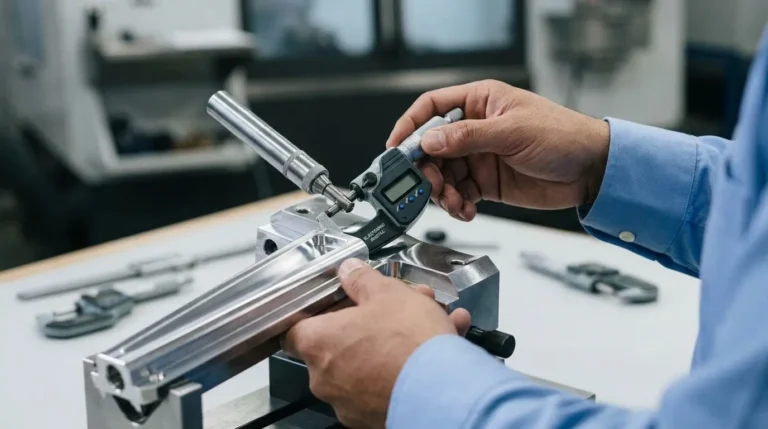
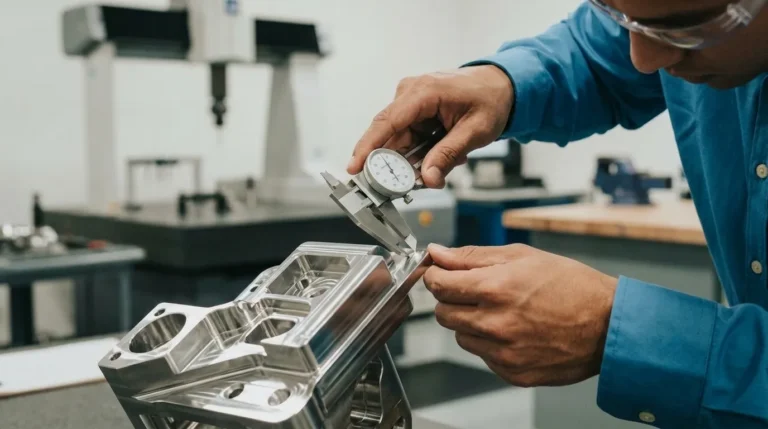
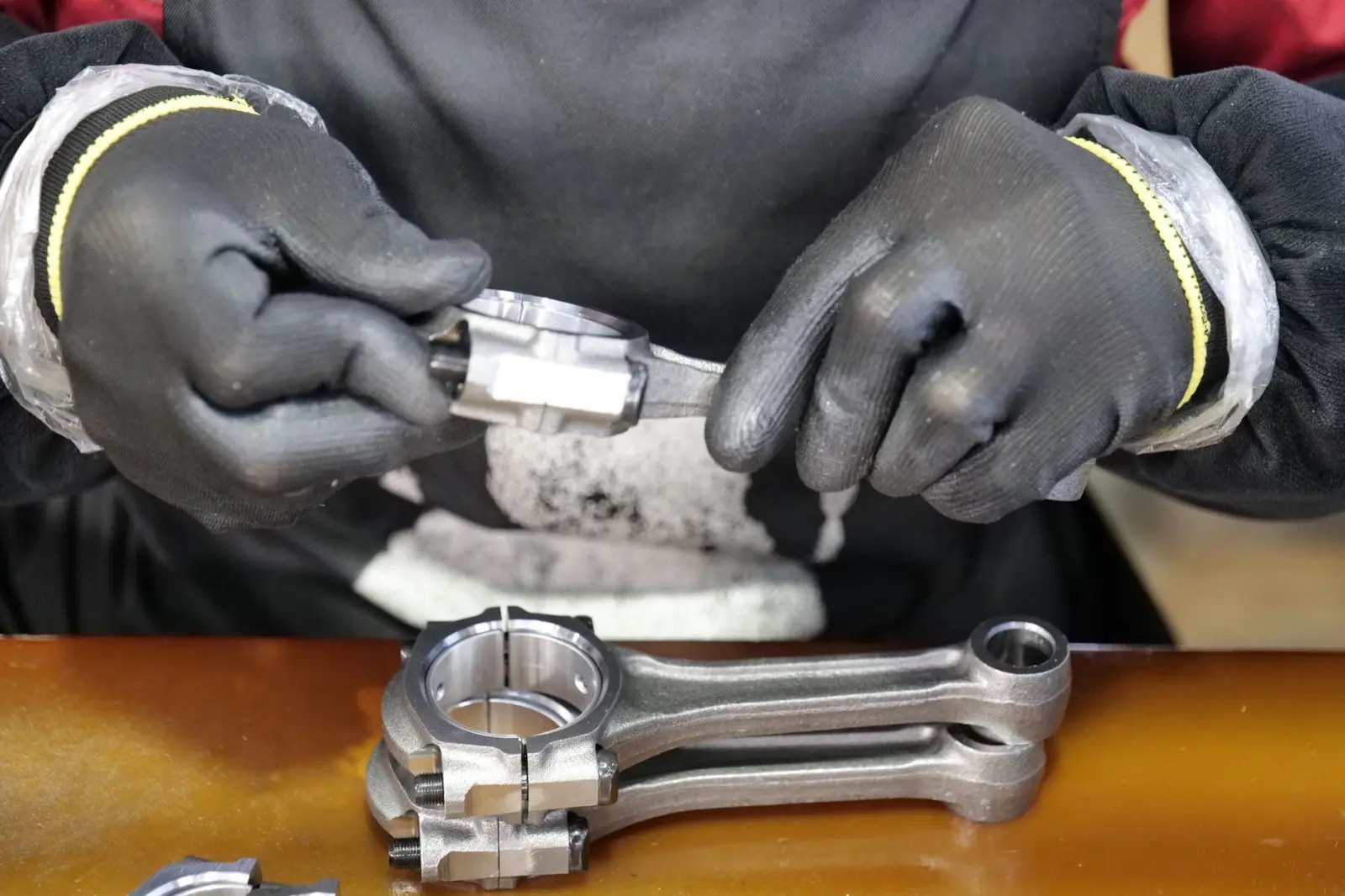
Redstone staff inspect parts in person, on the ground, before every shipment, and no shipment leaves without that inspection. Because full-time engineering staff sit in our facility in China, they can translate quality specifications into inspection templates with every callout ballooned (each measured dimension numbered to correspond to inspection results) and run milestone inspections during production rather than only at the end.
The largest risk in unmonitored overseas work is quality fade: the gradual decline in quality over successive production runs. Parts are right at sample stage and degrade over time because nobody is watching. For original equipment manufacturer (OEM) buyers, the cost of catching a defect after it enters production is 5 to 25 times higher than catching it at incoming inspection. Embedded staff catch drift early, before it becomes a bad batch.
Mill test certificates, which are the mill’s own documents certifying the chemical and mechanical properties of the metal supplied, are collected and retained from the supply base as material traceability documentation. Restriction of Hazardous Substances (RoHS, Directive 2011/65/EU as amended by Delegated Directive (EU) 2015/863) and Registration, Evaluation, Authorisation and Restriction of Chemicals (REACH, Regulation (EC) No 1907/2006 Article 33) declarations are issued on request. Parts are manufactured at ISO 9001 certified facilities.
China Vs. Mexico And Direct Factory Vs. Managed Import
Both comparisons involve trade-offs. The right answer depends on the part, the volume, the material, and what the buyer needs to land at their dock, and both comparisons tie back to who carries risk and work.
On the China vs. Mexico question, the variables that actually drive landed cost deserve attention. Ocean freight is cheap relative to trucking, so proximity saves less than most buyers expect. Shipping a 40-foot container equivalent costs roughly $350 to $2,800 by truck from Mexico, versus $7,000 to $8,400 by ocean from China. But transit adds 1 to 4 days from Mexico versus 3 to 5 weeks from China. Labor rates differ, yet labor accounts for only 10 to 20% of total cost for precision machined parts, so hourly labor savings should not drive the decision. Material availability and subsidy differences matter. USMCA duty treatment depends on content thresholds, not country of shipment. For steel and aluminum, duty still follows where the metal was made, not where the part was machined, regardless of which country ships the part.
On the direct factory vs. managed import question, the factory will quote a lower part price because it is only selling parts. Everything else transfers to the buyer, usually with payment demanded in advance and no recourse when something fails. The direct factory vs. managed import comparison comes down to the same risk transfer described earlier: the factory sells parts, and inspection, freight, customs, tariff exposure, and recourse shift to the buyer. Redstone’s answer is a different set of terms: nothing is owed until in-spec parts ship, a US company carries repair, replacement, and refund responsibility, and the customer never touches customs.
Redstone can move a program between China, India, Taiwan, Vietnam, and Mexico when tariffs or conditions change, without the customer requalifying a supplier. That flexibility matters when the trade environment shifts mid-program.
Common Mistakes And Misunderstandings
First-time buyers tend to make the same errors, and each one has a straightforward explanation.
- Assuming the part price is the landed cost. Freight, customs brokerage, HTS classification, duties, and tariffs are all separate. A CNC machined aluminum part can carry additional freight and duty costs by the time it reaches a US dock that nearly double the true cost.
- Assuming a lower factory quote is a like-for-like comparison. A direct factory quote typically excludes inspection, freight, customs, and tariff management. Those costs land somewhere. If the buyer does not see them in the quote, they will see them on the invoice.
- Assuming the higher of two tariff numbers replaced the lower one. Section 232 and Section 301 stack, and both apply when both triggers are met.
- Assuming a mostly-Chinese product finished in Mexico qualifies for USMCA. USMCA qualification depends on North American content thresholds, not on where final assembly happens.
- Assuming a supplier who is slow to respond before the order will be better after the PO. Communication before the order is the best available signal for communication after it. A supplier who is slow to respond before the purchase order commits the buyer is sending a clear signal.
- Assuming a part with no drawings cannot be quoted. Redstone can reverse engineer from physical samples or scans. Most suppliers will not, but the capability exists.
One more question comes up often enough to address directly: how to tell whether a part requires 5-axis machining.
How Do I Know If My Part Is A 5-Axis Part?
Most non-machinists cannot reliably tell whether a part requires 5-axis machining. The term refers to a CNC machine whose cutting tool can reach the part from five directions in a single setup, which allows complex geometry without repeatedly unclamping and re-fixturing the part. Some parts that can be made on a 5-axis machine can also be produced on a 3-axis or 4-axis machine, but it takes longer and often costs more.
The practical answer is to send the drawing. Redstone will review the part and explain whether there is a cost saving in producing it as a 5-axis part. Nobody should hesitate to submit a drawing for review.
Send your drawing and we’ll tell you if 5-axis saves you money.
Frequently Asked Questions
How Many Parts Count As Low Volume?
There is no hard industry standard. Most shops define low volume as 10 to 500 pieces, with 10 to 250 pieces as the core sweet spot. The practical definition is the range where no hard tooling is required, so the economics differ from both one-off prototyping and mass production. CNC machining does not require dedicated molds or dies, which means the minimum order quantity is set by economics rather than tooling amortization. Redstone works with buyers in the 10 to 500 piece range regularly.
What Should I Send A China CNC Shop For A Quote?
The full list appears in the section above. The short version is: send a STEP file or 3D model, a 2D drawing with tolerances, material and surface finish specifications, and a quantity. If you have no drawings, send a physical sample instead. Redstone can reverse engineer from it.
How Long Does Low Volume CNC Machining In China Take?
The lead times in the section above apply here: 4 to 6 weeks for production, roughly double for first-time parts because of sampling, plus 20 to 40 days by ocean or 3 to 5 days by express air. The practical takeaway is to start 5 to 6 weeks before Chinese New Year if you need to ship before the shutdown.
Do You Pay A China CNC Factory Up Front?
Yes, direct overseas facilities typically demand prepayment, which creates the risk described in the payment section above. Redstone’s terms are different: nothing is owed until samples are approved and in-spec production parts ship, then Net 30 or Net 60 from ship date, with a US company carrying repair, replacement, and refund responsibility.
What Tariffs Apply To CNC Machined Parts From China?
The answer depends on the HTS classification of the finished part, the material, and where that material was produced. At minimum, a China-origin machined part pays the MFN base duty rate for its HTS code. If the part falls under a Section 301 list, an additional duty applies on top of the base rate. If the part is made from steel or aluminum, Section 232 may also apply, and Section 232 follows where the metal was produced, not where the part was machined. The April 6, 2026 change described above applies here: Section 232 is calculated on full customs value, not metal content. These layers stack. Redstone handles HTS classification, includes duties at rates in effect as of the quote date, and adjusts at shipment if rates change, so the customer receives one landed unit price.
How Is Quality Checked Before A Shipment Leaves?
Every shipment is inspected in person by Redstone staff in China before it leaves, using inspection templates built from the approved golden sample. Mill test certificates and RoHS and REACH documentation are collected as needed. The full process appears in the quality control section above.
What Do I Do If I Have No Drawings?
Send a physical sample. Redstone can reverse engineer from physical samples or 3D scans, producing a 3D model, 2D drawings, material analysis, tolerance and finish definition, and inspection criteria. The reverse engineering fee is commonly waived in exchange for a one-year blanket PO, which is a volume statement rather than a payment obligation. If you cannot spare a sample because it is part of a matched set, contact Redstone to discuss options.
How Do I Evaluate A China CNC Supplier Instead Of Picking One From A List?
Start by distinguishing between a factory and a trading company. A factory owns machines and employs machinists. A trading company places orders with factories and adds a margin. Both can produce acceptable parts, but a trading company adds a layer of opacity between the buyer and the production process, which compounds risk when something goes wrong. Ask for evidence of machines and inspection equipment, not just a capability list. A supplier that can produce coordinate measuring machine (CMM) reports with actual measured values, material certificates traceable to a heat number, and first article inspection documentation is demonstrating real quality infrastructure.
Run a trial order before committing to volume. Validate geometry fit, tolerance achievement, communication responsiveness, documentation quality, and lead-time reliability on a small batch before placing a production PO. Pay attention to how the supplier communicates before the order. Slow or vague responses before the PO are a reliable signal of what comes after it. Review the Incoterms on the quote carefully. EXW (Ex Works) and FOB (Free On Board) place import and, for EXW, export clearance responsibilities on the buyer in practice, but Incoterms are commercial rules that do not by themselves change who US Customs treats as importer of record or who is statutorily liable on the entry. DDP places import responsibility on the seller, but only if the seller can actually act as importer of record, which most foreign factories cannot do without a US presence or a licensed customs broker acting on their behalf. Confirm who is named on the customs entry before the shipment moves.