
Key Takeaways
- USMCA (United States–Mexico–Canada Agreement) does not automatically make sheet metal parts from Mexico duty-free. Parts must meet North American content thresholds and product-specific rules of origin to qualify.
- Section 232 duties on steel and aluminum follow where the metal was produced, and these duties stack on top of other tariffs even when a part qualifies under USMCA.
- Landed cost is the full cost to get a part to your dock. It includes unit price, freight, insurance, duties, fees, and internal management time, and every quote should state its duty assumptions clearly.
- Core import documents include commercial invoices, HTS (Harmonized Tariff Schedule) classifications, USMCA certifications with supporting content analysis, and mill test certificates that prove metal origin.
- Redstone Manufacturing acts as importer of record on modified DDP (Delivered Duty Paid) terms, so buyers receive finished parts at a single landed price with U.S.-based accountability.
Request A Landed Sheet Metal Quote From Redstone Manufacturing
How USMCA Really Affects Sheet Metal Parts From Mexico
USMCA preferential duty treatment depends on North American content thresholds, not simply on where the final fabrication happens. A part stamped or bent in Mexico from mostly imported steel does not automatically qualify for duty-free entry into the United States.
To qualify, a good must meet one of three origin pathways under USMCA Chapter 4 and Annex 4-B. It must be wholly obtained in North America, made entirely from originating materials, or made with non-originating materials that satisfy the product-specific rule of origin for its HTS code. That product-specific rule may require a tariff shift, a regional value content (RVC) threshold, or both.
The two RVC methods are the transaction value method, which requires at least 60% North American content as a share of the good’s adjusted value, and the net cost method, which requires at least 50%. A 10% de minimis allowance lets a small share of non-originating materials pass even if they fail the tariff shift test.
Under 19 CFR (Code of Federal Regulations) Part 182, an importer who makes a USMCA preferential tariff treatment claim is responsible for the truthfulness of the claim and of all information in the certification of origin and must submit supporting documents requested by CBP (U.S. Customs and Border Protection), even though the certification of origin may be completed by the importer, exporter, or producer. CBP can request the certification within 30 days of entry, and the importer must retain it for five years from the date of importation. A claim without the underlying content analysis creates liability instead of savings.
There is a second layer that USMCA does not change. For steel and aluminum, Section 232 duties apply regardless of USMCA origin qualification. USMCA originating status provides no automatic relief from Section 232 duties on covered metal products. To understand why that matters, it helps to see how Section 232 and Section 301 operate as separate layers that can apply to the same part.
How Section 232 And Section 301 Stack On A Steel Or Aluminum Sheet Metal Part
These two programs are best understood by what each one targets, because the layers do not cancel each other.
Section 301 targets a country, so it applies based on where the part was made. The China duties buyers usually hear about are Section 301 duties. Section 232, by contrast, targets a material on national-security grounds, primarily steel and aluminum, and its derivative product lists are what pull ordinary fabricated parts into scope. Because these triggers are independent, a steel bracket made in China can catch a Section 232 duty because it is steel and a Section 301 duty because it is Chinese, both sitting on top of the ordinary duty rate for its HTS code. These duties stack on top of the standard MFN (Most Favored Nation) duty rate. Buyers hear both numbers, cannot tell which applies, and often assume the higher one replaced the lower one, which understates real exposure.
The basis for calculating Section 232 duties shifted significantly in April 2026. The April 2, 2026 Presidential Proclamation, effective April 6, 2026, changed how Section 232 duties are calculated. They now apply to the full customs value of covered aluminum, steel, and copper articles and their derivatives, rather than just the metal content. That change creates the greatest duty exposure for derivative articles with relatively low metal content but high overall customs value. A covered steel derivative article that was previously assessed on its steel content alone is now assessed on its full customs value under the April 2026 Section 232 rule.
As of September 17, 2026. Rates change. The layering mechanics described here remain the same.
The Metal-Origin Rule And How It Shapes Your Program
For steel and aluminum, duty follows the metal’s production location rather than the fabrication site. This single rule is where many buyers go wrong. A sheet metal part made in Mexico from imported coil can still carry a Section 232 exposure, because the metal’s origin determines the applicable duty rate.
That same rule also creates a legitimate structure. Under the June 2026 modification to Section 232, the qualifying U.S.-origin content threshold dropped from 95% to 85% by weight, and products manufactured abroad from qualifying U.S.-origin metal inputs can receive a reduced 10% duty rate.1 A buyer can purchase U.S. material, ship it out for fabrication, and bring the finished part back, and duty then follows the metal rather than the part. The 10% rate applies where the aluminum content was smelted and cast in the United States or the steel content was melted and poured in the United States.
This structuring decision belongs in the conversation before the first purchase order. Redstone reviews the metal-origin question as part of every sheet metal program and builds the duty assumption into the landed price from the start.
Get A Landed Price With Metal-Origin Assumptions Included
How To Calculate The Landed Cost Of A Sheet Metal Part From Mexico
Landed cost is the total cost of getting a part to your dock. The components include unit price, international freight, insurance, customs duties, merchandise processing fee, brokerage fees, and inland freight. Any other applicable charges should also be factored in. For a first-time importer, one more component rarely appears on a spreadsheet: the internal labor absorbed when you manage the program yourself, including time spent on supplier communication, customs questions, and quality disputes.
A few things about Mexico specifically matter before you build your model. Start with freight. Ocean shipping is remarkably cheap relative to trucking, so proximity to Mexico saves less on freight than most buyers expect. Mexico’s unit cost is typically higher than China’s on a factory-price basis, though landed cost can be lower once tariffs and inventory carrying costs are included.
Unit cost is only one piece. Labor rates in Mexico are lower than China’s, but efficiency differs by facility, so labor cost per part may not fall the way the spreadsheet assumes. Finally, material availability can introduce hidden costs. Standard steel and aluminum are readily available in Mexico, but specialty alloys may require imported inputs that carry their own tariff exposure.
The metal-origin rule is the reason the duty line in your landed cost model moves. The total duty rate is the sum of all applicable tariff programs that stack on the same shipment, including MFN duty, USMCA preferential rates, Section 232, and Section 301. A quote that does not state its duty assumption leaves you with a part price and an unknown number attached.
What Documentation You Need To Import Sheet Metal Parts From Mexico
The core document set for a Mexico-to-U.S. sheet metal import includes the commercial invoice, the HTS classification, the USMCA certification of origin with the content analysis behind it, and mill test certificates. Each one does a specific job, and each one can fail a buyer who has not run an import before.
The commercial invoice establishes the transaction value that customs duties are calculated against. It must include seller and buyer details, product description, HTS code, quantity, unit price, total value, currency, Incoterms, and country of origin. The HTS classification determines the duty rate and which Chapter 99 subheadings apply for Section 232 reporting. Importers must declare each applicable Chapter 99 HTS subheading on the entry summary in addition to the regular Chapter 1-97 classification.
Mill test certificates are material traceability documents issued by the metal producer, certifying the chemical and mechanical properties of the metal it supplied. Mill certificates are critical supporting documents for proving the country of melt and pour for steel and the country of smelt and cast for aluminum, and CBP audits focus on exactly these records. Transshipment through a third country does not change the country of origin for Section 232 purposes, which is why the mill certificate, not the shipping document, is what CBP wants to see.
Buyers often get caught without these documents for a predictable reason. The certificate is requested after the parts land, the content analysis for the USMCA claim was never done, and the HTS classification was inherited from a freight forwarder rather than reasoned from the part. Redstone collects and retains mill test certificates from its facilities as material traceability documentation and handles HTS classification as part of every program. RoHS (Restriction of Hazardous Substances) and REACH (Registration, Evaluation, Authorisation and Restriction of Chemicals) declarations are increasingly requested by buyers’ own customers and are issued by Redstone on request.
Additionally, a Steel Import Monitoring and Analysis (SIMA) license, administered by the International Trade Administration, is required for most steel imports and must be filed before entry. An Aluminum Import Monitoring (AIM) license is required for aluminum imports through the same portal.
Mexico Vs China For Sheet Metal Fabrication
The decision between Mexico and China for sheet metal fabrication is a set of trade-offs that depend on the part, the volume, the metal origin, and the tariff exposure at the time of the program.
On tariff exposure, the structural difference is significant. USMCA-qualifying Mexican-origin machined parts enter the U.S. at 0% duty, while Chinese-origin machined parts face a durable 25% Section 301 tariff on USTR (United States Trade Representative) List 1 machinery classifications stacked on top of the normal MFN base rate, with no sunset date.1 For steel and aluminum parts specifically, Section 232 applies to both origins, so the metal-origin rule matters regardless of which country fabricates the part.
On lead time, Mexico’s proximity produces shorter transit times by truck, which reduces the inventory a buyer must carry. On labor cost per part, Mexico’s rates are lower than China’s, but the gap is smaller than many assume and narrows further when tooling cost, material availability, and process efficiency are factored in. China’s manufacturing ecosystem is deeper for parts requiring multiple processes or specialty materials, while Mexico’s supply chain is mature for automotive-grade sheet metal work.
The most important thing Redstone offers on this question is flexibility across countries. Redstone can move a program between facilities in China, India, Taiwan, Vietnam, and Mexico if tariffs or conditions change, without the customer having to find and qualify a new supplier. That flexibility often matters more than any single country’s current tariff rate, because rates change and the program does not have to.
But regardless of which country fabricates the part, someone must file the customs entry and bear legal responsibility for it. That is where the importer of record comes in.
Who Files The Customs Entry And Who Is Accountable When A Batch Is Wrong
The importer of record is the party legally responsible for the customs entry. That party classifies the goods, files the paperwork, and pays the duties and tariffs. Under a standard purchase arrangement, that responsibility falls on the buyer, and most first-time importers do not learn this until something goes wrong.
Redstone acts as importer of record on modified DDP (Delivered Duty Paid) terms. DDP is the shipping Incoterm where the seller moves the goods all the way to the buyer’s door with duties paid. Redstone’s version is modified in that freight is quoted separately, prepaid, and added to the invoice, rather than buried inside the part price. The buyer sees one landed unit price with tariffs and duties included at rates in effect as of the quote date, adjusted at shipment if they change. The buyer avoids filing customs forms, engaging a customs broker, and tracking rate changes.
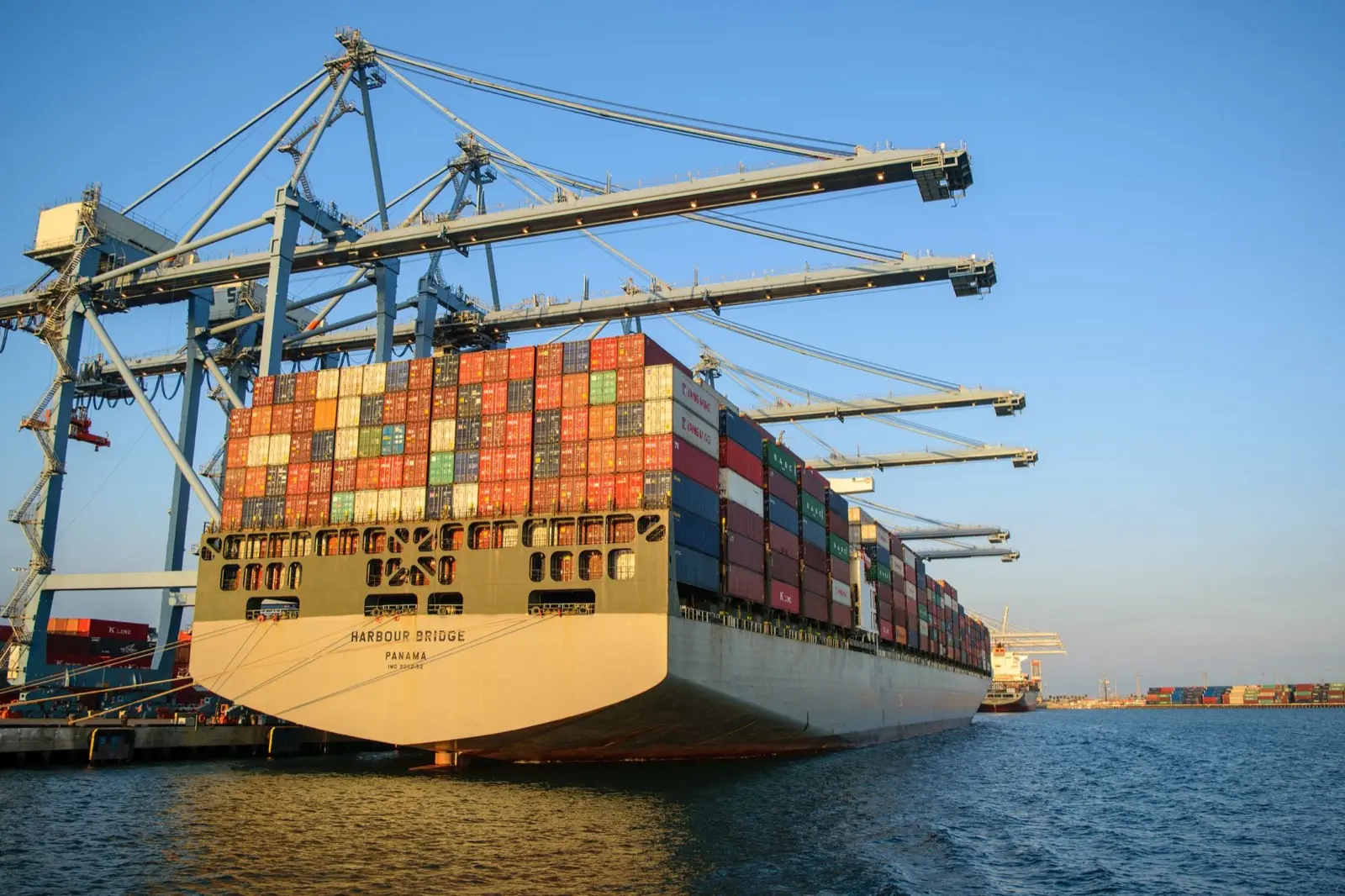
To back up that accountability, Redstone inspects every shipment in person at origin before it leaves. No shipment departs without that inspection. Parts are manufactured at ISO 9001 certified facilities, and repair, replacement, or refund responsibility sits with Redstone as a U.S. company under a U.S. contract. Payment terms reinforce this structure. Nothing is owed until samples are approved and in-spec production parts ship, then payment runs on Net 30 or Net 60 from ship date.
That structure answers the buyer’s real question, which concerns who is responsible when something goes wrong on a batch, not just which country made the part.
Start A Program With Redstone As Importer Of Record
What To Do First To Get A Real Landed Price
Three steps cover the ground between a drawing and a real landed price.
- Send the drawing. A quote cannot include a duty assumption without knowing the part’s HTS classification, the metal, and the likely production route. Send whatever you have, including incomplete drawings or a physical sample.
- Ask the supplier to state their duty assumption and confirm who files the customs entry. A quote that does not answer both questions does not give you a true landed price.
- Confirm who carries accountability when a batch is wrong. The answer should be a U.S. company under a U.S. contract, rather than a supplier you would have to pursue overseas.
Share Your Drawings For A Landed Cost Review
Frequently Asked Questions About Importing Sheet Metal Parts From Mexico
What Happens If My USMCA Claim Is Audited?
CBP audits focus on whether the records support your USMCA claim. Auditors look for documentation that proves the good qualifies for preferential tariff treatment, including bills of materials, supplier certifications, and origin criteria documentation. As explained earlier, the RVC threshold is either 60% or 50% depending on the calculation method. The certification must be retained for five years, and CBP can request it within 30 days of entry.
How Do Section 232 And Section 301 Duties Combine On A Steel Part?
These duties stack because they have different triggers. One follows the material, and the other follows the country of origin. As described earlier, a steel part can face Section 232 based on the metal and Section 301 based on where the part was made, with both sitting on top of the MFN duty rate.
How Should I Approach Landed Cost When Comparing Quotes?
Landed cost is the sum of part price, international freight, insurance, customs duties, merchandise processing fee, brokerage fees, inland freight, and the internal labor the buyer absorbs when they manage the program themselves. For U.S. imports in 2026, import duty (MFN plus stacked Section 232, Section 301, and IEEPA (International Emergency Economic Powers Act) layers) is the single most variable line item of landed cost, capable of differing by 45 percentage points between origins.1 Always ask for the duty assumption in writing before comparing quotes.
What Documentation Should I Have Ready Before My First Shipment?
The core set includes the commercial invoice, the HTS classification, the USMCA certification of origin with its content analysis, and mill test certificates establishing where the metal was melted and poured for steel or smelted and cast for aluminum. For most steel imports, a Steel Import Monitoring and Analysis license must be filed before entry. For aluminum imports, an Aluminum Import Monitoring license is required. Keeping these organized from the start makes any later CBP review far easier to manage.
How Do I Decide Between Mexico And China For My Specific Part?
The better route depends on the part, the volume, the metal origin, and current tariff exposure. Mexico offers lower tariff exposure for USMCA-qualifying parts and shorter transit times. China offers a deeper material and process ecosystem for complex or specialty work. The practical question is which route produces the lower landed cost for your specific part and volume, with your specific metal, under current tariff conditions. That is the analysis Redstone runs before recommending a production route.
What If A Shipment Arrives Out Of Spec Or Incorrect?
Under a standard import arrangement, the importer of record is legally responsible for the customs entry and carries the duty liability, which usually means the buyer. When something is wrong with the parts themselves, the buyer’s recourse against a distant supplier can be limited. Redstone takes the importer of record role on modified DDP terms and carries repair, replacement, or refund responsibility as a U.S. company under a U.S. contract. The buyer receives finished parts at their dock at one landed price and has a U.S. counterparty to call when something is not right.
1 Tariff rates change often. Always check the US Customs and Border protection website for the latest information.