Key Takeaways
- Landed cost for CNC machining in Mexico includes factory price plus freight, brokerage, duties, and tariffs to your dock. Factory-gate price is only the starting point.
- Many buyers underestimate the full cost stack and miss customs fees, duties, and freight that they never modeled into their quote.
- Redstone Manufacturing acts as importer of record on modified Delivered Duty Paid (DDP) terms and handles Harmonized Tariff Schedule (HTS) classification, United States-Mexico-Canada Agreement (USMCA) qualification, and duties, so you never touch a customs form.
- USMCA rules of origin and Section 232 steel and aluminum tariffs can change duty rates from 0% to well over 20%, so qualification and metal origin must be confirmed in writing before quoting.1
- Redstone Manufacturing quotes one landed unit price that includes tariffs and duties at the rates in effect on the quote date.
Have a part? Talk to an engineer.
What Landed Cost Includes For CNC Machined Parts
Landed cost covers every dollar that leaves your account between the moment a part is finished at the facility and the moment it reaches your dock. The factory price starts the calculation and never finishes it.
The Harmonized Tariff Schedule (HTS) code is the classification number that sets your duty rate. Customs assigns HTS by end use. Incorrect classification is one of the most common and expensive mistakes in cross-border sourcing, because it changes the duty line in your cost stack. Redstone handles HTS classification as part of its standard process so that duty aligns with the correct code.
The table below shows a representative cost stack for a CNC machined aluminum bracket. All figures are illustrative. Your part, volume, material, and destination will produce different numbers, and the duty and tariff line is the one that can swing the most.
| Cost Component | Example Per-Part Amount | Notes |
|---|---|---|
| Factory (unit) price | Variable | Depends on material, complexity, volume, and machine type |
| Packaging | Small fraction of unit price | Export-grade packaging for machined parts; varies by part size and fragility |
| International freight (Mexico to US border, truck) | Per-load rate divided by units per load | FTL truck from Mexico runs roughly $1,800–$3,500 per load; LTL at roughly $0.20–$0.40 per pound |
| Border drayage and transload | Per-load fee divided by units | Border drayage typically runs $300–$800 per crossing for cross-dock transfer |
| Cargo insurance | ~0.3%–0.8% of cargo value | Full-route coverage must be arranged explicitly; Mexican carrier coverage may not follow cargo onto the US leg |
| Customs brokerage | Flat fee per entry | Licensed broker fees typically run $150–$400 per formal entry |
| Merchandise Processing Fee (MPF) | 0.3464% of entered value | Minimum approximately $31.67–$32.71, maximum approximately $614.35–$634.62 per entry, depending on the year and source; applies to every formal US customs entry |
| Duty and tariff | 0% for USMCA-qualifying goods (excluding Section 232 metal duties) to 25%+ for non-qualifying or Section 232-affected goods1 | Depends on HTS code, USMCA qualification, material origin, and applicable tariff layers; see sections below |
| US inland freight to dock | Per-mile rate from border to destination | Laredo-to-Dallas lanes run roughly $2.50–$3.50 per mile; longer hauls to Midwest or East Coast add proportionally |
One more note on “CNC machining cost per hour in Mexico.” Fully burdened CNC machinist labor in Mexico runs roughly $10–$13 per hour in 2026, compared with $30–$50 per hour for skilled labor in the United States. The machine-hour rate feeds into the factory price, and the factory price is only one line in the landed cost stack. Hourly labor alone never tells you what the part costs at your dock.

How To Calculate Landed Cost Per Part
Landed cost per part starts with a specific part and volume. Imagine a generic 6061 aluminum bracket at an illustrative annual volume. The numbers below are placeholders, and you would plug in your own figures.
The calculation begins with the factory unit price, because that is usually the only number on a basic quote. From there, every other cost must convert to a per-part figure. Packaging adds directly on a per-unit basis. Freight, drayage, and inland delivery are totaled for the shipment and then divided by the number of parts in that shipment, so you see the transportation cost per unit.
Insurance, customs brokerage, and the Merchandise Processing Fee (MPF) work the same way. They are charged at the shipment or entry level, so they only become meaningful once you spread them across the units in that entry. Duty and tariff come last. They are not fixed amounts, but percentages of entered value that depend on your HTS code, USMCA qualification status, and material origin.
A simplified formula looks like this:
Landed cost per part = Factory price + Packaging + (Freight + Drayage + Inland freight) / Units per shipment + Insurance + (Brokerage + MPF) / Units per entry + (Entered value × Duty rate) / Units per entry
The duty rate is the variable that surprises most buyers. If your part qualifies under the United States-Mexico-Canada Agreement (USMCA), the base duty rate drops to 0%.1 If it does not qualify, you may face a 25% or higher tariff, such as an International Emergency Economic Powers Act (IEEPA) or Section 122 surcharge, in addition to the standard Most Favored Nation (MFN) rate for your HTS code, plus any applicable Section 232 metal duties.1 If your part contains steel or aluminum from outside North America, Section 232 duties apply on top of that. The next two sections explain these mechanics in plain terms.
Freight is the other variable that buyers often underestimate. A truck from a northern Mexican facility to Dallas takes one to two days, which is fast. Cross-border trucking, however, involves multiple handoffs. A Mexican carrier moves the load to the border, a drayage carrier moves it across, and a US carrier delivers to your dock. Each leg has its own rate. Ask for an all-in freight number that covers the full route.
Send your drawing for a landed-cost quote.
How USMCA Rules Of Origin Shape Your Duty Rate
USMCA qualification is where many landed cost models break down and where duty assumptions often fail.
USMCA duty-free treatment is not automatic for goods made in Mexico. The agreement, which entered into force July 1, 2020, requires that a good meet product-specific rules of origin (PSROs) listed in Annex 4-B. Those rules are keyed to the good’s HTS classification and typically require either a tariff shift, a Regional Value Content (RVC) threshold, or both. Administration falls to the Office of the United States Trade Representative (USTR), US Customs and Border Protection (CBP), and the Department of Commerce under 19 Code of Federal Regulations (CFR) Part 182.
A tariff shift means the non-originating inputs must be classified under a different HTS heading than the finished good. The most common formulation for manufactured goods is a Change in Tariff Heading (CTH), meaning a four-digit level shift. If Chinese-origin steel bar stock enters Mexico under one heading and exits as a machined bracket under a different heading, the tariff shift may be satisfied. If the inputs and the finished good share the same heading, the tariff shift requirement is not met.
Regional Value Content (RVC) is the percentage of the good’s value that must originate in North America. General industrial goods commonly require 60% RVC under the transaction value method or 50% under the net cost method, though the exact threshold must be checked in Harmonized Tariff Schedule of the United States (HTSUS) General Note 11 for the specific tariff line.
A product that uses mostly Chinese content and is only finished in Mexico rarely qualifies. Non-qualifying goods from Mexico face materially higher duties under current tariff actions, commonly cited at 25% ad valorem for affected categories1, in addition to any standard MFN rate. US Customs and Border Protection increased USMCA verification and audit activity in 2025 and 2026, and incorrect USMCA claims expose importers to back duties and penalties under 19 United States Code (U.S.C.) 1592.
Ask your supplier for the USMCA certification in writing before you commit to a landed cost model. The importer is liable to CBP for the truth of the USMCA certification regardless of whether the importer, exporter, or producer issued it. Redstone handles USMCA qualification analysis as part of its standard quoting process and folds the result into the landed unit price.
How Steel And Aluminum Tariffs Follow The Metal
Steel and aluminum tariffs are where the dollar consequences often become largest, because they apply to material origin as well as country of machining.
For steel and aluminum, duty follows where the metal was produced, not where the part was machined. US Customs and Border Protection defines the steel melt-and-pour country as the original location where raw steel is first produced in a steel-making furnace in a liquid state and then poured into its first solid shape, with aluminum governed by a smelt-and-cast standard. A part machined in Mexico from Chinese-origin steel still carries a Chinese steel tariff.
This mechanic also creates a legitimate structure. You can buy US-origin material, ship it to Mexico for machining, and bring the finished part back. The metal’s origin remains North American, so Section 232 exposure on the metal content is reduced or eliminated.
Section 232 and Section 301 are two separate statutes with different triggers, and they stack. Section 232 of the Trade Expansion Act of 1962 (19 U.S.C. §1862) authorizes tariffs on steel, aluminum, and their derivatives on national-security grounds, and the duty follows the metal’s origin. Section 301 of the Trade Act of 1974 applies because of where the part was made and specifically targets Chinese-origin goods.
A steel bracket made in China can catch three separate duties. Section 232 applies because the part is steel, Section 301 applies because the part is Chinese, and the standard MFN duty applies to its HTS code. All three stack on top of each other. Under Proclamation 11021, effective April 6, 2026, Section 232 duties now apply to the full customs value of the imported product, not just the metal content. That shift in calculation basis catches buyers who modeled their duty on metal content alone.
Under the June 1, 2026 proclamation, for USMCA-qualifying products of Canada and Mexico, a 25% Section 232 duty applies only to the non-US content of the product, with a minimum effective duty of 15% ad valorem1. For products whose steel or aluminum content is composed entirely of metal melted and poured or smelted and cast in the United States, a reduced 10% rate applies1. USMCA preference and Section 232 operate side by side.
Redstone analyzes material origin, HTS classification, and tariff layers for every part it quotes so that the landed price reflects the real duty structure.
Mexico Vs China Landed Cost For CNC Machining
Once duty mechanics are clear, the Mexico-versus-China question becomes a calculation instead of a slogan. The answer depends on your part, your material, your volume, and the tariff environment at the time of import.
Proximity saves less than many buyers expect. Ocean freight from China is remarkably cheap on a per-kilogram basis, so the freight savings from trucking out of Mexico are real but not dramatic on their own. Mexico changes transit time and inventory carrying cost more than it changes pure freight. A shipment from China ties up roughly 35 days of in-transit inventory, while a truck from Mexico arrives in one to five days. Shorter cycles compress replenishment and reduce safety stock.
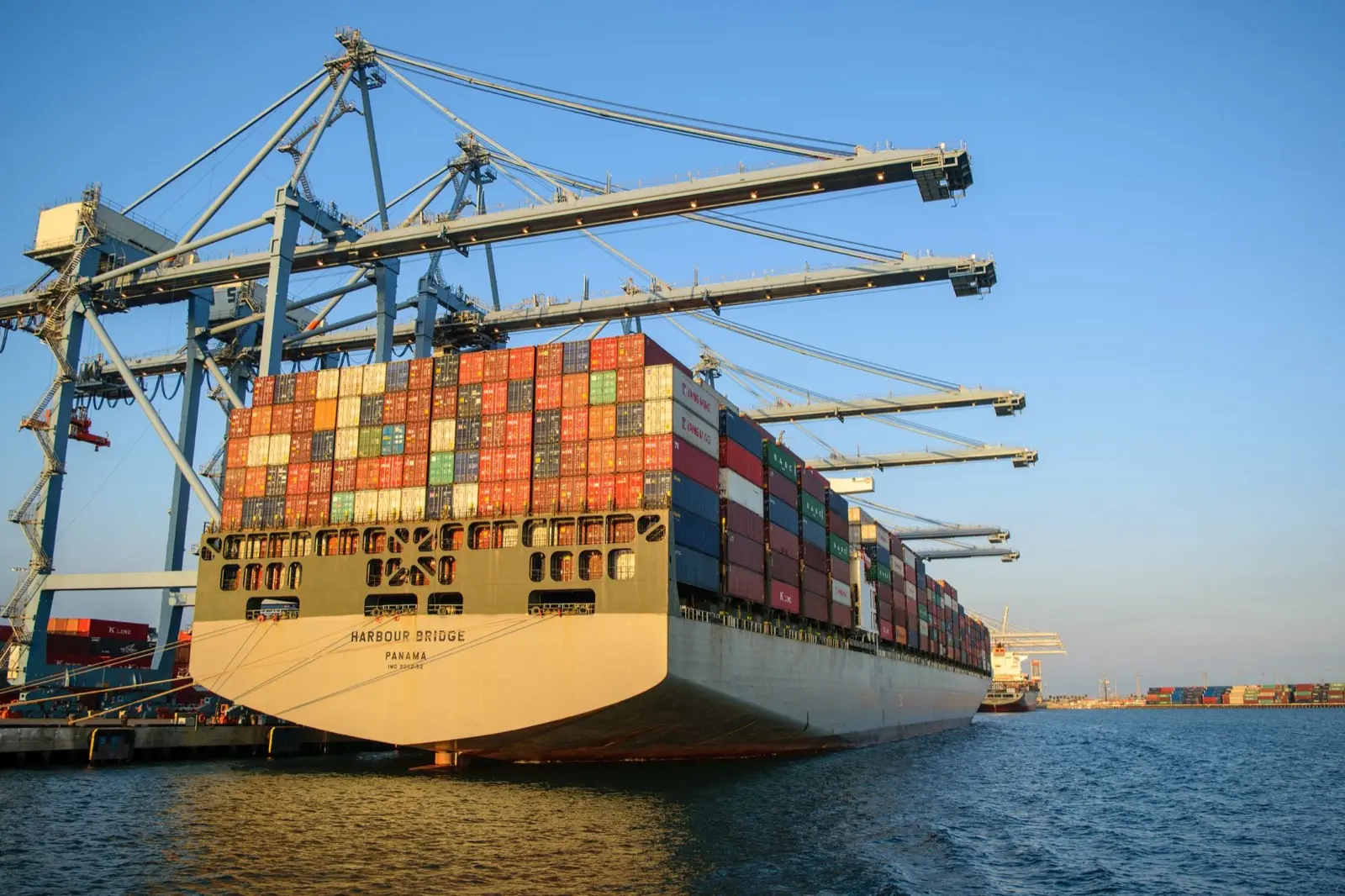
The tariff picture is where the math can shift significantly. A part that qualifies under USMCA enters at 0% base duty. The same part from China may carry Section 301 duties and, if it contains steel or aluminum, Section 232 duties on top. Hidden costs including shipping, duties, rework, and delays can erase 15–30% of upfront savings if unmanaged.
Labor cost per part depends on efficiency as well as wage rates. China 3-axis milling machine-hour rates run roughly $35–$50 per hour versus $80–$120 per hour in the United States. Mexico usually sits between those figures on labor, but machine-hour rates reflect more than wages. For a detailed comparison of these two production routes for your specific part, see Redstone’s Mexico vs China CNC machining comparison.
Redstone can move a program between its facilities in China, India, Taiwan, Vietnam, and Mexico if tariffs or conditions change. You do not have to find and qualify a new supplier when policy shifts, which is worth modeling into any sourcing decision.
What To Ask A Supplier To Confirm In Writing
Before you commit to a landed cost model based on a supplier’s quote, get the following points in writing so you know exactly what the numbers mean:
- HTS classification: The specific 10-digit code the supplier is using and the duty rate it carries.
- USMCA qualification: Whether the part qualifies, under which origin criterion, and what documentation supports the claim.
- Importer of record: Who is legally responsible for the customs entry. If it is you, you carry the tariff risk.
- Duty inclusion: Whether duty is included in the quoted price at rates in effect as of the quote date, and how rate changes between quote and shipment are handled.
- Freight terms: Whether freight is quoted separately or built into the unit price, and what the all-in freight cost covers.
Redstone quotes one landed unit price on modified Delivered Duty Paid (DDP) terms, acts as importer of record into the United States, and includes tariffs and duties in the unit price at rates in effect as of the quote date, with adjustments at shipment if rates change. Freight is quoted separately, prepaid, and added to the invoice. Nothing is owed until samples are approved and in-spec production parts ship, then payment terms run Net 30 or Net 60 from ship date. Parts are manufactured at ISO 9001 certified facilities.
Frequently Asked Questions
Is It Cheaper To Manufacture In Mexico Or China?
Total cost depends on the part, the material, the volume, and the current tariff environment. Mexico’s factory prices are often higher than China’s on a unit basis. Mexico can still win on total landed cost once USMCA duty savings, shorter transit times, and lower inventory carrying costs are included. China’s scale economics still favor very high volumes on locked long-run programs. The right answer comes from a full landed cost calculation for your specific part.
How Much Does CNC Machining Cost Per Hour In Mexico?
As noted earlier, Mexico’s fully burdened machinist labor rate is a fraction of the United States rate. That hourly rate is only one input into the factory price, and the factory price is only one line in the landed cost stack. Hourly cost alone does not show what the part costs at your dock.
What Are The Import Duty Rates For CNC Machined Parts From Mexico?
Duty rates depend on three things: the HTS code for your part, whether the part qualifies under USMCA rules of origin, and whether the part contains steel or aluminum from outside North America. A USMCA-qualifying part enters at 0% base duty. A non-qualifying part may face a 25% tariff on top of the standard MFN rate.1 Steel and aluminum content from non-North American sources can trigger Section 232 duties on top of that, now calculated on the full product value rather than just the metal content.
How Do USMCA Rules Of Origin Affect My Duty Rate?
USMCA duty-free treatment requires that your part meet product-specific rules of origin, typically a tariff shift, a Regional Value Content (RVC) threshold, or both. A part assembled in Mexico from primarily Chinese-origin inputs may not qualify. If it does not qualify, you pay the non-preferential duty rate, which can reach 25% or more under current tariff actions. The importer is legally responsible for the accuracy of any USMCA claim, regardless of who prepared the certification.
How Do Steel And Aluminum Tariffs Follow The Metal Rather Than The Part?
Section 232 duties on steel and aluminum are keyed to where the metal was melted and poured for steel or smelted and cast for aluminum, not where the finished part was machined. A bracket machined in Mexico from Chinese-origin steel still carries a Chinese steel tariff. Moving machining to Mexico does not remove Section 232 exposure if the metal’s origin remains outside North America. Buying US-origin material and shipping it to Mexico for machining addresses this, because the metal’s origin is North American.
Who Should Be Importer Of Record?
The importer of record is the party legally responsible for the customs entry, which includes classifying the goods, filing the paperwork, and paying the duties and tariffs. If your supplier does not act as importer of record, that responsibility falls on you. Most buyers who are not in the import business prefer to avoid that role. Redstone acts as importer of record on modified DDP terms, so the customer does not file a customs entry, does not speak to a customs broker, and does not track tariff rate changes.
1 Tariff rates change often. Always check the US Customs and Border protection website for the latest information.