Key Takeaways
- Quality in Mexican die casting depends on process control and verification. Buyers need proof of porosity control, traceability, and pre-shipment inspection instead of relying on ISO (International Organization for Standardization) or IATF (International Automotive Task Force) logos alone.
- Porosity is inevitable in high-pressure die casting. The key is how a supplier controls, detects, and accepts it using X-ray, CT (computed tomography), ultrasonic, or destructive testing with clear zone-based criteria.
- PPAP (Production Part Approval Process) documentation shows that a supplier can produce parts consistently to specification. Buyers should request a full Level 3 package with capability data, control plans, and material certificates before production begins.
- Before any shipment leaves Mexico, buyers should require first-article inspection, CMM (coordinate measuring machine) reports, SPC (statistical process control) and Cpk data, mill test certificates, and full traceability from raw material to finished part.
- Redstone Manufacturing provides United States contractual accountability, acts as importer of record, and inspects every shipment at origin while producing die castings at ISO 9001 certified facilities in Mexico.
Start Your Supplier Evaluation With A Quote
Quick Overview And Decision Framework
This guide gives buyers a six-step framework to evaluate any die casting supplier in Mexico before committing tooling spend.
The six factors are: process control, documentation, inspection before shipment, alloy and material selection, landed cost and trade treatment, and accountability. Each factor appears in its own section, followed by common mistakes and a focused FAQ (frequently asked questions).
By the end of this article, you will have a step-by-step framework. First, verify process control. Second, confirm documentation and PPAP. Third, lock in inspection before shipment. Fourth, align on alloy and material selection. Fifth, calculate landed cost and trade treatment. Sixth, establish accountability when something goes wrong.
Quality Standards And What They Actually Prove
A qualified die casting supplier in Mexico should hold ISO 9001 certification, operate under IATF 16949 for automotive programs, follow NADCA (North American Die Casting Association) product standards, and be able to produce a PPAP documentation package on request. These credentials set the baseline. The buyer still has to verify real process control.
ISO 9001 certifies that a plant runs a documented quality management system covering process control, traceability, and corrective action, audited by an independent body. ISO 9001 does not define specific die casting parameters, equipment, or inspection frequencies. It is a management system standard. The auditor confirms that the system exists and is followed, not that the plant can hold your porosity limit or tolerance band.
IATF 16949 is the automotive quality management standard. It is built on ISO 9001 foundations and adds automotive-specific requirements such as APQP (Advanced Product Quality Planning), PFMEA (Process Failure Mode and Effects Analysis), control plans, MSA (Measurement System Analysis), and SPC. Automotive OEMs (original equipment manufacturers) and tier-1 suppliers require it. ISO 9001 alone will not get a die caster onto the automotive bid list.
NADCA is the North American Die Casting Association. Its standards cover die casting process and product quality, including dimensional tolerances, surface finish, and porosity acceptance criteria. NADCA product standards specify a standard linear tolerance of ±0.25 mm for the first 25 mm of a dimension plus ±0.025 mm for each additional 25 mm. These values are starting points. Tighter tolerances need tighter process control and often secondary machining.
A certificate sets the floor for a quality system. A supplier can still let quality drift run over time. The certificate proves the system was audited. It does not prove that today’s parts meet the drawing. That proof comes from sample parts and capability data.
Redstone Manufacturing produces die castings at ISO 9001 certified facilities. Independent bodies verify those certifications. Certification alone does not guarantee quality, so the next step is to examine porosity control.
How Porosity Is Controlled And Detected In Die Casting
Porosity is the most common quality failure in die casting and should be the first technical topic on any supplier call. In high pressure die casting, porosity appears in nearly every part. The engineering question is where the pores are, how large they are, what created them, and whether the part’s function tolerates them.
In simple terms, porosity means gas or shrinkage voids inside the metal. These voids weaken the part, cause leaks in pressure-containing components, or ruin a cosmetic surface when machining exposes them. Gas porosity produces rounded or spherical pores with smooth internal walls, often in a subsurface layer just below the skin. Shrinkage porosity produces irregular, angular, often interconnected voids at thermal hot spots such as thick bosses and rib-wall intersections.
Porosity control relies on several linked elements: melt management, die design, gate and runner design, process parameters, and vacuum assist where needed. To reduce gas porosity, suppliers optimize venting, slow the initial injection speed, control die lubrication volume, and may use vacuum-assisted casting for high-integrity parts. To manage shrinkage porosity, they design gating for directional solidification, apply adequate intensification pressure, control die temperature, and use squeeze pins in thick sections.
Porosity is detected through several methods, each with a specific role:
- X-ray inspection is a non-destructive method that shows internal voids inside a casting without cutting it open. It reveals gas and shrinkage porosity as density differences in a 2D projection and serves as the standard screening method for internal soundness.
- CT (computed tomography) scanning builds a full three-dimensional volumetric image of the casting interior. Each pore appears as a measurable object with position, shape, volume, and distance to the nearest functional surface. CT is most useful at first article and for failure analysis.
- Ultrasonic testing sends high-frequency sound waves through the part and reads reflected echoes to detect internal voids and inclusions. It works best for thicker sections but can be limited by coarse cast structure and complex geometry.
- Destructive sectioning cuts the part open, mounts and polishes the cross-section, and examines it under magnification. It directly shows pore morphology and confirms what other methods detected.
A supplier should describe porosity control in concrete terms. Ask which detection methods they use, how often they use them, and what the acceptance criteria are by zone. Vague answers signal weak control.
PPAP Documentation And Why It Matters
PPAP stands for Production Part Approval Process. It is a standardized framework governed by the AIAG (Automotive Industry Action Group) that checks whether a supplier’s manufacturing process can consistently produce parts that meet all engineering and quality requirements before series production.
A PPAP package is evidence that the process can produce parts to specification. A Level 3 PPAP package includes design documentation, PFMEA, process flow diagram, control plan, MSA or Gage R&R studies, dimensional results, material certificates, initial process capability data such as Cpk at or above 1.67 on critical characteristics, sample production parts, and a Part Submission Warrant (PSW).
OEMs require PPAP because a prototype only proves that the design worked once. Production requires proof that the process works repeatedly. Buyers outside automotive still benefit from an equivalent package, because it answers the core question: can this supplier make this part to this drawing, over and over, without constant supervision?
A supplier who treats PPAP as a formality, uses generic templates, or sends documents referencing a different part family signals weak process discipline. A supplier operating under a real quality system can produce the required documents on demand. Once you confirm that capability, the next step is to control every shipment leaving Mexico.
What To Demand Before A Shipment Leaves Mexico
Buyers should approve shipments only after reviewing a clear set of documents and data from the die casting supplier in Mexico.
- First-article inspection (FAI): The first parts off a new setup, measured against the drawing and approved before volume runs. FAI confirms that the supplier understood the drawing and that the process is stable enough to repeat.
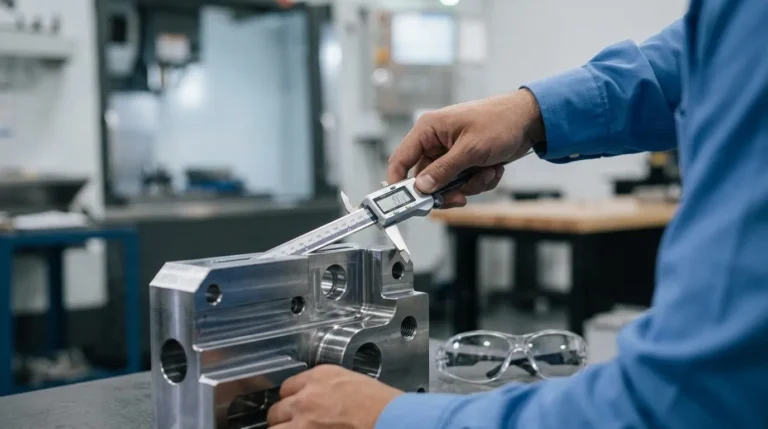
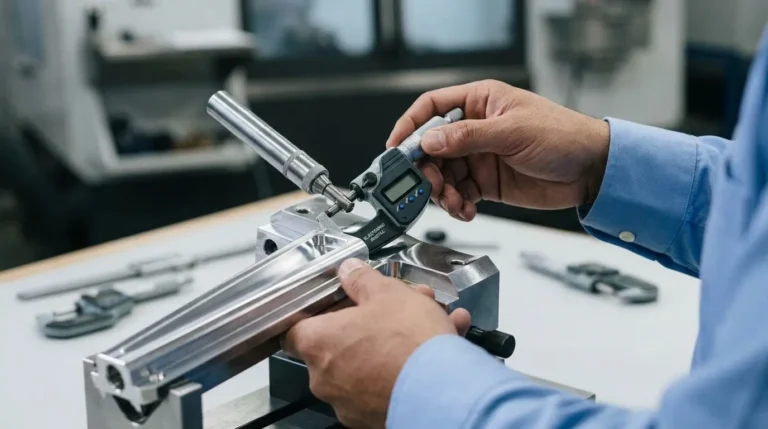
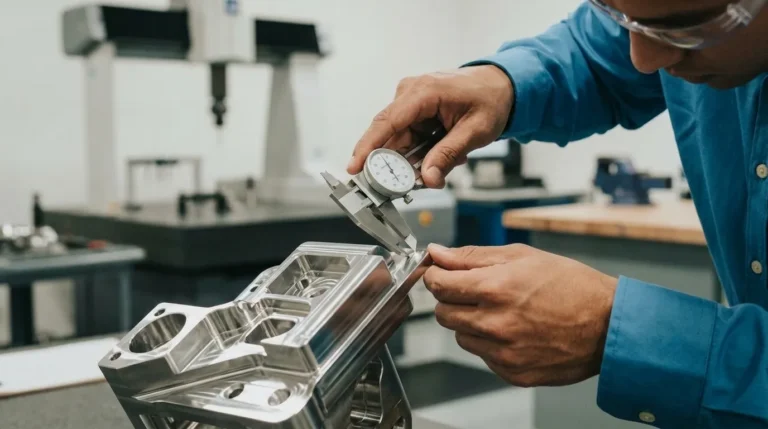
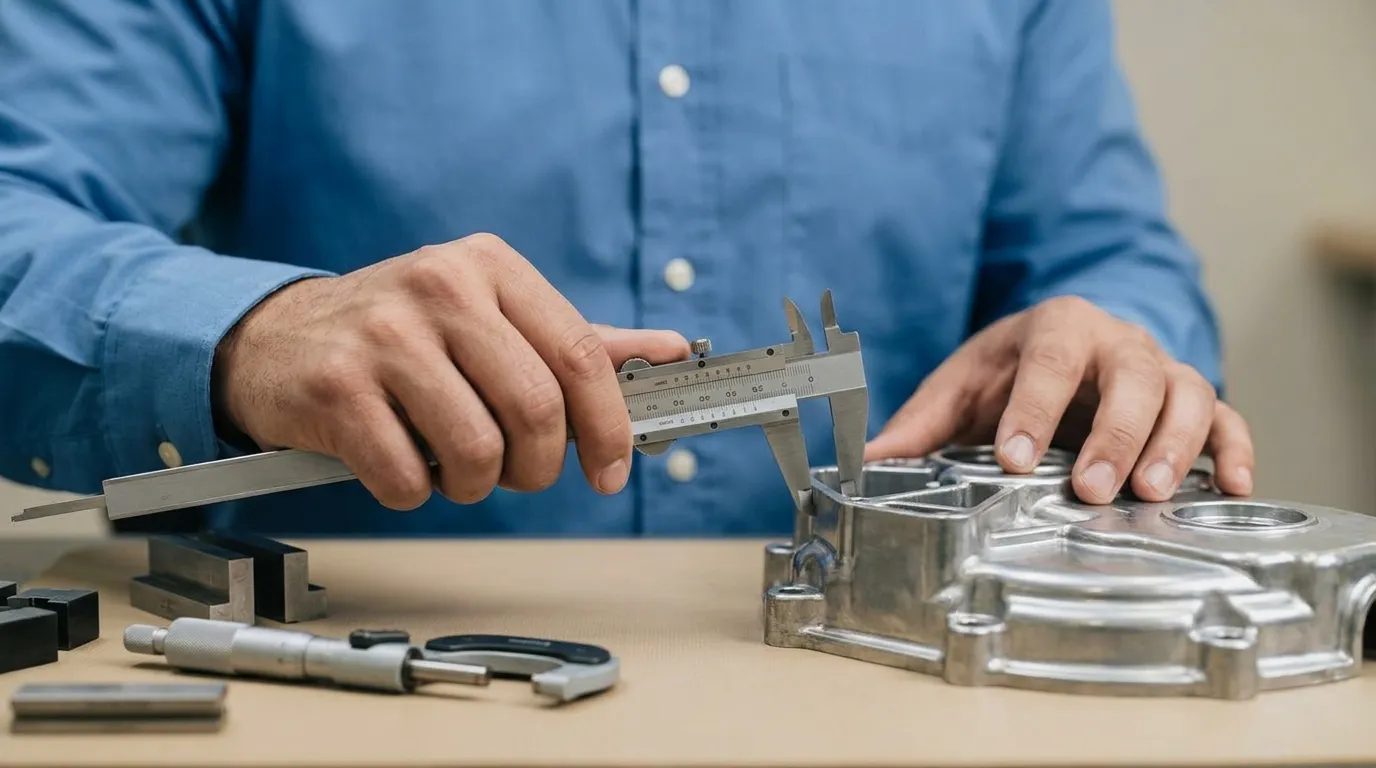
- CMM inspection report: A CMM (coordinate measuring machine) measures a part’s dimensions in three dimensions against the drawing, using a touch probe or laser scanner. CMM inspection provides quantitative data on how close each dimension is to nominal, not just pass or fail results.
- SPC and Cp/Cpk data: SPC (statistical process control) tracks critical process parameters on control charts during production. Cp and Cpk are process capability indices. Cp measures how wide the process variation is relative to the tolerance band. Cpk adjusts for centering and shows whether the process is both capable and correctly targeted. For critical characteristics, automotive customers typically require a Cpk of 1.67 or higher. A Cpk below 1.0 means the process will produce out-of-tolerance parts even when running in control.
- Material certification and mill test certificates: The mill’s own document certifying the chemical and mechanical properties of the metal it supplied. These documents provide material traceability and should be retained by the supplier and available on request.
- Traceability from raw material to finished part: The ability to connect a specific shipment back to the heat number, production date, and material source. Strong traceability allows fast containment and correction when a problem appears.
Redstone Manufacturing inspects parts in person at origin before every shipment. No shipment leaves without this inspection. Mill test certificates from the supply base are retained as material traceability documentation. Upon request, Redstone also provides RoHS (Restriction of Hazardous Substances) declarations under Directive 2011/65/EU as amended by Delegated Directive (EU) 2015/863, and REACH SVHC (Substances of Very High Concern) declarations under Regulation (EC) No 1907/2006 Article 33 and the ECHA Candidate List.
Review Your Pre-Shipment Checklist With Redstone
Alloy Selection For First-Time Die Casting Buyers
Alloy choice affects strength, corrosion resistance, surface finish, and cost, so buyers should align on alloy before tooling is cut.
Many buyers ask two related questions. They want to know the common grades of die cast aluminum and whether die cast aluminum is better than aluminum grades such as 6061. The second question mixes two different material categories.
Wrought alloys such as 6061 and 6063 cannot be die cast. 6061 contains only 0.4 to 0.8 percent silicon, which gives poor fluidity and a wide freezing range that hot-tears in a steel die. Parts made from 6061 or 6063 must be CNC machined from billet or fabricated from extruded profile. A drawing that specifies 6061 is not a die casting drawing.
The main die casting aluminum alloys a buyer will encounter are:
- A380 is the general-purpose die casting alloy. It offers balanced castability, strength, and machinability and serves as the default for many industrial and consumer applications. Note that A380 does not anodize well due to its copper content.
- A360 offers better corrosion resistance and pressure tightness than A380. It has higher ductility and improved corrosion resistance, making it a better choice for parts exposed to moisture or requiring a cleaner anodized finish.
The right alloy depends on the part’s function and environment. When a buyer answers “whatever is standard,” most suppliers will choose A380. That choice may work or may create later issues with corrosion or finish. A short alloy discussion early in the project avoids expensive changes later.
Who Is Accountable When Something Goes Wrong?
Redstone Manufacturing, a United States-based precision die casting company with production facilities in Mexico, provides accountability for buyers sourcing die castings from Mexico. Buyers receive a delivery guarantee, transactional security, and legal protection through a United States company.
The core concern is simple. The supplier sits in another country, and when a part is wrong, the buyer often has no practical way to enforce a fix. That concern is valid. Buying directly from a die casting facility in Mexico means the buyer is responsible for everything: supplier selection, quality management, DFM (design for manufacturability) review, drawing control, pre-shipment inspection, freight, customs brokerage, HTS (Harmonized Tariff Schedule) classification, and tariff exposure. Payment usually happens in advance, so money leaves before anything is verified. When something fails, recourse against a foreign supplier is limited.
Buying from a United States company that manages the facility provides a United States point of contact, United States contractual accountability, and one landed price. The comparison looks like this:
| Factor | Buying Direct From A Mexico Facility | Buying From Redstone Manufacturing |
|---|---|---|
| Who runs supplier selection and quality management | The buyer | Redstone |
| Who handles customs and tariffs | The buyer, through a customs broker they hire | Redstone, as importer of record |
| Who carries accountability for wrong parts | The buyer has no practical recourse | Redstone, under a United States contract: repair, replacement, or refund |
| Payment terms | Typically payment in advance | Net 30 or Net 60 from ship date, after samples are approved |
Two commercial terms define Redstone’s offer and deserve clear explanation.
Importer of record is the party legally responsible for the customs entry. That party classifies the goods, files the paperwork, and pays duties and tariffs. This responsibility normally falls on the buyer. Redstone assumes that role.
Modified DDP stands for Delivered Duty Paid. Under standard DDP, the seller moves the goods to the buyer’s door with duties paid. Redstone’s modified version quotes freight separately, prepaid and added to the invoice, instead of burying freight inside the part price.
Redstone Manufacturing produces die castings at its own facility in Mexico, acts as importer of record on modified DDP terms, folds tariffs and duties into one landed unit price, and carries repair, replacement, or refund responsibility under a United States contract. Buyers owe nothing until samples are approved and in-spec production parts ship, then pay on Net 30 or Net 60 terms from ship date.
Mexico Versus Other Sourcing Countries For Die Casting
Trade and tariff content as of September 2026. Rates and rules change. Verify current conditions before committing a program.
Mexico’s proximity to the United States improves responsiveness, but its effect on landed cost is often smaller than buyers expect. Ocean freight is inexpensive relative to trucking. Once port handling, drayage, and inland freight are added, distance savings compress. Proximity matters most for lead time and for programs that need frequent tooling adjustments, not purely for unit cost.
USMCA (United States-Mexico-Canada Agreement) duty treatment depends on North American content thresholds. Final assembly location alone does not determine eligibility. A mostly foreign product finished in Mexico may not qualify for USMCA preferential rates. Each part needs its own content calculation.
For steel and aluminum, duty follows where the metal was produced, not where the part was cast. This point affects many programs. A die casting made in Mexico from Chinese aluminum ingot may still carry a Section 232 duty on the metal content. Buying United States-origin material and shipping it to Mexico for casting changes that duty calculation and can reduce total cost.
Redstone can move a program between its facilities in China, India, Taiwan, Vietnam, and Mexico if tariffs or conditions change, without forcing the customer to requalify a new supplier. That flexibility helps in a trade environment where rates can shift between quote and shipment. The right country for a given part depends on the part, the volume, the alloy, and current trade conditions.
Get A Landed-Cost And Country Comparison
Common Mistakes And Misunderstandings
Buyers often repeat the same errors when evaluating die casting quality in Mexico. Each mistake is avoidable with a few targeted questions.
- Treating a certificate as proof of process control. A certificate proves a quality system was audited. As noted earlier, a certificate only proves the system was reviewed. It does not prove that today’s parts meet the drawing. Ask for capability data and sample parts, not just a certificate number.
- Assuming a lower part price equals a lower landed cost. For a United States import, a part price becomes a landed cost only when it includes freight, insurance, customs duties and import taxes, port and handling fees, customs broker fees, HTS classification, and tariff exposure such as Section 301, Section 232, and Section 122. Compare landed costs, not quoted part prices.
- Skipping the importer-of-record question. If a supplier does not clearly answer who is the importer of record, the buyer is generally the party CBP (U.S. Customs and Border Protection) holds responsible, because the statutory reasonable-care duty runs to the party making entry and no private contract removes CBP’s claim against the importer of record, though the importer must be an eligible party and under DDP terms the seller may be the importer if it qualifies as a nonresident importer. That structure leaves the buyer responsible for classification, paperwork, and duties. Many first-time buyers have never handled any of these tasks.
- Ignoring what happens when a part is wrong. When a foreign supplier has already been paid in full, the buyer loses the deferred-payment leverage that operations-research literature identifies as the main deterrent against cutting corners on quality. Ask about remedies and payment structure before placing the order.
- Assuming USMCA treatment is automatic. USMCA eligibility depends on North American content thresholds that must be calculated for each part. A supplier who claims “it qualifies for USMCA” without showing the calculation is guessing.
- Assuming proximity to the United States guarantees a faster or cheaper program. Lead times for die casting programs depend mainly on tooling design and mold manufacturing, sampling, and production scheduling, with shipping region and customs as secondary factors. As noted earlier, ocean freight economics compress the cost advantage of proximity more than most buyers expect.
- Accepting a quote that ignores tariff changes. Tariff rates change. A quote that stays silent on this point leaves the buyer exposed to unplanned charges. Ask explicitly who absorbs any tariff change between quote date and ship date.
Frequently Asked Questions
This FAQ addresses common follow-up questions buyers ask after working through the six factors. It adds detail on standards, inspection methods, documentation, alloys, and customs responsibilities.
What Quality Standards Should A Die Caster In Mexico Meet?
The baseline is ISO 9001 certification, which confirms a documented quality management system that an independent body audits. For automotive programs, IATF 16949 sits on top of ISO 9001 and adds automotive-specific requirements. NADCA standards cover die casting process and product quality, including dimensional tolerances and porosity acceptance criteria. A capable supplier can also produce a PPAP package. Certifications are a starting point. Buyers still need capability data and sample parts to confirm process control.
How Is Porosity Detected In A Die Casting?
The main methods are X-ray inspection, CT scanning, ultrasonic testing, and destructive sectioning. X-ray shows internal voids as density differences in a two-dimensional projection and serves as the standard production screening method. CT scanning builds a three-dimensional volumetric image and is used at first article and for failure analysis. Ultrasonic testing sends sound waves through the part and reads reflected echoes, and works best on thicker sections. Destructive sectioning cuts the part open and examines the cross-section under magnification. A supplier should explain which methods it uses, how often, and what the acceptance criteria are by zone.
What Is PPAP And Do I Need It?
PPAP stands for Production Part Approval Process. It is a documentation package a supplier submits to prove that a production process can consistently meet the customer’s specifications. The package typically contains dimensional results, material and performance test results, a process flow diagram, a control plan, and a measurement system analysis. OEMs require it before approving a supplier for production. Buyers outside automotive still benefit from an equivalent package, because it answers whether the supplier can repeatedly make the part to the drawing. A supplier who cannot produce a PPAP package or equivalent lacks documented process control.
What Is A CMM And What Does It Measure?
CMM stands for coordinate measuring machine. It measures a part’s dimensions in three dimensions against the drawing, using a touch probe or laser scanner. It produces quantitative data showing how close each dimension is to nominal, not just a pass or fail result. CMM inspection supports first-article reports, PPAP dimensional results, and ongoing process capability monitoring. A die casting supplier without an in-house CMM is outsourcing a critical quality gate, which adds time and an extra step to the feedback loop.
What Is The Difference Between A380 And A360 Aluminum?
A380 is the general-purpose die casting alloy. It offers good castability, strength, and machinability and serves as the default for many industrial and consumer applications. A360 offers better corrosion resistance and pressure tightness. It works better for parts exposed to moisture, fluid contact, or applications requiring a cleaner anodized finish. A380 does not anodize well because of its copper content, so if appearance after anodizing matters, A360 or another low-copper alloy should be specified before tooling is cut.
Is Die Cast Aluminum Better Than 6061?
The answer depends on the application because these materials belong to different categories. 6061 is a wrought aluminum alloy machined from billet or extruded profile. It cannot be die cast. Die cast aluminum alloys such as A380 and A360 are formulated specifically for die casting, with higher silicon content that gives them the fluidity needed to fill a steel die at high pressure. Die casting is cost-effective at volume because the tooling investment is spread across many parts. Machining from 6061 billet suits low volumes, complex internal geometries, or parts that need the mechanical properties of a wrought alloy. The right choice depends on function, volume, and tolerance requirements.
How Do I Verify Quality Before A Shipment Leaves Mexico?
Buyers should demand a first-article inspection report tied to the approved drawing revision, a CMM dimensional report with actual measured values, SPC and Cpk data on critical characteristics with the same 1.67 threshold mentioned earlier, material certifications and mill test certificates traceable to the heat number, and full traceability from raw material to finished part. For pressure-containing parts, add a leak test result with the test pressure, medium, hold time, and acceptance criterion specified. For structural parts, add X-ray results by zone with the acceptance grade stated. Redstone Manufacturing inspects parts in person at origin before every shipment.
Who Is Responsible For Customs And Tariffs On A Die Casting From Mexico?
The importer of record is legally responsible for classifying the goods, filing customs paperwork, and paying duties and tariffs. Under United States customs law (19 U.S.C. § 1484), if the supplier does not act as importer of record, which it may lawfully do only if it qualifies as a nonresident importer with a customs bond and resident agent or designates a licensed customs broker, then the buyer who makes entry as owner or purchaser bears the importer-of-record responsibility to CBP, regardless of what the commercial contract says. Many buyers sourcing die castings for the first time have never filed a customs entry, do not know how to classify a part under the Harmonized Tariff Schedule, and do not track tariff rate changes between quote and shipment. Redstone Manufacturing acts as importer of record on modified DDP terms, folds tariffs and duties into one landed unit price, and handles all customs filing.
What Happens If The Parts Are Wrong?
The outcome depends on who holds the contract. Buying directly from a die casting facility in another country with payment already made leaves the buyer with limited practical recourse. Buying from Redstone Manufacturing places repair, replacement, or refund responsibility on a United States company under a United States contract. Nothing is owed until samples are approved and in-spec production parts ship, then payment follows Net 30 or Net 60 terms from ship date. That structure keeps the buyer’s financial exposure low until parts are proven correct.
Share Your Drawing And Talk With An Engineer