Key Takeaways
- Hardened steel molds for high-volume injection molding need defined steel grades, hardness ranges, and documented heat treatment to reach around 1,000,000 cycles.
- Steel grade selection follows resin type and failure mode: H13 for wear resistance, S7 for impact toughness, and 420 stainless for corrosive or high-polish applications.
- Glass-filled and carbon-filled resins wear molds about three times faster than unfilled materials, so high-wear areas need surface treatments such as physical vapor deposition (PVD) coating or nitriding.
- Buyers should audit tooling quotes using seven specific questions covering core and cavity steel grade, mold base steel, hardness, heat treatment, surface treatment, cycle life, and maintenance responsibility.
- Tool ownership and maintenance responsibility should appear in the supply agreement, because a tooling invoice alone does not establish legal title.
What Hardened Steel Actually Means In Mold Making
HRC stands for Rockwell C, the hardness scale used to measure a steel’s resistance to surface deformation. A higher HRC number means the steel resists wear and holds dimensions longer. Toughness is a separate property, and that distinction matters in mold making.
Hardness and toughness move in opposite directions. A harder mold resists abrasive wear and holds cavity dimensions longer. The same mold also becomes more likely to crack under impact or thermal shock. A tool running at the upper end of the hardness range has less margin against impact than the same steel at the lower end. Specify hardness to match the application rather than to maximize the number.
Heat treatment converts a machined steel block into a hardened mold component. For grades like H13, which is a chromium hot-work tool steel, and S7, which is a shock-resisting tool steel, the process involves austenitizing at a controlled temperature, quenching, and then tempering, often twice, to relieve internal stress and convert retained austenite. Vacuum heat treating is critical for hardened steel grades such as H13 and S7, because it delivers deep, uniform hardness without surface oxidation. Shortcut tempering cycles create brittle cavities that fail early.
A steel grade without a hardness specification and a stated heat treatment process is an incomplete specification. Tool steels including P20 are specified under ASTM A681 in the United States, which defines chemical ranges and hardenability requirements. Referencing that standard in a purchase order gives the buyer a documented baseline to audit.
The decision at the end of this section: specify the lowest hardness that holds the tolerance and wear life the program needs. Higher hardness is not a safety margin. Every additional point of hardness reduces the tool’s margin against cracking, so over-specifying hardness trades one failure mode for another.
Steel-To-Application Selection Table
The table below shows why no single steel grade fits every injection molding application. H13 and S7 trade wear resistance against toughness, 420 stainless solves corrosion and polish requirements, and P20 trades ultimate cycle life for lower upfront cost. Use the “When To Avoid” column to rule out grades before comparing price.
| Steel Grade | Typical Hardness (HRC) | Best-Fit Resin And Application | When To Avoid |
|---|---|---|---|
| H13 | 44–52 HRC after heat treatment | High-volume production of 500,000 to 1,000,000+ parts; glass-filled, carbon-filled, and mineral-filled resins; high-temperature engineering resins such as polyether ether ketone (PEEK), polyetherimide (PEI), and polyphenylene sulfide (PPS) | Corrosive resins such as polyvinyl chloride (PVC), which release hydrochloric acid gas that pits standard tool steels including H13, unless a corrosion-resistant surface treatment or coating is specified |
| S7 | 48–58 HRC depending on the source and application. Shock-resisting applications commonly specify 52–58 HRC. | High-impact mold components including unscrewing molds, side-action cores, slides, lifters, and thin-section features subject to repeated mechanical shock; molds for high-impact polymers such as polycarbonate and acrylonitrile butadiene styrene/polycarbonate (ABS/PC) blends | Abrasive glass-filled or carbon-filled resins where wear resistance matters more than toughness; high-temperature resins such as PEEK or liquid crystal polymer (LCP) where mold temperatures exceed 200°C, because S7 begins losing hardness above that threshold |
| 420/S136 Stainless | 48–52 HRC | Corrosive resins including PVC and halogenated flame retardants; medical and food-contact applications; optical parts requiring Society of the Plastics Industry (SPI) A-1 mirror polish | High-impact applications where brittleness is a concern; thin sections under repeated mechanical shock, where S7’s toughness advantage matters |
| P20 | 28–34 HRC (pre-hardened, no post-machining heat treatment required) | Prototype molds, bridge tooling, and production runs under 300,000 shots with non-abrasive thermoplastics such as acrylonitrile butadiene styrene (ABS), polypropylene (PP), polyethylene (PE), and polystyrene (PS) | Class 101 programs; glass-filled or mineral-filled resins at any volume; production volumes exceeding 500,000 shots; any application where cavity pressure exceeds 15,000 pounds per square inch (psi) on thin steel sections |
If you are comparing steel grades for a high-volume program, send your drawing for a specification review.
H13 Vs S7 Injection Mold Steel
H13 is the default for high-volume production because it balances wear resistance and toughness in the typical hardened range. H13 tool steel, with proper heat treatment, reliably achieves one to two million injection molding cycles while resisting thermal fatigue cracking, which makes it suitable for high-temperature or glass-filled applications. That combination of properties explains why H13 appears in many Class 101 tooling specifications.
S7 exists for a specific failure mode: cracking before wearing. S7 is favored over H13 when the primary failure mode is cracking rather than wear or heat checking, and its superior impact toughness can extend tool life by two to three times compared with H13 in those crack-prone conditions. The chemistry explains why. S7 carries lower carbon and chromium content than H13, which means fewer large carbides and better impact absorption.
The hardness-versus-toughness tradeoff applies within H13 as well as between grades. A harder H13 tool has less margin against impact and thermal shock than the same steel at the lower end of its range. A polycarbonate power-tool housing with a deep internal undercut used an H13 lifter that cracked at a thin section after 30,000 shots; the lifter was replaced with S7 and was still running at 120,000 shots. That outcome illustrates the rule in practice: specify the lowest hardness that holds the tolerance and wear life the program needs.
The decision: if the tool chips or cracks before it wears out, move to S7. If it wears out before it breaks, stay with H13. Both grades work for Class 101 tooling. The choice depends on the geometry and the dominant failure mode.
Abrasive Resins And Surface Treatment
Glass-filled and carbon-filled resins rank among the most abrasive materials processed in injection molding. Glass-filled materials wear out mold steel three times faster than unfilled grades, and a mold steel lasting 500,000 shots with unfilled polyamide 66 (PA66) will be at end of life by 150,000 shots with PA66-GF50. Wear concentrates at the gate, at sharp flow transitions, and at the parting line rather than across the entire tool.
Surface treatment targets those high-wear zones without replacing the entire tool. Physical vapor deposition (PVD) and chemical vapor deposition (CVD) coatings, typically titanium nitride (TiN), titanium aluminum nitride (TiAlN), diamond-like carbon (DLC), or chromium nitride (CrN), deliver hardness values of 2,000 to 5,000 Vickers hardness (HV). These coatings dramatically reduce abrasive wear from glass-filled, mineral-filled, or flame-retardant resins. Nitriding, which diffuses nitrogen into the steel surface to create a hardened case, is an alternative where coating adhesion is a concern. Treat surface protection as a specification item rather than an afterthought.
One distinction that competing tooling quotes routinely omit: core and cavity steel carries the wear and holds the tolerance. Mold base steel does not. Standard mold base plates are commonly made from 1045 mild steel for clamp and backing plates and P20 pre-hardened steel at roughly 28 to 32 HRC for the A and B plates that carry the cavity and core. A quote that names only one steel grade for the entire tool is underspecified. The buyer needs to know what steel is in the core and cavity inserts, and what steel is in the mold base, as separate items.
The decision: for glass-filled or carbon-filled resins, specify H13 in the hardened range for core and cavity inserts, with nitriding or PVD coating at gates and wear surfaces. Require the quote to address core and cavity steel and mold base steel as separate line items.
Cycle Life And Class 101 Tooling
Class 101 is the highest durability classification in the SPI (Society of the Plastics Industry, now the Plastics Industry Association) mold classification system. SPI Class 101 molds are rated for more than 1,000,000 cycles and serve as the workhorse classification for high-volume consumer goods, automotive components, and medical disposables. The 1,000,000-cycle figure is a design target rather than a warranty. Actual tool life depends on steel grade, hardness, resin, maintenance, and process control.
Most early mold failures trace back to a short list of causes. Poor gate design or placement, inadequate mold maintenance, running abrasive resin through a mold not rated for it, and inconsistent cycle times or improper clamping tonnage all shorten mold life even when the correct steel grade is used. A Class 101 tool built to specification and then run without maintenance will not reach its rated shot count.
The SPI classification system also defines the lower tiers. Class 103 molds are rated for up to 500,000 cycles and are often built from pre-hardened steels such as P20 at roughly 28 HRC. Class 104 molds are rated for up to 100,000 cycles and are used for low-volume production or bridge tooling. Selecting a lower class on price alone creates a future tooling spend. Running 30% glass-filled polybutylene terephthalate (PBT) in a Class 103 P20 tool will fail the tool at 80,000 to 120,000 cycles rather than the rated 500,000.
The decision: if the program exceeds 500,000 cycles, specify Class 101 tooling with hardened H13 or S7 core and cavity steel. Calculate required cycle life by multiplying annual volume by expected product life in years and adding a service buffer. If that number exceeds 500,000, the program sits in Class 101 or Class 102 territory.
How To Audit A Molder’s Steel Recommendation
A tooling quote is a document that can be audited. Many buyers simply lack a checklist. The seven questions below form a practical minimum to answer in writing before approving a tooling expenditure.
- What steel grade for core and cavity? The grade name alone is not enough. Require the American Iron and Steel Institute (AISI) designation, such as H13 or S7, rather than a trade name or a generic description.
- What steel for the mold base? Core and cavity steel and mold base steel are separate specifications. A quote that names only one leaves a gap.
- What hardness in HRC? A steel grade without a hardness specification is unverifiable. Require a target HRC range and ask how it will be confirmed.
- What heat treat process? Vacuum heat treating is the standard for H13 and S7. Ask whether the process includes double tempering. Double tempering is mandatory for H13, S7, and other secondary-hardening grades to convert retained austenite; skipping the second temper is a documented cause of dimensional drift in service.
- What surface treatment at gates and wear surfaces? For glass-filled or abrasive resins, nitriding or PVD coating at the gate belongs in the specification.
- What cycle life is expected and under what resin? The cycle life claim should tie to a specific resin, including filler type and percentage. A cycle life figure with no resin specified carries little meaning.
- Who performs maintenance when the tool wears? Maintenance responsibility should be documented in the tooling agreement. A mold without a maintenance plan will not reach its rated cycle life.
Do not approve a tooling quote that leaves any of these seven questions unanswered in writing. Tooling cost is typically 10 to 30% of total program cost for low-to-mid volume runs, which makes underinvestment in tooling one of the most common and expensive mistakes in new product introduction. The audit checklist above helps the buyer protect that investment.
Who Owns The Mold When It Is Cut Overseas
The steel grade question and the ownership question are connected. Many discussions of mold steel treat the tool as if it appears from nowhere. The real buyer question is who is cutting the tool, who owns it, and who is accountable when it wears out at 400,000 cycles instead of 1,000,000.
Paying a mold fee, tooling charge, or development cost invoice does not by itself establish ownership. A factory may argue that the payment covered only materials and fabrication while its engineering work, design rights, and production know-how remained separate. Tool ownership follows the supply agreement. When legal title, physical custody, or operational control are silent in the contract, the supplier’s interpretation usually prevails.
Retrieving a tool from an offshore facility, even one the buyer owns on paper, requires negotiated release from the supplier, physical extraction, international shipping, customs clearance, tool condition verification on receipt, and re-qualification at a new molder. Each step becomes a leverage point in a strained relationship. When tooling sits under a United States contract with a United States company, tool ownership disputes are adjudicated under United States commercial law, and physical retrieval does not require international shipping or customs clearance.
Tooling cost is driven by where the tool is cut and who manages the program, along with the steel grade and complexity. The steel grade is a technical specification. The accountability structure is a sourcing decision.
Tariff And Trade Mechanics (As Of September 2026): Duty on steel and aluminum follows where the metal was produced, not where the part was made. This single point drives many landed-cost surprises and also creates a legitimate structure: buy United States material, ship it out for casting or tooling work, and bring the finished part back. Section 232 and Section 301 of United States trade law stack, because they are two different statutes with two different triggers. Section 301 applies because of where the part was made. Section 232 applies because of the material, on national-security grounds. Both can apply to the same part at the same time. Rates move, but the layering structure does not. Avoid modeling tariff exposure on a single rate assumption.
Before approving a tooling quote, confirm in writing who owns the tool, who maintains it, and who is accountable when it wears out.
Common Mistakes When Specifying Hardened Steel Molds
The errors below repeat across programs of every size. Each one is avoidable with the right questions at the quote stage.
- Accepting a steel grade with no hardness specification. A grade name without an HRC range is unverifiable. The supplier can deliver any hardness and claim compliance. Require a target range and a hardness test report.
- Treating P20 as a production steel for a Class 101 program. Running glass-filled resins in P20 tooling produces visible cavity wear within 50,000 to 100,000 shots, which shows up as surface roughness increase, dimensional drift, and flash development at parting lines. P20 is a pre-hardened mold base and prototype steel suited to lower cycle counts.
- Assuming harder is always better. Hardness and toughness trade off against each other. Specifying the maximum available hardness on a tool with thin sections or moving components increases cracking risk without a proportional gain in wear life.
- Ignoring abrasive filler in the resin. Adding glass fiber to a thermoplastic resin causes the mold to wear out three times faster. A steel grade that works for unfilled ABS can show measurable gate wear within tens of thousands of shots on 30% glass-filled nylon.
- Not asking who owns the tool. Tool ownership should be documented in the purchase order and tooling agreement before steel is cut. Verbal agreements on tooling ownership carry little weight in a dispute.
- Comparing tooling quotes on price without comparing what is specified. A Class 102 quote and a Class 104 quote represent different tools rather than a true price advantage. When bids return with different SPI classes or different steel grades, require the outlier bidder to requote at the target specification before comparing price.
Compare quotes on what is specified, not on price alone. A P20 tool quoted for a million-cycle program will fail early and force a second tooling spend, so the lower number becomes a deferred cost rather than a savings.
Frequently Asked Questions
What Hardness Should A High-Volume Injection Mold Be?
For Class 101 tooling rated at around 1,000,000 or more cycles, core and cavity inserts typically run in the 48 to 52 HRC range. That range applies to both H13 and S7. The mold base steel operates at a lower hardness, typically 28 to 34 HRC for P20-grade base plates, because the base does not carry the wear load that the cavity and core inserts do. Hardness above the typical range for cavity steel increases brittleness without a proportional gain in wear resistance for most production injection molds.
When Is P20 Not Good Enough For High-Volume Molding?
P20 is generally recommended for non-abrasive resin programs up to roughly 300,000 shots, beyond which hardened steel is typically more cost-effective, though P20 molds can reach 500,000 cycles or more with disciplined maintenance. P20 does not provide enough wear resistance at any volume for glass-filled, mineral-filled, or carbon-filled resins. P20 ships pre-hardened at 28 to 34 HRC. That hardness suits prototype molds and bridge tooling, but it does not resist the abrasive wear from filled resins or the dimensional drift that accumulates over a long production run. If the program is a Class 101 program, P20 is the wrong steel for the core and cavity inserts regardless of price.
How Many Cycles Will A Hardened Steel Mold Last?
As covered in the cycle life section, Class 101 tooling targets 1,000,000 or more cycles under the right conditions. H13 tools have been documented reaching well over one million cycles when they run non-abrasive resin at the correct hardness with disciplined preventive maintenance. The variable that changes most is resin abrasiveness. The same tool running 30% glass-filled nylon without surface treatment at the gate will wear significantly faster. A cycle life figure in a quote only becomes meaningful when it ties to a specific resin, including filler type and percentage, and a stated maintenance schedule.
Which Steel For Abrasive Glass-Filled Or Carbon-Filled Resins?
H13 in the hardened range is the minimum specification for core and cavity inserts when running glass-filled or carbon-filled resins. For programs above 500,000 shots, nitriding or PVD coating at the gate and other high-wear surfaces extends service intervals. For very high glass loadings, such as 50% glass-filled nylon, carbide gate inserts are standard practice. S7 offers lower wear resistance than H13, so it does not serve as the primary choice for abrasive resins. The correct combination for most glass-filled production programs is H13 cavity and core inserts in the target hardness range with replaceable hardened gate inserts and a PVD or nitrided surface treatment at wear zones.
H13 Vs 420 Stainless For Injection Molds: Which One And When?
H13 is the default for high-volume production with engineering resins, glass-filled materials, and high-temperature polymers. 420 stainless and its premium variant S136 become necessary when the resin is corrosive, when the application is medical or food-contact, or when the part requires an SPI A-1 mirror polish. PVC releases hydrochloric acid gas during processing that will pit H13 cavities. 420 stainless resists that corrosion. The tradeoff is that 420 stainless is more brittle than H13 under impact, so thin sections in high-impact applications are better served by H13 or S7. The selection rule: if the resin is corrosive or the part needs a mirror finish, specify 420 stainless or S136. If the resin is abrasive and non-corrosive, specify H13.
What Is Class 101 Tooling?
Class 101 is the highest durability classification in the SPI mold classification system, maintained by the Plastics Industry Association. A Class 101 mold is built from hardened tool steel, typically H13 or S7 in the standard hardness range, with hardened cavities and cores, guided ejection, and robust cooling. The design target is 1,000,000 or more cycles. Class 101 is the appropriate specification for high-volume consumer goods, automotive components, and medical disposables. It does not fit prototype or bridge tools. The SPI class should be stated explicitly in the purchase order, along with the required steel grade and hardness for both the core and cavity inserts and the mold base.
Who Owns The Mold When It Is Cut Overseas?
The owner is whoever the supply agreement names as owner. Paying a tooling invoice does not automatically transfer legal title. The contract should state that the tool becomes the buyer’s property upon payment in full, identify the specific mold by number and cavity count, and define maintenance responsibility, transfer rights, and the procedure for releasing the tool if the relationship ends. Without that language, the supplier’s interpretation of ownership typically prevails.
When tooling is managed through Redstone Manufacturing, repair, replacement, or refund responsibility sits with a United States company under a United States contract, and the customer has one American point of contact accountable for the program from quote through delivery.
How Do I Verify Steel Hardness After Heat Treatment?
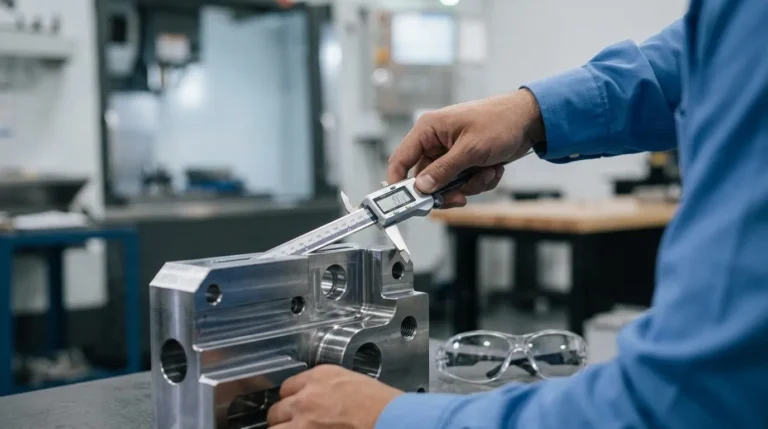
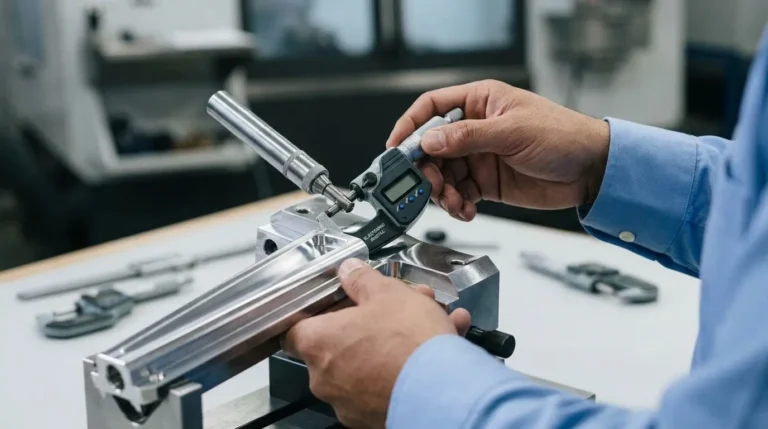
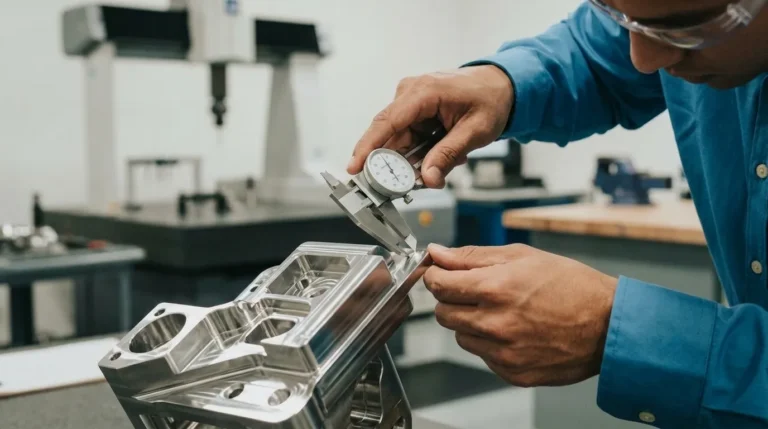
The most direct method is hardness testing on a sample coupon or on non-critical areas of the tool. A reputable heat treater will provide a hardness certificate that lists the measured Rockwell C values and the test locations. For critical Class 101 tools, buyers can require independent hardness verification at incoming inspection. If the measured hardness falls outside the specified range, the tool should return to the heat treater for correction before it enters production.
Not sure which steel grade your part needs? Talk to an engineer about your application.