








Drawing / DFM Quote / RFQ Tooling / Die Casting / Pour CNC Machining Finishing Inspection / Caliper NDT / X-ray Shipping Customs / Import Lead Time One U.S. Contact Quality Assured ISO 9001 Certified Certificate of Conformance Audit Ready Hardness / NDT Quality Cost / Landed Fit U.S. Managed Die Casting Sand Casting CNC Machining Sheet Metal Metal Injection Molding Investment Casting Automotive Medical Defense Heavy Machinery Industrial Equipment Oil & Gas Construction Agriculture Energy Aerospace Alloy / Metal

Turn-Mill Machining Services

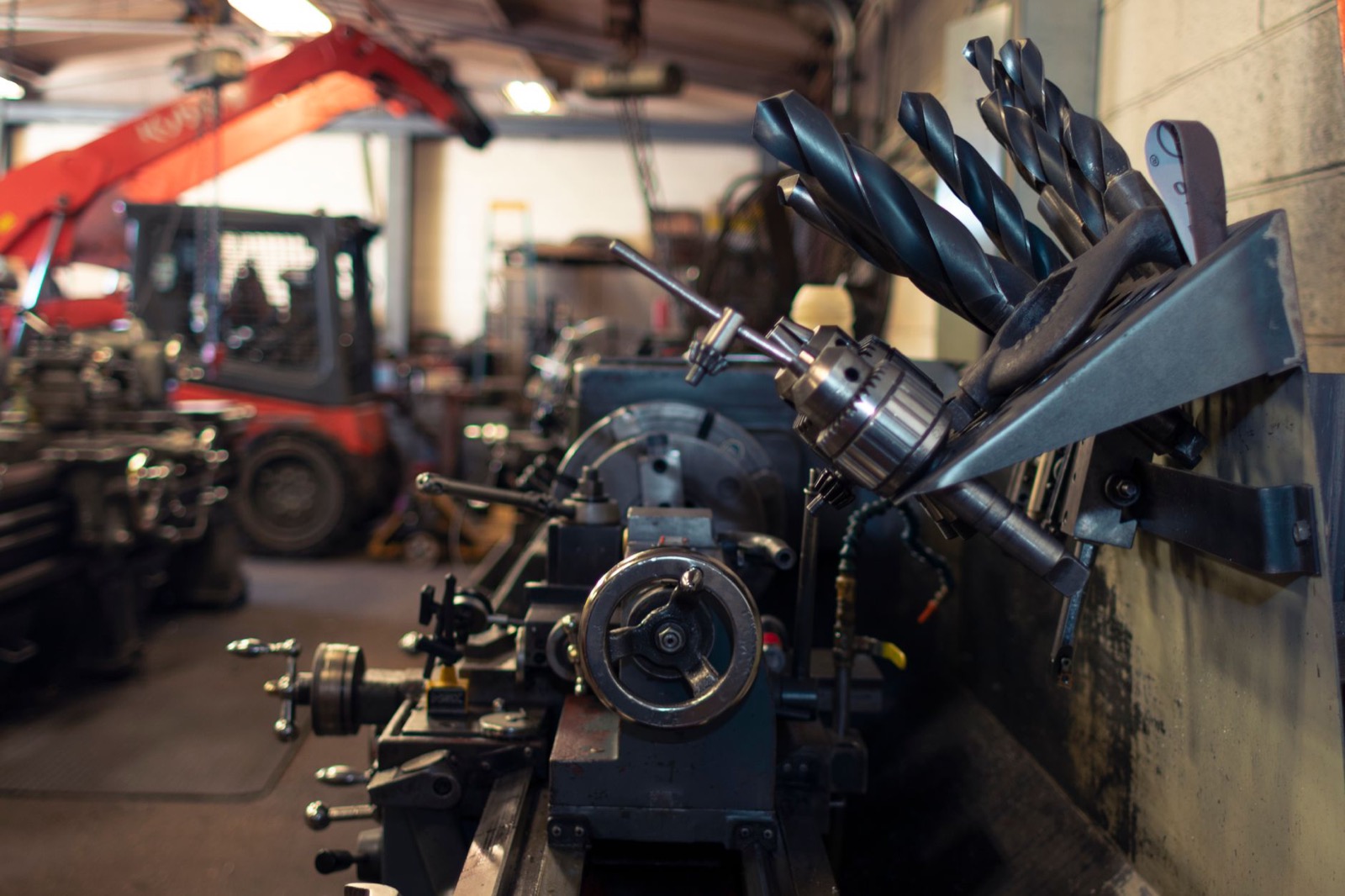
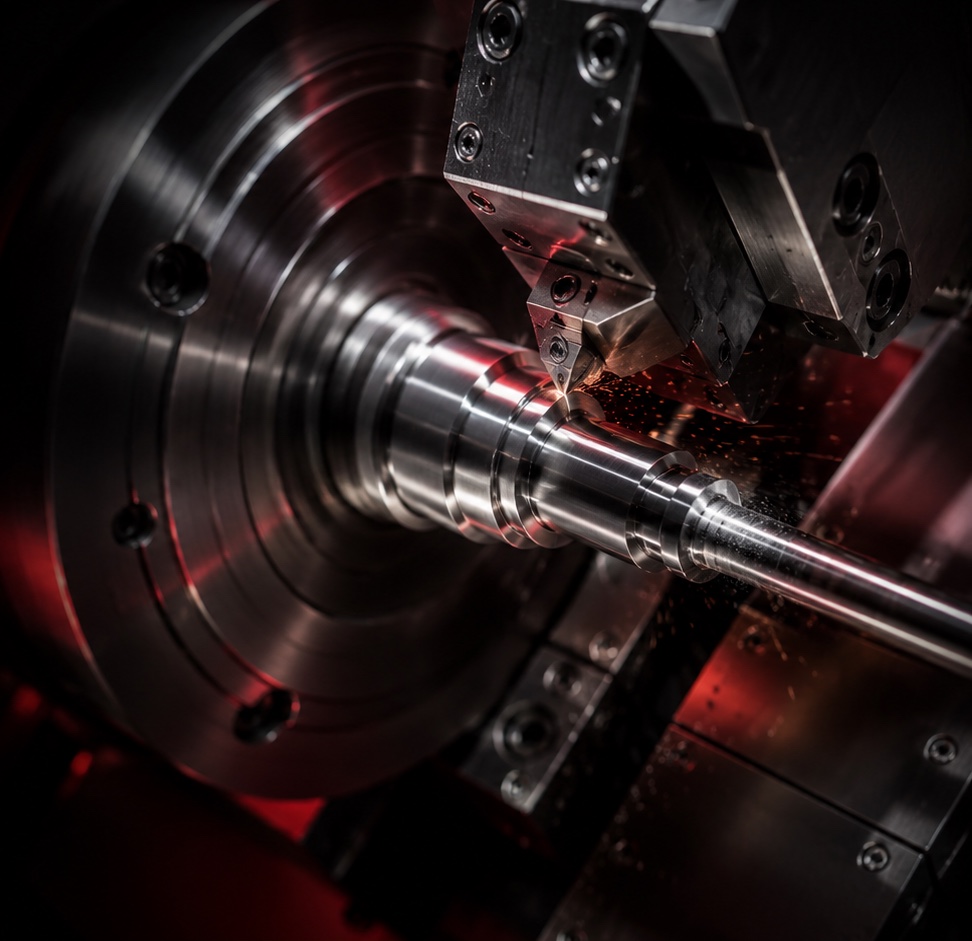
Turn-mill machining combines CNC turning and live-tool milling in a single setup, from ISO 9001 and IATF 16949 certified facilities. Rotational profiles and off-axis milled features are completed without re-fixturing, holding dimensional accuracy between turning and milling operations.

Trusted by Programs across Tier 1 suppliers, Fortune 500 OEMs & hardware startups
  • Honda
  • Libman
  • Mahindra
  • Meyer
  • MIT
  • Amazon
  • Bloom Energy
  • Circor
  • Halliburton
  • Honda
Turn-Mill Machining capabilities

Technical Capabilities

Review core turn-mill machining capabilities, materials, tolerances, inspection methods, and production requirements before requesting a quote.

Production envelope · Verified
Turn and live-tool mill
01
Single setup
Aluminum, stainless, steel, plastics
02
4 materials
Anodize, powder, plate + more
03
6 finishes
Materials
Aluminum, stainless steel, mild steel, and engineering plastics; specific alloy availability confirmed at feasibility review
Process
CNC turning with live-tool milling on the same machine; turned O.D., I.D., and face features combined with cross-holes, flats, slots, and radial milled features in one setup
Request a Quote

See Our Process Or same-day technical feasibility review

Production specifications

Dimensional tolerance
Tolerances confirmed against the specific feature and inspection method at the feasibility review
Geometry capability
Turned O.D. and I.D. profiles with cross-holes, flats, keyways, slots, and radial pockets in a single clamping
Secondary operations
Anodizing, powder coating, plating, passivation, heat treatment, bead blasting
Inspection
First-article inspection on every new part, in-process inspection, full dimensional reports including turned-to-milled positional checks; CMM available on request
Certifications
ISO 9001, IATF 16949
Standard lead time
4-8 weeks from approved drawings

Production Process

01 DFM Review
02 Custom Raw Material and Fixtures
03 First Articles
04 Production
Next step

Ready for technical review?

Share your part details, drawings, or CAD files. Redstone will review the requirements and confirm feasibility, tolerances, materials, lead time, and next steps.

  • Feasibility review based on your drawing or CAD file
  • Material, tolerance, and production requirements confirmed
  • Quote reviewed within 24 hours
Get started Request a Quote or Talk to an Engineer

Final specifications are confirmed during the technical feasibility review.

Why Redstone

Quality, cost, and a clear fit

Redstone helps hardware teams move from released drawings to repeat production with documented quality, competitive unit costs, and engineering support from the U.S.

  • ISO 9001 certified facilities
  • U.S.-based engineering support
  • Direct manufacturing partner
Quality

One setup. Full geometry. Certified inspection.

Turn-mill combines a rotating spindle with live tooling, so turned diameters and milled flats, holes, and slots are cut in a single clamping. Positional accuracy between the turned profile and the off-axis milled features is set by the machine, not by a second fixture. Every program runs at ISO 9001 and IATF 16949 certified facilities with first-article inspection and full dimensional reporting.

  • ISO 9001 and IATF 16949 certified facilities
  • Turned and milled features held in positional relationship without re-fixturing
  • First-article inspection with a dimensional report on every new part
  • Certificate of Conformance and material certification with every shipment
Cost

One operation where two used to run

Parts that previously required a turning operation followed by a separate milling setup can run through a turn-mill center in one cycle. Eliminating the second setup removes one fixture cost, one queue, and one opportunity for re-clamping error. Redstone quotes landed cost, with programming, fixturing, freight, and duties in the number.

  • Single-setup machining removes a second fixture and a second queue from the program
  • Programming, fixturing, freight, and duties quoted up front
  • Unit pricing broken out by volume tier
  • No offshore quote desk between you and the production line
Fit

Is this a fit?

Turn-mill is the right choice for rotational parts that also carry milled features: cross-holes, flats, keyways, slots, or radial pockets on a turned body. If your part is purely cylindrical with no milled features, standard CNC turning is typically the more cost-efficient route. Our engineering team confirms the best process at the feasibility review.

  • Rotational parts with cross-holes, flats, keyways, or milled radial features
  • Parts where positional accuracy between turned and milled features is critical
  • Programs where two separate operations currently raise lead time or tolerance risk
  • Engineering-led teams working from released CAD and GD and T
Parts built for production

What we produce

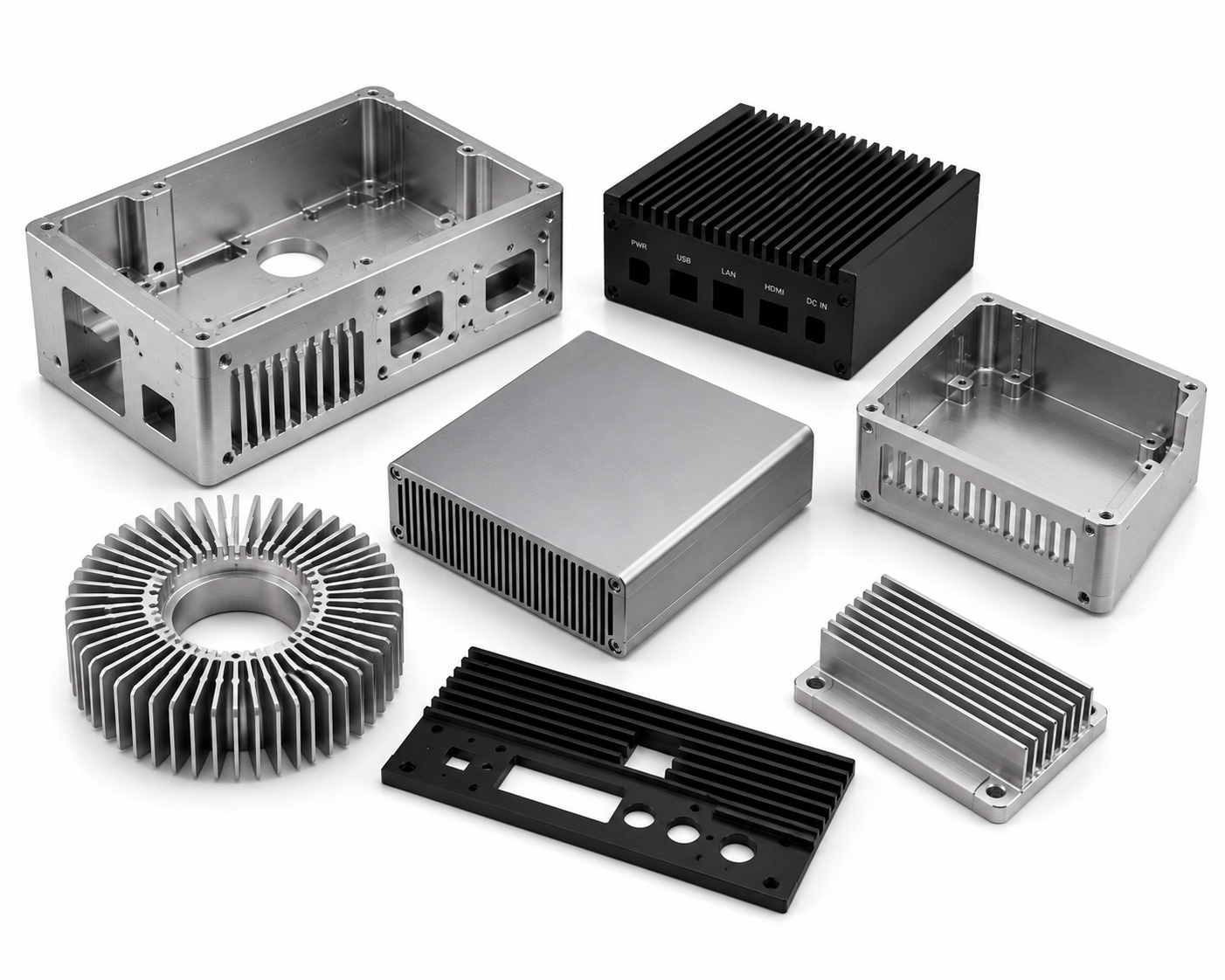
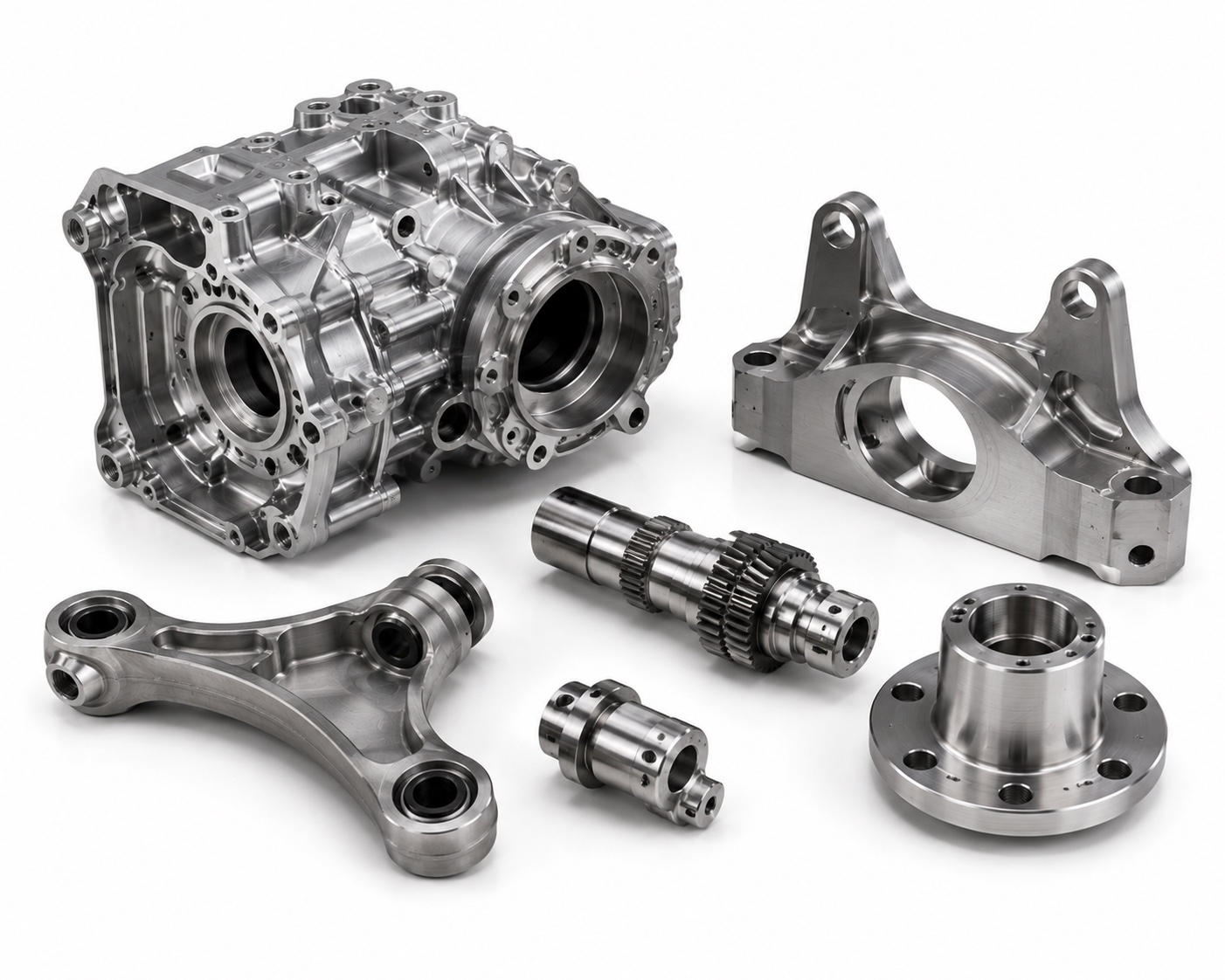
Redstone supports production metal parts across automotive, electronics, industrial equipment, and consumer hardware programs.

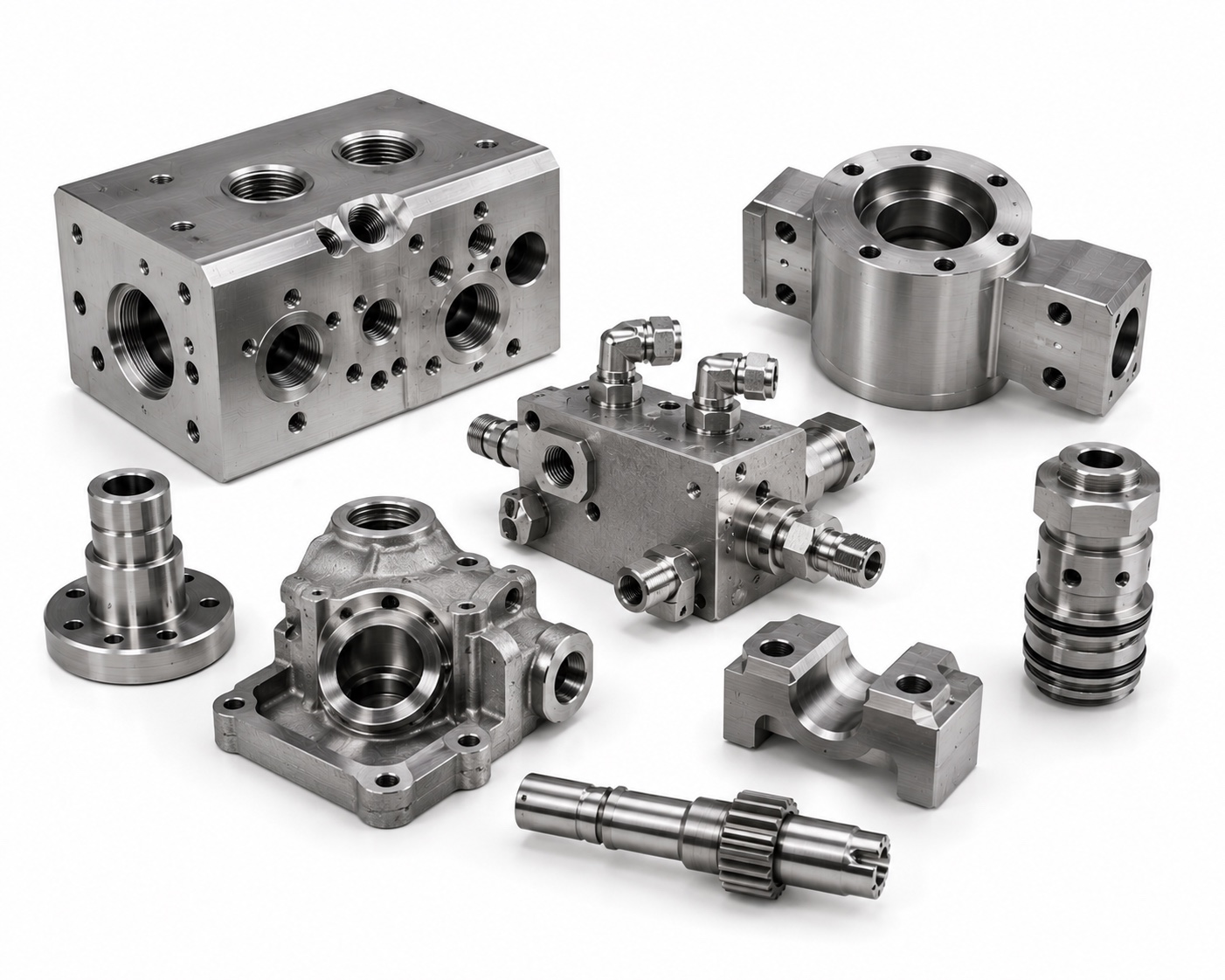
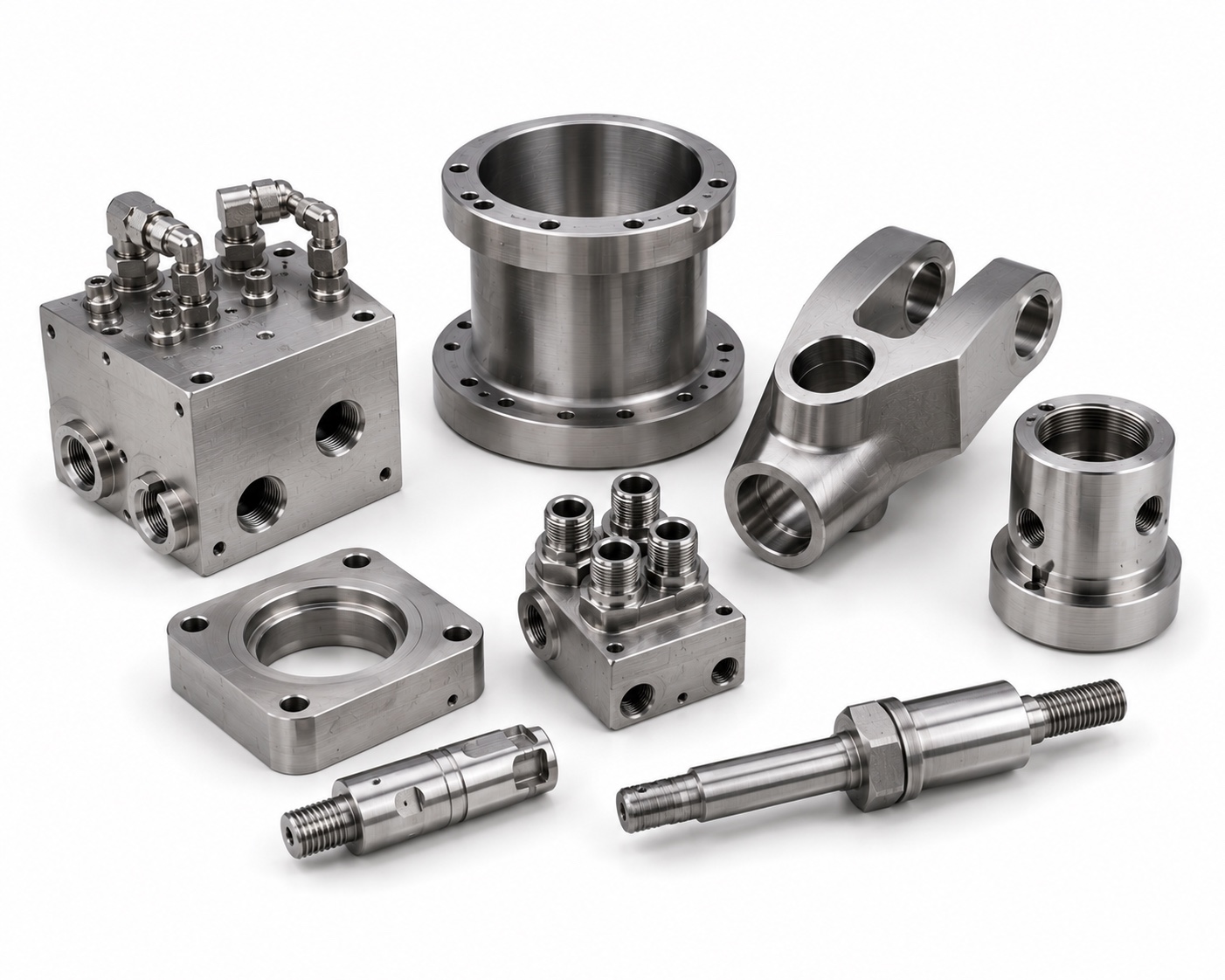
Valve bodies and fluid fittings with ported faces

Valve bodies and fluid fittings with ported faces

Turned bodies with cross-drilled ports, milled flats for wrench engagement, and threaded features are a natural fit for turn-mill. The positional relationship between the port and the turned bore is set by the machine in a single clamping.

Shafts with keyways and cross-drilled features

Shafts with keyways and cross-drilled features

Shafts and spindles that carry keyways, set-screw holes, or radial bores alongside turned diameters move through a turn-mill center in one cycle rather than requiring a separate milling setup after turning.

Threaded connectors and adapters with milled flats

Threaded connectors and adapters with milled flats

Connectors and adapters with turned threads combined with hex or wrench flats and cross-holes on the body run efficiently on a turn-mill center. Single-setup machining holds the flat-to-thread concentricity that a two-step process puts at risk.

Industrial equipment drive components

Industrial equipment drive components

Gear hubs, coupling bodies, and drive flanges with combined turned profiles and milled bolt patterns benefit from turn-mill when both the O.D. and the bolt circle positional accuracy must be held to a tight relationship.

From quote to production

A five-step process, documented at every handoff

From initial drawings to final delivery, Redstone keeps each stage clear, documented, and aligned with production requirements.

Each handoff is documented. No stage moves forward until drawings, materials, and production requirements are confirmed with the customer.

  1. 01

    Submit Your Files

    Upload CAD files in STEP or IGES with 2D drawings and GD and T callouts. Our engineering team reviews each part for turn-mill suitability, identifies which features run on the turning spindle and which require live tooling, and confirms the single-setup strategy before quoting.

  2. 02

    Receive a Quotation

    A full quotation covering programming, tooling strategy, unit pricing by volume tier, lead time, and material and finish options. One U.S. point of contact manages the program from RFQ through your receiving dock.

  3. 03

    First Article

    We program and run a first article through the turn-mill center, then issue a dimensional report against every called-out tolerance on your drawing, including positional relationships between turned and milled features. Samples ship to your engineering team for sign-off before volume starts.

  4. 04

    Production

    Volume machining runs at the assigned certified facility under documented quality control. Your U.S. point of contact sends progress updates and photo documentation throughout the run.

  5. 05

    Inspection and Delivery

    Every shipment includes a Certificate of Conformance, a dimensional report, and material certification. We are the importer of record and coordinate freight to your dock. Landed cost on delivery matches the number quoted.

Industries

Industries we machine for

Redstone supports production turn-mill machining programs for OEMs and engineering-led teams that require repeatable quality, controlled costs, and reliable part production.

  • Automotive

    Automotive

    Production components for automotive Tier 1 and Tier 2 suppliers and specialty OEM programs, run to IATF 16949 in certified facilities with U.S. engineering oversight from quote through delivery.

    • You run automotive components at production volume, not one-off prototypes.
    • Your program needs IATF 16949 quality and audit-ready documentation.
    • You are a Tier 1 or Tier 2 supplier, or a smaller OEM program that wants production-grade quality without a large-OEM minimum-order gate.
  • Industrial Equipment

    Industrial Equipment

    Cast, machined, and fabricated components for industrial equipment programs, run to ISO 9001 with U.S. engineering oversight from quote through delivery.

    • You run cast, machined, or fabricated components at production volume, not one-off prototypes.
    • Your equipment operates in demanding service environments.
    • You want to consolidate multiple processes with one supplier and one U.S. point of contact.
  • Electronics

    Electronics

    Production turn-mill machining components for electronics programs, run to documented quality with U.S. engineering oversight.

    • Recurring production volume
    • Documented dimensional inspection
    • One U.S. point of contact
  • Consumer Products

    Consumer Products

    Production turn-mill machining components for consumer products programs, run to documented quality with U.S. engineering oversight.

    • Recurring production volume
    • Documented dimensional inspection
    • One U.S. point of contact
  • Energy

    Energy

    Production turn-mill machining components for energy programs, run to documented quality with U.S. engineering oversight.

    • Recurring production volume
    • Documented dimensional inspection
    • One U.S. point of contact
  • Defense

    Defense

    Machined and cast components for commercial firearms programs, run to ISO 9001 in certified facilities with full material traceability and U.S. engineering oversight from quote through delivery.

    • You run firearms components at production volume, not one-off prototypes.
    • Your parts have safety-critical, tight-tolerance features that need documented inspection.
    • You work from released drawings and need audit-ready quality documentation and material traceability.

Not sure if turn-mill machining fits your part?

Final step

Ready to review your part?

Share your drawings, CAD files, or production requirements. Redstone will review feasibility, materials, tolerances, lead time, and the best manufacturing path for your program.

  • ISO 9001 and IATF 16949 certified facilities
  • U.S.-based engineering support
  • Quote reviewed within 24 hours
  • Production support across Redstone’s facilities in the U.S., Mexico, and China
Resources

From the engineering desk

Visit the Resource Hub

Frequently asked questions

Don’t see your question? Request a quote and our engineering team will answer it.

What is turn-mill machining?

Turn-mill machining is a process that combines a CNC lathe turning spindle with live rotary tooling on the same machine. The workpiece rotates for conventional turning operations on O.D. and I.D. features, and the live tooling head activates to cut milled features, such as flats, cross-holes, slots, and keyways, without the part leaving the machine. The result is a complete part in a single clamping.

What is the difference between turn-mill and a standard CNC lathe?

A standard CNC lathe produces only rotational features: O.D. profiles, I.D. bores, tapers, and threads. A turn-mill center adds live tooling, so the machine can also cut milled features, such as flats, cross-holes, and radial pockets, on the same part in the same setup. If your part has any off-axis or non-rotational features, turn-mill is typically the more efficient and accurate route.

When should I choose turn-mill over separate turning and milling operations?

When the positional accuracy between a turned feature and a milled feature is important, running both in a single setup removes the re-clamping step that introduces error. It also reduces lead time and total fixturing cost by eliminating one operation from the routing. Our engineering team reviews your part at the feasibility stage and confirms whether a single turn-mill setup or separate operations is the better fit.

What materials do you machine?

Turn-mill programs run in aluminum, stainless steel, mild steel, and engineering plastics. Specific alloy grades and machinability are confirmed at the feasibility review.

What are your standard lead times?

Standard production lead time is 4 to 8 weeks from approved drawings, with first-article timing confirmed at the quote stage. Rush programs are reviewed case by case.

How do customs and delivery work?

We are the importer of record and manage customs clearance, then coordinate freight to your dock with tracking. Duties and freight are quoted up front so there is no surprise on the invoice.