
- 01Two routes to the same part
- 02What casting is
- 03What machining is
- 04How casting and machining compare
- 05Geometry and complexity
- 06Tolerance and surface finish
- 07Strength and microstructure
- 08Volume, tooling, and cost
- 09Combining casting and machining
- 10Material options
- 11How to choose the right process
- 12How Redstone helps you decide
- 13Frequently Asked Questions
Two routes to the same part
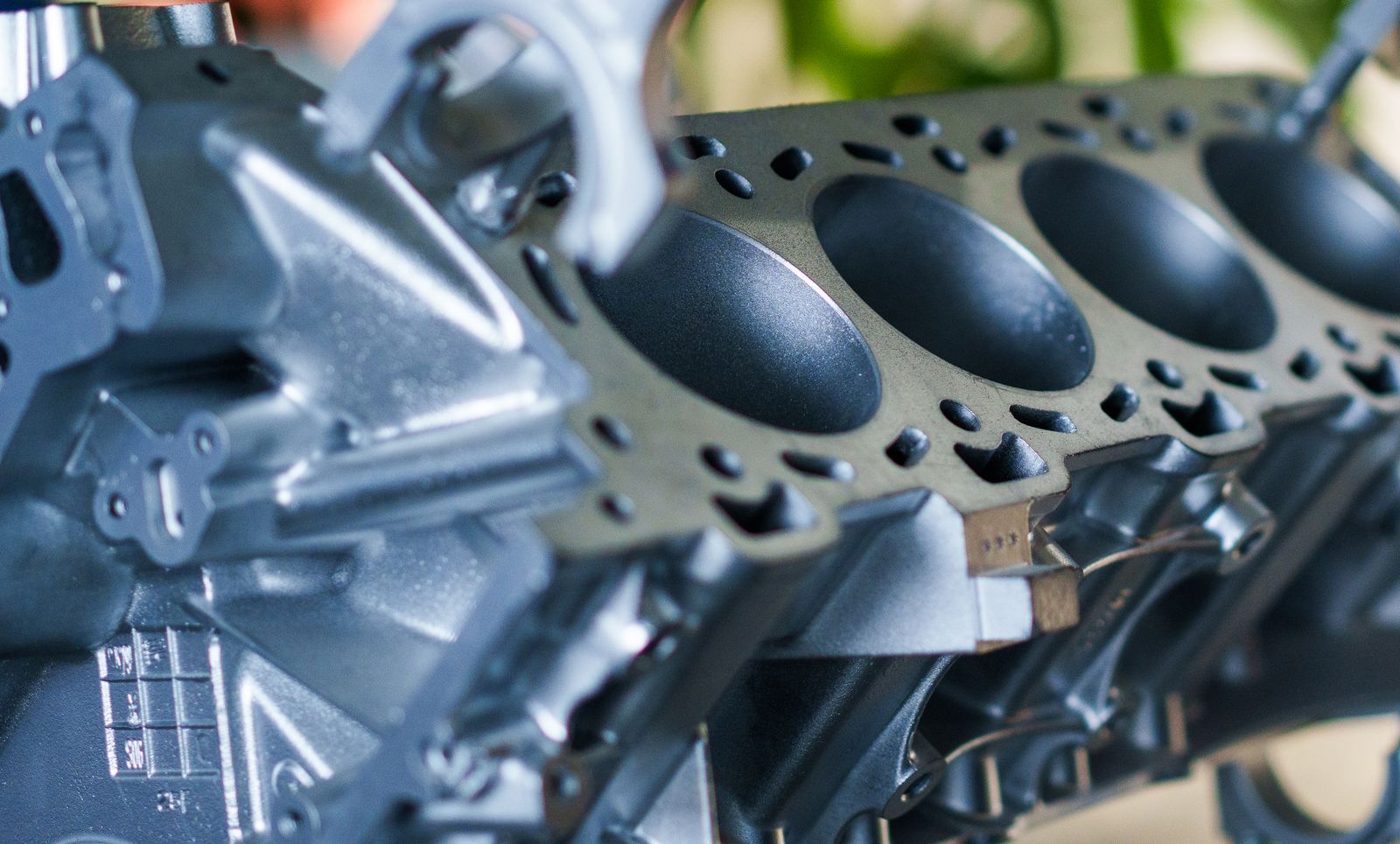
Imagine a metal bracket, a pump housing, or a structural fitting. You can arrive at the finished part by building it up from liquid or by carving it out of solid. The casting process forms the part close to its final shape from the start, so relatively little metal is added or removed afterward. The machining process does the opposite: it begins with a billet or bar and cuts away everything that is not the part.
That single distinction, near-net-shape forming versus subtractive removal, drives nearly every tradeoff that follows. Casting tends to win when shapes are complex, hollow, or made in large numbers. Machining is a subtractive manufacturing method that tends to win when tolerances are tight, surfaces must be fine, or quantities are low.
Because both can produce the same part in the same metal, comparing casting vs machining is less about capability and more about fit. A part that is trivial to machine in ones and twos can become expensive at volume, and a casting that is cheap at volume can be slow and costly to tool for a single prototype.
Understanding where each method shines lets you match the manufacturing process to the part rather than forcing the part to suit a process you already have in mind.
What casting is
Casting is the family of processes that form a part by introducing molten metal into a mold cavity, letting it solidify, and then removing the cast part. Metal casting is one of the oldest manufacturing methods still in heavy industrial use, and it remains the most efficient way to produce complex or hollow shapes in quantity.
The mold defines the geometry, so once the tooling exists, each pour reproduces intricate features, internal passages, and organic contours that would be slow and wasteful to cut from solid.
Several casting methods cover different needs. Sand casting uses a sand mold packed around a pattern; it is flexible, handles large parts, and keeps tooling cost low, which makes it attractive for lower and medium volumes or big components. Investment casting (lost-wax) builds a ceramic shell around a wax pattern, melts the wax out, and pours metal into the resulting cavity, yielding fine detail and good surface finish for smaller, more precise parts.
Die casting forces molten metal into a reusable steel die under pressure, producing dimensionally consistent parts at high speed; die cast tooling is expensive, so the die cast route earns its keep at high volume. Each casting method trades tooling cost, detail, and per-part speed differently, but all share the near-net-shape advantage.
What machining is
Machining is a subtractive manufacturing approach: it starts with a solid block, plate, or bar of metal and removes material with cutting tools until the finished geometry remains. Most production machining today is done on a CNC machine, where a computer controls the tool path so the same program reproduces a part repeatably.
CNC milling moves a rotating cutter against fixed stock to create flats, pockets, holes, and contoured surfaces, while CNC turning spins the workpiece against a tool to produce cylindrical features. Together they cover the bulk of machined parts an engineer is likely to specify.
The defining trait of machining is precision. Because the cutter removes material directly from solid stock, a CNC machine can hold tighter tolerances and produce finer surface finishes than an as-cast surface, with no mold or pattern standing between the program and the part.
That same trait is also its limit: every cubic millimeter of metal that ends up as a chip on the shop floor is paid for in stock and in cutting time.
For simple parts and low quantities this barely matters, but as geometry grows complex or volume climbs, the cost of removing material from billet starts to dominate. Machining is the natural home for prototypes and short runs, since there is no tooling to build before the first part exists.
How casting and machining compare
The table below summarizes how casting and machining compare across the dimensions that usually decide a sourcing call. None of these are absolutes, but they capture the general direction each process leans, and they are a useful starting frame before drilling into the specifics that matter most for your part.
| Dimension | Casting | Machining |
|---|---|---|
| Process type | Near-net-shape forming from molten metal | Subtractive removal from solid stock |
| Geometry | Excels at complex, hollow, organic shapes | Best for prismatic features, flats, holes |
| Tolerance | Looser as-cast; tightened by later machining | Tightest tolerances achievable directly |
| Surface finish | Coarser as-cast surface | Finer, more controllable surface finish |
| Material use | High utilization; little waste | Lower utilization; chips removed as waste |
| Tooling cost | Molds or dies add upfront cost | Little to no dedicated tooling |
| Best volume | Higher production volume | Low volume and prototypes |
| Lead time | Slower first part (tooling); fast at volume | Fast first part; slows per unit at volume |
Geometry and complexity
Geometry is often the first filter. Casting forms metal around a cavity, so internal channels, thin curved walls, undercuts, and flowing organic shapes come almost for free once the mold exists.
A hollow pump body or a manifold with internal passages is a natural casting; reproducing those same internal voids by machining would mean cutting from multiple sides, or splitting the part and joining it, which adds cost and weakens the result.
Machining, by contrast, favors features a cutter can reach: external faces, pockets, bores, and holes approached from accessible directions. Deep internal cavities, sharp internal corners, and fully enclosed voids are hard or impossible to mill.
So as a part's internal complexity rises, casting gains ground; as a part is dominated by precise external features and flat datums, machining pulls ahead. Many real parts sit between these poles, which is exactly why combining the two is so common.
One design variable deserves special mention on the casting side: wall thickness uniformity is the single biggest factor in producing sound castings. Non-uniform walls cause uneven fill and cooling, which drives porosity, sink marks, and warpage, and is why manufacturers run mold-flow analysis to identify problem areas before cutting tooling.
Tolerance and surface finish
Where dimensional precision and surface quality matter, machining holds tighter tolerances and finer surface finishes than as-cast surfaces. A cast part shrinks as it cools and inherits some texture from the mold, so as-cast features carry looser tolerances and a coarser surface finish than a machined face.
That is acceptable for the many surfaces of a part that simply need to exist in roughly the right place, but it is not enough for a sealing face, a bearing bore, or a mating flange.
This is the single most common reason a cast part still needs machining. Designers cast the bulk of the geometry to capture complexity cheaply, then machine only the critical features that require precision. The casting carries the shape; the machining process delivers the tolerance and finish exactly where the drawing demands it, and nowhere it does not.
Strength and microstructure
A frequent buyer question is whether a machined part is stronger than a cast one. The honest answer is that it depends on the metal, the process control, and the loading, not on a blanket rule.
Machined parts are cut from wrought stock that was rolled or forged, giving a worked grain structure and consistent properties, which is why machining from billet is often associated with strong, predictable parts. Castings solidify from liquid, so their microstructure and any internal porosity depend heavily on how well the casting process is controlled.
But casting is not inherently weaker. A well-designed, well-controlled casting can be made stronger than a machined part in the right application, because casting lets you put metal exactly where the load is and add generous fillets and ribs that a subtractive route would have to carve away.
Castings can also be heat treated and engineered around their solidification behavior. The takeaway is that strength is a design and process-control outcome, not an automatic property of casting or machining alone.
Volume, tooling, and cost
Production volume is usually the deciding economic factor, and it works through tooling. Machining needs little or no dedicated tooling, so the first machined part is comparatively cheap and quick to produce, which is why prototypes and short runs almost always start there. The catch is that machining cost barely falls with quantity: cut the hundredth part and you still pay for roughly the same stock and cutting time as the first.
Casting reverses that curve. Molds and especially die cast dies carry real upfront tooling cost, so the first cast part is expensive once tooling is counted. But each subsequent pour is fast and cheap, so the per-part cost drops sharply as volume rises and the tooling investment spreads across more units. Somewhere a break-even point exists: below it, machining is cheaper; above it, casting wins.
The crossover moves with part complexity and the casting method chosen, but the shape of the tradeoff is reliable. Machining favors low volume, prototypes, and tight tolerances; casting favors higher volume and complex or hollow shapes.
| If your part is... | Process that usually fits |
|---|---|
| A one-off or prototype | Machining (no tooling to build) |
| Low volume, simple geometry | Machining |
| High volume, repeatable geometry | Casting |
| Complex, hollow, or organic | Casting (often plus machining) |
| Tight tolerance on a few features | Cast body, machined critical features |
| Tight tolerance everywhere | Machining |
Combining casting and machining
Casting and machining are not really rivals for many parts; they are partners. The most common production strategy for complex metal components is to cast a near-net shape and then machine the features that need precision. The casting captures the bulk geometry, internal passages, and rough form efficiently, and secondary machining brings the sealing faces, bores, threaded holes, and mating surfaces into tolerance.
This cast-then-machine approach gives you casting's material efficiency and geometric freedom together with machining's precision, usually at a lower total cost than machining the whole part from solid.
Yes, die-cast parts can be machined afterward, and routinely are. A die cast housing might be cast to shape and then have its bearing bores, mounting faces, and threaded holes machined as a secondary operation.
The same logic answers another common question: aluminum parts can absolutely be both cast and machined. An aluminum component is frequently cast for its shape and then machined for its critical interfaces, which is one of the most ordinary workflows in production manufacturing. The decision is rarely casting or machining in isolation; it is how to divide the work between them.
Material options
Material availability differs slightly between the two routes. Casting works with alloys formulated to flow and solidify well, including many aluminum, zinc, and iron families plus common cast steels and bronzes, which is why cast-specific grades exist alongside their wrought cousins. Machining works from wrought stock, so it draws on the broad catalog of bar and plate alloys, including many high-strength and free-machining grades developed specifically to be cut.
In practice both processes cover the metals most engineers reach for, but if a design hinges on a particular grade, it is worth confirming early that the chosen process supports it.
A quick everyday example ties this together. Are screws cast or machined? Standard fasteners are generally not cast at all; they are mass-produced by cold forming and thread rolling, with machining (and CNC turning) reserved for special, large, or low-volume screws.
It is a useful reminder that casting and machining are two important options among several manufacturing methods, and the best choice always tracks the specific part, its volume, and its requirements.
How to choose the right process
Choosing comes down to working through your part against a short list of questions. How complex is the geometry, and does it have internal or hollow features? How tight are the tolerances, and on how many surfaces? How many parts do you need now and over the program's life? Which metal does the design require, and how is the part loaded?
Answer those honestly and the process usually selects itself. Complex and high volume points to casting; simple, precise, or low volume points to machining; complex with a few critical features points to casting plus secondary machining.
It is also worth weighing the disadvantages of each. The main disadvantage of casting is that as-cast tolerances and surface finish are looser, internal porosity is possible if the process is not well controlled, and tooling adds upfront cost and lead time before the first part exists.
Machining's disadvantage is material waste and cost that does not scale down with volume, plus difficulty reaching internal geometry.
On environment, the picture is nuanced: machining turns a large share of expensive billet into chips, which is wasteful even though those chips are recyclable, while casting uses metal efficiently but is energy-intensive to melt and pour. Neither is automatically greener, which is one more reason to match the process to the part rather than apply a rule of thumb.
How Redstone helps you decide
Most parts do not announce which process they want, and the crossover between casting and machining shifts with volume, geometry, tolerance, and material in ways that are easy to misjudge from a single drawing. That is where an engineering-review model earns its place.
Redstone works from your part and requirements, not from a fixed menu, evaluating whether to cast, machine, or cast and then machine, and routing the work to the right vetted foundry or machine shop in our network accordingly.
Because we coordinate both casting and machining across that network, we can split a part across processes when that lowers cost without compromising the features that matter, and we can prove out a machined prototype before committing to casting tooling for a production run.
If you are weighing casting vs machining for a specific component, send us the part and the volumes you are targeting, and our engineering team will recommend the process route, the right casting method or machining approach, and a path from prototype to production.
Frequently Asked Questions About Casting vs Machining
Is machining better than casting? Neither is better in the abstract. Machining has the advantage for low volumes, prototypes, and components with tight tolerances across many features. Casting becomes more economical as volume climbs and geometry grows complex. The better process depends on your volume, geometry, material, and tolerance requirements.
Are machined parts stronger than cast parts? Components cut from wrought stock keep the base material's worked grain structure, giving consistent properties throughout the part. Cast parts can achieve comparable strength through controlled solidification and heat treatment, but poorly controlled casting can introduce porosity. Severity depends on wall thickness uniformity, gating design, and alloy selection, and when porosity is a concern manufacturers use x-ray inspection and vacuum impregnation to detect and seal micro-voids.
Is casting considered machining? No. They are fundamentally different manufacturing processes: casting is a forming process where molten metal fills a mold cavity, while machining is a subtractive process that removes material from a solid workpiece. Many production workflows combine both, casting the initial shape and then finishing critical dimensions on a machine.
What is the disadvantage of casting? Casting carries upfront tooling cost and a longer lead time before the first part exists, plus the potential for defects such as porosity, shrinkage, and flow lines if the process is not well controlled. As-cast surfaces also carry looser tolerances and rougher finishes than machined faces, often requiring secondary processing. The most common design mistake is inconsistent wall thickness, which drives most casting defects.