
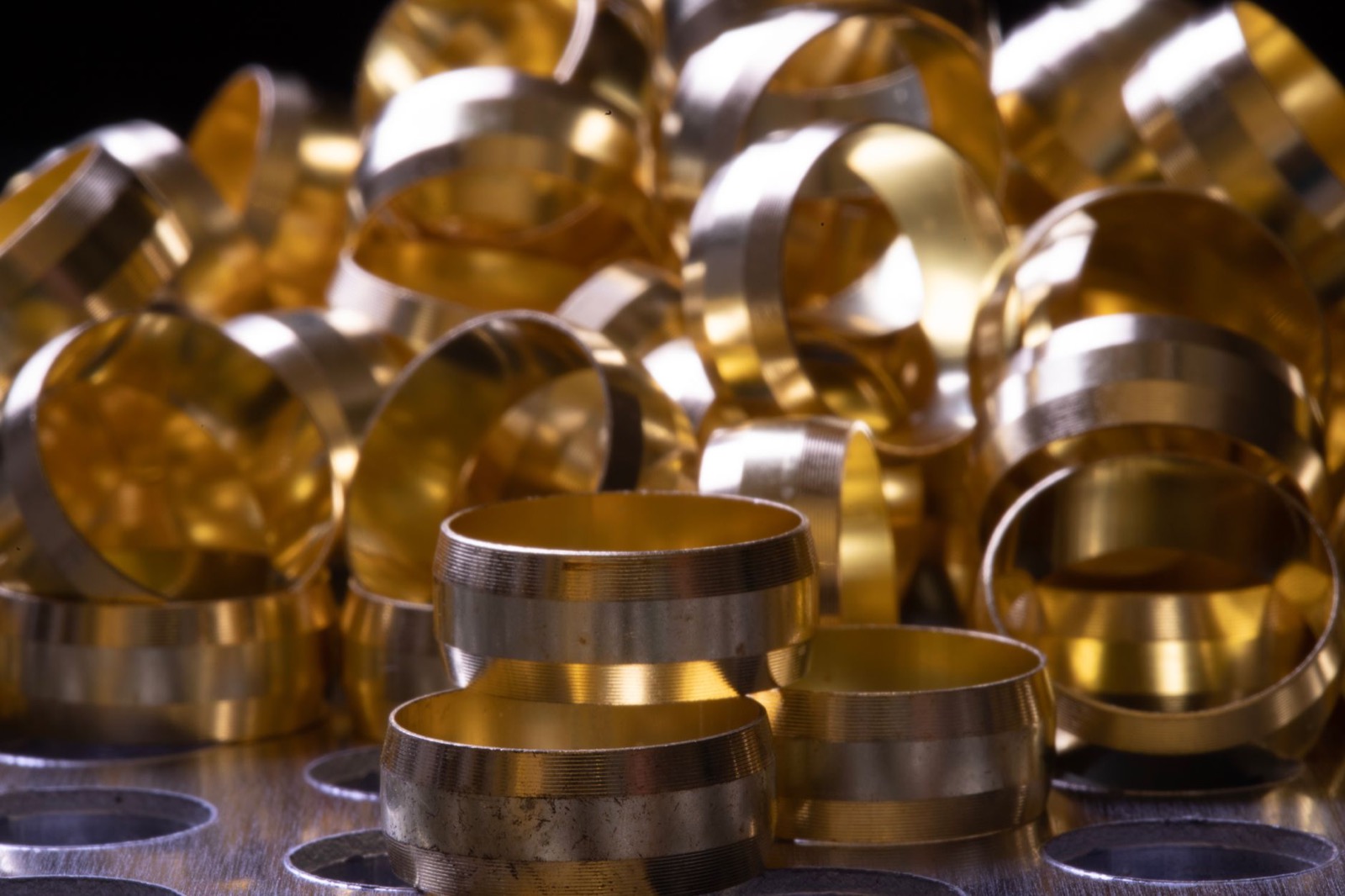
What is Metal Injection Molding?
Metal injection molding involves mixing powdered metal with a binder to create high-strength components. MIM produces small, intricate parts from various materials at lower costs, is ideal for thin-wall specifications down to 100 micrometers, and is a net shape process requiring minimal finishing with virtually no material waste.
Metal Injection Molding Process
- Step 1: Metal alloy is powdered and mixed with a thermoplastic binder to form feedstock.
- Step 2: Properties depend solely on the metallic powder composition.
- Step 3: An injection molding machine injects the feedstock; the molded part is called a 'green' part.
- Step 4: The part cools and is ejected from the mold.
- Step 5: De-binding removes the thermoplastic binder using catalysts, solvents, and thermal furnaces.
- Step 6: The part is heated to sinter the powder; the part can lose 15-30% of its volume during sintering.
MIM Applications
- Firearms: Triggers, safety mechanisms.
- Medical Devices: Articulation gears, joint replacements.
- Automotive: Turbocharger vanes, rocker arms.
- Consumer Electronics: Connectors, heat sinks.
- Aerospace: Engine components, valve holders.
What is Die Casting?
Die casting injects molten metal under high pressure into a die, using non-ferrous metals like aluminum, zinc, copper, and magnesium. Four die types are available: single cavity (one part), multiple cavities (identical parts), unit die (different parts per cycle), and combinations die (assembly parts).
Die Casting Process
- Clamping: Dies cleaned, clamped, and lubricated.
- Injection: Molten metal injected at 20,000 to 31,000 psi.
- Cooling: Metal begins cooling immediately upon injection.
- Ejection: Part removed after complete cooling.
Three primary methods exist: gravity die casting, hot chamber, and cold chamber die casting.
Die Casting Applications
- Automotive: Powertrain systems, housings, transmission components.
- Medical Devices: Computer covers, surgical devices.
- Lawn, Garden, and Recreation: Axles, gear cases, chassis.
Advantages and Disadvantages
| Factor | MIM | Die Casting |
|---|---|---|
| Net shape | Yes, minimal secondary processes | No secondary operations required in most cases |
| Alloy range | Wide range available | Wide range (non-ferrous only) |
| Mechanical strength | High (sintering) | High |
| Tolerance | Accurate to 3mm | Excellent dimensional accuracy |
| Design freedom | Full design freedom | Wide shape complexity |
| Material waste | Virtually none | Reduced vs. machining |
| Relative cost | Higher than die casting | Up to 30% cheaper than MIM depending on alloy |
| Die lifespan | 150K-300K shots | Up to 1,000,000+ shots |
| Setup cost | High initial setup | Complex and expensive setup |
| Porosity | Low | Common challenge |
| Batch size | Economical at 10K-20K+ units | Better for smaller runs of larger parts |
| Part weight limit | Adds cost above 100g | Handles larger complex parts cost-effectively |
| Volume shrinkage | Up to 30% during sintering | Minimal |
| Thin walls | Down to 100 micrometers | Down to 0.6-0.8mm |
MIM vs. Die Casting Summary
For small parts manufacturing, MIM is economically advantageous for complex small parts weighing 0.1 to 250 grams, offering flexible design without additional complexity costs and supporting thin walls down to 100 micrometers.
For large runs, MIM becomes more affordable with cost savings typically occurring between 10,000 and 20,000 units. Die casting is better for smaller runs that involve larger, complex parts.
Both processes offer affordable options for small and large production runs, but the decision ultimately turns on part size, weight, complexity, and target volume.